Table of Contents
- The Commencement: Palm Sunday and the Blessing of Branches
- The Climax of Devotion: Maundy Thursday and the Sang Procession
- The Flavours of Tradition: Mallorcan Easter Gastronomy
- Easter Monday and the Pancaritats: The Final Celebration
- Questions and Answers
- El Comienzo: Domingo de Ramos y la Bendición de las Palmas
- Los Sabores de la Tradición: Gastronomía de Pascua en Mallorca
- Lunes de Pascua y los Pancaritats: La Celebración Final
- Preguntas y Respuestas
- Mallorquinische Ostergastronomie: Die Aromen der Tradition
- Ostermontag und die Pancaritats: Der krönende Abschluss
Easter & Semana Santa 2026: A Guide to Mallorca’s Most Solemn and Beautiful Traditions
As the spring of 2026 settles over the Mediterranean, Mallorca prepares for its most profound cultural and spiritual event: Semana Santa and the Easter celebrations. From March 29 to April 6, 2026, the island undergoes a remarkable transformation. The lively, sun-drenched atmosphere of the coast gives way to the ancient, rhythmic tolling of cathedral bells and the scent of incense drifting through narrow stone streets. For both the local community and the international residents who call the island home, this period offers a rare glimpse into the deep historical soul of the Balearics. It is a time of contrasts—where the silence of mourning on Good Friday meets the explosive joy of Easter Sunday, and where centuries-old rituals are performed with the same fervor today as they were in the Middle Ages.
The significance of Easter in Mallorca extends beyond religious observance; it is a vital pillar of the island’s social fabric. In Palma, the Gothic masterpiece of La Seu Cathedral serves as the focal point for many ceremonies, but the spirit of the week is equally palpable in the smaller villages. From the dramatic hilltop descents in Pollença to the silent candlelight vigils in Sineu, every corner of the island contributes to this collective narrative of faith and heritage. For those looking to experience the authentic Mallorca, 2026 provides a perfect opportunity to witness these traditions against the backdrop of a blossoming spring landscape.
The Commencement: Palm Sunday and the Blessing of Branches
The journey begins on March 29, 2026, with Palm Sunday (Domingo de Ramos). This day marks the triumphant entry of Jesus into Jerusalem and is characterized by a festive, family-oriented atmosphere. In Palma, the traditional "La Borriquita" procession sees children carrying intricately woven white palms (palmas blancas), which are a specialty of the island’s artisans. These palms, often decorated with sweets or traditional charms, are brought to churches across the island to be blessed by the clergy. Following the blessing, many residents hang these branches on their balconies or over their front doors as a symbol of protection for the coming year.
The blessing at the Cathedral of Palma is a particularly majestic sight, as the bishop leads the faithful in a sea of waving olive and palm branches. For international visitors, this is the most accessible day of the week, as the mood is light and the streets are filled with the sounds of traditional bands and choral groups. It serves as the gentle introduction to the increasingly somber days that follow, setting a tone of community unity that defines the Mallorcan approach to the Passion.
The Climax of Devotion: Maundy Thursday and the Sang Procession
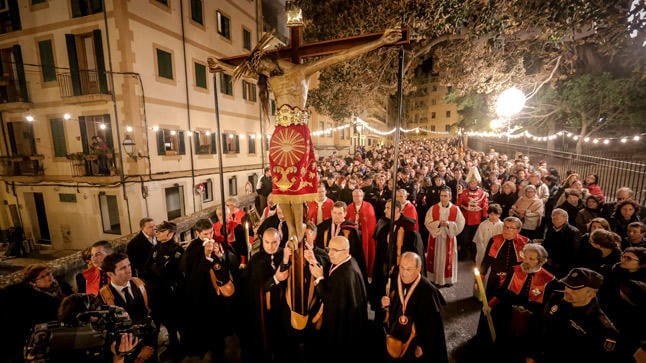
The atmosphere shifts dramatically as the sun sets on Maundy Thursday, April 2, 2026. This is arguably the most important night in the Palma calendar, as it hosts the Processó del Sant Crist de la Sang. Dating back to the 16th century, this procession features the most venerated image on the island—the Christ of the Sang (Holy Blood). Thousands of people line the streets of the old town in total silence to watch the cofradías (brotherhoods) slowly make their way from the Church of the Annunciation. Each brotherhood is distinguished by its unique tunics and the iconic "capirote"—the tall, conical hood that ensures the penitent's anonymity before God.
The scale of the Maundy Thursday procession is immense. Over thirty brotherhoods participate, many carrying massive wooden platforms (pasos) depicting scenes from the Passion. These platforms are incredibly heavy and are carried on the shoulders of dedicated men and women who have trained for months. The slow, rhythmic beat of muffled drums and the mournful notes of trumpets create an environment of intense solemnity. In 2026, the route through the narrow streets of the Barri Gòtic is expected to draw record crowds, as the "Sang" image is believed to hold special significance for the island's protection and well-being.
The Flavours of Tradition: Mallorcan Easter Gastronomy
Beyond the spiritual, Easter in Mallorca is defined by its unique and seasonal gastronomy. This is the time when island kitchens come alive with the scent of "Panades," "Rubiols," and "Crespells." Panades are savory, round pies traditionally filled with lamb, peas, and a touch of sobrassada, representing the end of Lenten abstinence. Families often gather in the days leading up to Good Friday to prepare batches of these pies together, passing down secret recipes through the generations. In some parts of Palma, you can even find "Panades dolçes," where sugar is added to the dough for a unique sweet-and-savory contrast.
For those with a sweet tooth, "Rubiols" are the quintessential Easter treat. These crescent-shaped pastries are filled with everything from sweet cottage cheese (brossat) and apricot jam to "cabell d'àngel" (pumpkin strands). Alongside them are "Crespells," buttery biscuits cut into shapes like stars or hearts, which are especially popular with children. No Easter table is complete without "Frit de Pasqua," a rich fry-up of lamb, potatoes, and spring vegetables like artichokes and peas. Sampling these delicacies is an essential part of the Mallorcan Easter experience, offering a literal taste of the island's history.
Easter Monday and the Pancaritats: The Final Celebration
The festivities do not end on Easter Sunday. In the Balearics, Easter Monday (April 6, 2026) is a significant public holiday known for the tradition of "Pancaritats." This custom dates back to the Middle Ages when bread was distributed to the poor. Today, it has evolved into a day of joyous outdoor pilgrimages. Residents across the island hike to local hermitages and sanctuaries, such as Bellver Castle in Palma, the Puig de Maria in Pollença, or the Sanctuary of Sant Salvador in Felanitx.
These gatherings are festive "third festivals" where friends and families share the last of the Panades and Rubiols in a communal picnic. There is often traditional "ball de bot" dancing and music, celebrating the arrival of spring and the resilience of the community. For residents and visitors alike, the Pancaritats represent the perfect conclusion to the intense emotions of Holy Week—a transition from solemn religious reflection to the shared joy of nature and companionship.
Questions and Answers
When does Easter 2026 take place in Mallorca?
Easter (Semana Santa) in 2026 runs from Palm Sunday on March 29 to Easter Sunday on April 5. Easter Monday, April 6, is also a public holiday in the Balearic Islands.
What are Panades and when should I eat them?
Panades are traditional savory pies usually filled with lamb and peas. While they are available year-round in some bakeries, they are traditionally prepared and eaten during the Easter week to mark the end of meat abstinence.
Where is the best place to see the Easter Monday celebrations?
Bellver Castle in Palma hosts the "Angel Sunday" (often celebrated on the first Sunday after Easter) or Easter Monday festivities. For a more rural experience, head to the Puig de Maria in Pollença for a traditional pilgrimage and picnic.
Are shops open on Good Friday and Easter Monday?
Most major retailers and local shops close on Good Friday (April 3) and Easter Monday (April 6). However, the Mallorca Fashion Outlet and many restaurants in tourist zones remain open.
Summary: Easter & Semana Santa 2026: A Journey Through Mallorca's Sacred and Culinary Traditions
Easter 2026 in Mallorca (March 29 – April 6) is a period of immense cultural depth, blending solemn religious processions with vibrant community festivities. From the historic "Sang" procession in Palma to the dramatic "Davallament" in Pollença, the island honors its medieval roots. This guide highlights the essential role of Easter gastronomy—including Panades, Rubiols, and Frit de Pasqua—and the traditional Easter Monday pilgrimages known as Pancaritats. Whether witnessing the quiet devotion of Good Friday or the communal joy of an outdoor picnic, Easter provides a unique window into the authentic Mallorcan way of life.
Whilst Imperial Properties makes all efforts to ensure the information in the description and listing is correct, it is the buyer's responsibility to clarify any statistical data shown.