10 facts about Mallorca you might not have known before!
Mallorca is an island that constantly evolves, yet its most fascinating attributes are often those rooted in centuries of history and unique natural phenomena. For those of us who spend our time navigating the local property market or enjoying the Mediterranean lifestyle, it is easy to overlook the extraordinary details that sit right on our doorstep. From architectural wonders to biological rarities, the island is far more than just a collection of beautiful beaches. Exploring these ten facts offers a deeper connection to the place many of us call home, revealing a level of sophistication and mystery that defines the true Mallorcan spirit.
1. The Mathematical Precision of the Cathedral of Santa Maria
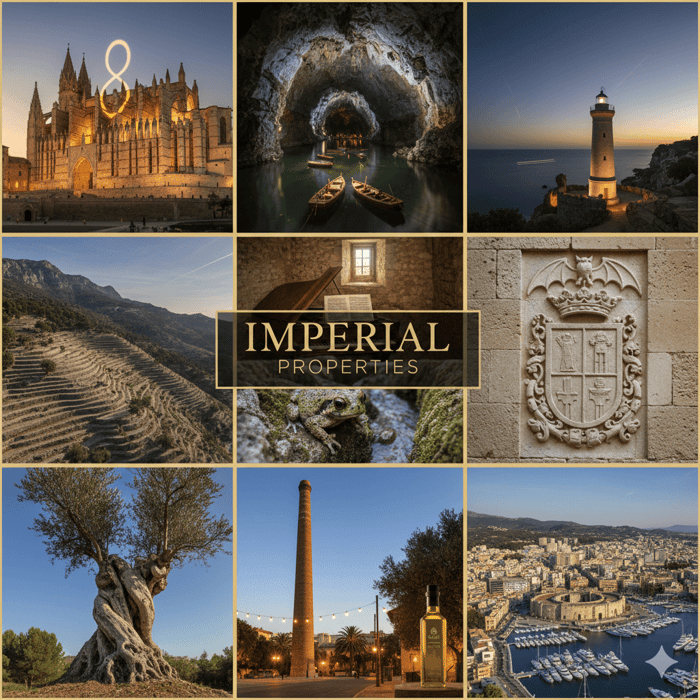
The Cathedral of Santa Maria in Palma, affectionately known as La Seu, is a masterpiece of Gothic design. However, many are unaware of the incredible solar geometry built into its structure. Twice a year, on February 2nd and November 11th, a phenomenon known as the "Miracle of the Light" occurs. As the sun rises, the light passes through the main East Rose Window and projects a perfect reflection directly onto the opposite wall, forming a vibrant figure eight. This alignment is precise to the minute and serves as a testament to the advanced astronomical knowledge of 14th-century builders. It is a moment of pure symmetry that draws hundreds of spectators to the historic center of Palma each year.
2. Europe’s Largest Subterranean Lake
Deep within the limestone heart of Porto Cristo lie the Caves of Drach, home to Lake Martel. This is one of the largest subterranean lakes in the world, stretching 117 metres in length. Since 1935, the lake has hosted daily classical music concerts where musicians perform on illuminated rowing boats. The natural acoustics of the cavern provide a sound profile that no modern concert hall can replicate. The constant temperature inside the caves makes this a perfect visit regardless of the season, and it remains a cornerstone of the island's geological heritage. Visitors can easily find the caves located on the eastern coast, with clear signposting from the Ma-4020 road.
3. Frédéric Chopin’s Creative Isolation in Valldemossa
In the winter of 1838, the legendary Polish composer Frédéric Chopin and writer George Sand sought refuge in the mountain village of Valldemossa. They stayed in a cell at the Royal Charterhouse (Real Cartuja), where Chopin composed several of his most influential works, including his 24 Preludes. Despite the damp walls and his failing health, the island's raw, mountain atmosphere provided a unique creative fuel. Today, his original Pleyel piano remains in the cell, a haunting and beautiful relic of a winter that significantly impacted the history of Romantic music. Valldemossa remains one of the most culturally significant villages in the Serra de Tramuntana.
4. The World’s Third-Oldest Working Lighthouse
Palma’s maritime history is anchored by the Torre de Porto Pí. Constructed in the early 14th century, it is the third-oldest operational lighthouse in existence, surpassed only by the Tower of Hercules in Galicia and the Lanterna in Genoa. For over 700 years, its light has guided sailors through pirate raids and naval transitions. Standing as a silent sentinel at the entrance to the bay, it represents the island’s enduring importance as a Mediterranean trade hub. It is a rare example of medieval functional architecture that continues to serve a vital role in the modern era of satellite navigation.
5. The Tramuntana: A Masterpiece of Human Engineering
In 2011, the Serra de Tramuntana was awarded UNESCO World Heritage status, but interestingly, it was designated as a "Cultural Landscape." This distinction is given because the mountains are not just a natural wonder; they are a monument to a thousand years of human engineering. The Moors developed the "dry stone" (pedra en sec) technique, building thousands of kilometres of terraces and gravity-fed irrigation systems without a single drop of mortar. This transformed vertical limestone cliffs into fertile groves for olives and citrus. When you walk these trails today, you are experiencing an ancient, sustainable agricultural system that remains functional and vital to the island's identity.
6. The Legend of the Vigilant Bat
If you look closely at the official coat of arms of the City of Palma, you will see a bat perched atop the crown. This curious symbol dates back to the 13th-century conquest of the island by King Jaume I. Legend says a bat landed on the King’s tent during a surprise night-time counter-attack, alerting the camp and allowing them to repel the invaders. The bat was adopted as a symbol of luck and vigilance. Today, it remains an unofficial mascot of the Balearics, found carved into public buildings, fountains, and even the local football club's iconography, reminding us of the night a small creature changed Mallorcan history.
7. Alaró: The Vanguard of Electricity
It is a surprising fact that the quiet mountain village of Alaró was the first town on the island to have an electric grid, beating the capital, Palma, by several years. In 1901, the streets of Alaró were illuminated by incandescent light, an advancement driven by the town’s then-booming shoe-making industry. This spirit of innovation is a hallmark of the island’s inland communities. Today, the original power plant chimney is a protected landmark, serving as a monument to a time when Alaró was the most technologically advanced location in the entire archipelago.
8. Ancient "Liquid Gold" from Millennial Trees
The olive oil of Mallorca is often referred to as liquid gold, and for good reason. In the high terraces of the Tramuntana, there are olive trees that were planted by the Moors over 1,000 years ago. These "Olivos Milenarios" are biological monuments, their trunks twisted into fantastical shapes by a millennium of growth. The oil produced from these trees is rare and highly concentrated in flavour. To own an estate with these trees is to be a custodian of living history. The production remains traditional, with harvesting done by hand on the same stone terraces built ten centuries ago.
9. The "Lazarus" Toad of the Mountains
One of the most remarkable stories in biology is that of the Ferreret, or Mallorcan Midwife Toad. For years, scientists only knew of this creature through fossil records and believed it had been extinct for thousands of years. However, in 1979, it was found alive and well in the remote, narrow limestone canyons of the Serra de Tramuntana. This "Lazarus" species has since become a symbol of the island's hidden biodiversity. Conservation efforts have successfully protected its mountain habitat, and it remains one of the rarest amphibians in Europe, existing only in a few secret locations on our island.
10. Bellver Castle: A Circular Gothic Rarity
Perched on a hill overlooking Palma is Castell de Bellver, one of the few circular Gothic castles in Europe. Built in the 14th century for King Jaume II, its 360-degree design was a revolutionary defensive strategy, providing an unobstructed view of the bay and the surrounding mountains. While many castles are designed for pure utility, Bellver is a masterpiece of aesthetic symmetry. Over the centuries, it has served as a royal residence and a military prison. Today, it houses the city’s history museum and offers what is arguably the most complete view of the capital's landscape.
Key Locations and Facts Summary
| Feature | Location | Key Detail |
|---|
| La Seu Cathedral | Palma | Bi-annual Solar "Figure 8" |
| Coves del Drach | Porto Cristo | Lake Martel (117m long) |
| Bellver Castle | Palma | Circular Gothic Architecture |
| Torre de Porto Pí | Porto Pí | 3rd Oldest Working Lighthouse |
At Imperial Properties, we believe that understanding these historical and natural layers is what makes living on this island so rewarding. Whether you are looking for a historic estate in the Tramuntana or a modern apartment with views of the cathedral, we are here to help you find your perfect place in Mallorca’s continuing history.
Frequently Asked Questions
When can I see the light phenomenon at Palma Cathedral?
The "Miracle of the Light" occurs twice annually on the 2nd of February and the 11th of November. The doors usually open around 7:30 AM, and the alignment takes place shortly after 8:00 AM. It is advisable to arrive early to secure a good viewing spot.
Are the Caves of Drach open all year round?
Yes, the Caves of Drach are open every day of the year except for Christmas Day and New Year’s Day. Concerts and a boat ride across Lake Martel are included in the ticket price. Booking online in advance is highly recommended during the summer months.
Can I visit the cell where Chopin stayed in Valldemossa?
The cell at the Real Cartuja de Valldemossa is open to the public as a museum. You can see the original Pleyel piano that was sent from Paris, as well as original manuscripts and letters from his time on the island.
What is the best way to explore the Serra de Tramuntana UNESCO site?
The best way to experience the cultural landscape is on foot. The GR-221 (Dry Stone Route) offers well-marked trails that pass through the ancient terraces and villages. For those who prefer driving, the Ma-10 road offers spectacular views of the coastline and the engineering marvels.
¡10 datos sobre Mallorca que quizás no conocías antes!
Mallorca es una isla que evoluciona constantemente, pero sus atributos más fascinantes suelen ser aquellos arraigados en siglos de historia y fenómenos naturales únicos. Para quienes pasamos nuestro tiempo navegando por el mercado inmobiliario local o disfrutando del estilo de vida mediterráneo, es fácil pasar por alto los detalles extraordinarios que se encuentran justo a nuestra puerta. Desde maravillas arquitectónicas hasta rarezas biológicas, la isla es mucho más que una colección de hermosas playas. Explorar estos diez datos ofrece una conexión más profunda con el lugar que muchos de nosotros llamamos hogar, revelando un nivel de sofisticación y misterio que define el verdadero espíritu mallorquín.
1. La precisión matemática de la Catedral de Santa María
La Catedral de Santa María de Palma, conocida cariñosamente como La Seu, es una obra maestra del diseño gótico. Sin embargo, muchos desconocen la increíble geometría solar incorporada en su estructura. Dos veces al año, el 2 de febrero y el 11 de noviembre, ocurre un fenómeno conocido como el "Espectáculo del Ocho". Al salir el sol, la luz atraviesa el rosetón mayor oriental y proyecta un reflejo perfecto directamente sobre la pared opuesta, formando un vibrante número ocho. Esta alineación es precisa al minuto y sirve como testimonio de los avanzados conocimientos astronómicos de los constructores del siglo XIV. Es un momento de pura simetría que atrae a cientos de espectadores al centro histórico de Palma cada año.
2. El lago subterráneo más grande de Europa
En el corazón de piedra caliza de Porto Cristo se encuentran las Cuevas del Drach, hogar del Lago Martel. Este es uno de los lagos subterráneos más grandes del mundo, con 117 metros de longitud. Desde 1935, el lago ha albergado conciertos diarios de música clásica donde los músicos tocan en barcas de remos iluminadas. La acústica natural de la caverna proporciona un perfil sonoro que ninguna sala de conciertos moderna puede replicar. La temperatura constante dentro de las cuevas hace que esta sea una visita perfecta independientemente de la estación, y sigue siendo una piedra angular del patrimonio geológico de la isla. Los visitantes pueden encontrar fácilmente las cuevas situadas en la costa este, con una señalización clara desde la carretera Ma-4020.
3. El aislamiento creativo de Frédéric Chopin en Valldemossa
En el invierno de 1838, el legendario compositor polaco Frédéric Chopin y la escritora George Sand buscaron refugio en el pueblo de montaña de Valldemossa. Se alojaron en una celda de la Real Cartuja, donde Chopin compuso varias de sus obras más influyentes, incluyendo sus 24 Preludios. A pesar de las paredes húmedas y su delicada salud, la atmósfera cruda y montañosa de la isla proporcionó un combustible creativo único. Hoy en día, su piano Pleyel original permanece en la celda, una reliquia inquietante y hermosa de un invierno que impactó significativamente la historia de la música romántica. Valldemossa sigue siendo uno de los pueblos culturalmente más significativos de la Serra de Tramuntana.
4. El tercer faro en funcionamiento más antiguo del mundo
La historia marítima de Palma está anclada por la Torre de Porto Pí. Construida a principios del siglo XIV, es el tercer faro operativo más antiguo que existe, superado únicamente por la Torre de Hércules en Galicia y la Linterna de Génova. Durante más de 700 años, su luz ha guiado a los marineros a través de incursiones piratas y transiciones navales. Erigiéndose como un centinela silencioso a la entrada de la bahía, representa la importancia duradera de la isla como centro comercial del Mediterráneo. Es un ejemplo poco común de arquitectura funcional medieval que sigue desempeñando un papel vital en la era moderna de la navegación por satélite.
5. La Tramuntana: Una obra maestra de la ingeniería humana
En 2011, la Serra de Tramuntana fue declarada Patrimonio de la Humanidad por la UNESCO, pero curiosamente, fue designada como "Paisaje Cultural". Esta distinción se otorga porque las montañas no son solo una maravilla natural; son un monumento a mil años de ingeniería humana. Los árabes desarrollaron la técnica de la "piedra en seco" (pedra en sec), construyendo miles de kilómetros de bancales y sistemas de riego por gravedad sin una sola gota de mortero. Esto transformó acantilados verticales de piedra caliza en fértiles campos de olivos y cítricos. Cuando recorres estos senderos hoy en día, estás experimentando un sistema agrícola antiguo y sostenible que sigue siendo funcional y vital para la identidad de la isla.
6. La leyenda del murciélago vigilante
Si miras de cerca el escudo oficial de la ciudad de Palma, verás un murciélago posado sobre la corona. Este curioso símbolo se remonta a la conquista de la isla en el siglo XIII por el rey Jaume I. La leyenda cuenta que un murciélago aterrizó en la tienda del rey durante un contraataque nocturno por sorpresa, alertando al campamento y permitiéndoles repeler a los invasores. El murciélago fue adoptado como símbolo de suerte y vigilancia. Hoy en día, sigue siendo una mascota oficiosa de las Baleares, grabada en edificios públicos, fuentes e incluso en la iconografía del club de fútbol local, recordándonos la noche en que una pequeña criatura cambió la historia de Mallorca.
7. Alaró: La vanguardia de la electricidad
Es un dato sorprendente que el tranquilo pueblo de montaña de Alaró fuera la primera localidad de la isla en tener red eléctrica, superando a la capital, Palma, por varios años. En 1901, las calles de Alaró se iluminaron con luz incandescente, un avance impulsado por la entonces floreciente industria zapatera del pueblo. Este espíritu de innovación es una seña de identidad de las comunidades del interior de la isla. Hoy en día, la chimenea de la central eléctrica original es un monumento protegido, que sirve de recuerdo de una época en la que Alaró era el lugar tecnológicamente más avanzado de todo el archipiélago.
8. El antiguo "oro líquido" de los árboles milenarios
El aceite de oliva de Mallorca se conoce a menudo como oro líquido, y con razón. En los bancales altos de la Tramuntana, hay olivos que fueron plantados por los árabes hace más de 1.000 años. Estos "Olivos Milenarios" son monumentos biológicos, con sus troncos retorcidos en formas fantásticas por un milenio de crecimiento. El aceite producido a partir de estos árboles es raro y de sabor muy concentrado. Poseer una finca con estos árboles es ser custodio de la historia viva. La producción sigue siendo tradicional, con la cosecha realizada a mano en los mismos bancales de piedra construidos hace diez siglos.
9. El sapo "Lázaro" de las montañas
Una de las historias más notables de la biología es la del Ferreret, o sapillo partero mallorquín. Durante años, los científicos solo conocían a esta criatura a través de registros fósiles y creían que se había extinguido hace miles de años. Sin embargo, en 1979, fue hallado vivo y coleando en los remotos y estrechos cañones de piedra caliza de la Serra de Tramuntana. Esta especie "Lázaro" se ha convertido desde entonces en un símbolo de la biodiversidad oculta de la isla. Los esfuerzos de conservación han protegido con éxito su hábitat de montaña, y sigue siendo uno de los anfibios más raros de Europa, existiendo solo en unos pocos lugares secretos de nuestra isla.
10. El Castillo de Bellver: Una rareza gótica circular
Encaramado en una colina con vistas a Palma se encuentra el Castell de Bellver, uno de los pocos castillos góticos circulares de Europa. Construido en el siglo XIV para el rey Jaume II, su diseño de 360 grados fue una estrategia defensiva revolucionaria, que proporcionaba una vista sin obstáculos de la bahía y las montañas circundantes. Mientras que muchos castillos se diseñaron por pura utilidad, Bellver es una obra maestra de simetría estética. A lo largo de los siglos, ha servido como residencia real y prisión militar. Hoy alberga el museo de historia de la ciudad y ofrece la que posiblemente sea la vista más completa del paisaje de la capital.
Resumen de lugares clave y datos
| Característica | Ubicación | Detalle clave |
|---|
| Catedral La Seu | Palma | Espectáculo solar del "Ocho" |
| Cuevas del Drach | Porto Cristo | Lago Martel (117m de largo) |
| Castillo de Bellver | Palma | Arquitectura gótica circular |
| Torre de Porto Pí | Porto Pí | 3er faro más antiguo en uso |
En Imperial Properties, creemos que comprender estas capas históricas y naturales es lo que hace que vivir en esta isla sea tan gratificante. Tanto si busca una finca histórica en la Tramuntana como un apartamento moderno con vistas a la catedral, estamos aquí para ayudarle a encontrar su lugar perfecto en la historia continua de Mallorca.
Preguntas frecuentes
¿Cuándo puedo ver el fenómeno de la luz en la Catedral de Palma?
El "Espectáculo del Ocho" ocurre dos veces al año, el 2 de febrero y el 11 de noviembre. Las puertas suelen abrirse sobre las 7:30 h, y la alineación tiene lugar poco después de las 8:00 h. Es aconsejable llegar temprano para asegurarse un buen sitio para verlo.
¿Están las Cuevas del Drach abiertas todo el año?
Sí, las Cuevas del Drach abren todos los días del año excepto el día de Navidad y el de Año Nuevo. El concierto y un paseo en barca por el Lago Martel están incluidos en el precio de la entrada. Se recomienda encarecidamente reservar en línea con antelación durante los meses de verano.
¿Se puede visitar la celda donde se alojó Chopin en Valldemossa?
La celda de la Real Cartuja de Valldemossa está abierta al público como museo. Se puede ver el piano Pleyel original que se envió desde París, así como manuscritos originales y cartas de su estancia en la isla.
¿Cuál es la mejor manera de explorar la Serra de Tramuntana, sitio de la UNESCO?
La mejor manera de experimentar el paisaje cultural es a pie. La ruta GR-221 (Ruta de la Piedra en Seco) ofrece senderos bien señalizados que pasan por los antiguos bancales y pueblos. Para quienes prefieren conducir, la carretera Ma-10 ofrece vistas espectaculares de la costa y las maravillas de la ingeniería.
10 Fakten über Mallorca, die Sie vielleicht noch nicht kannten!
Mallorca ist eine Insel, die sich ständig weiterentwickelt, doch ihre faszinierendsten Eigenschaften sind oft jene, die in einer jahrhundertelangen Geschichte und einzigartigen Naturphänomenen verwurzelt sind. Für diejenigen unter uns, die ihre Zeit damit verbringen, sich auf dem lokalen Immobilienmarkt zu bewegen oder den mediterranen Lebensstil zu genießen, ist es leicht, die außergewöhnlichen Details zu übersehen, die sich direkt vor unserer Haustür befinden. Von architektonischen Wundern bis hin zu biologischen Seltenheiten ist die Insel weit mehr als nur eine Ansammlung schöner Strände. Die Erkundung dieser zehn Fakten bietet eine tiefere Verbindung zu dem Ort, den viele von uns ihr Zuhause nennen, und offenbart ein Maß an Raffinesse und Mysterium, das den wahren mallorquinischen Geist definiert.
1. Die mathematische Präzision der Kathedrale Santa Maria
Die Kathedrale Santa Maria in Palma, liebevoll La Seu genannt, ist ein Meisterwerk des gotischen Designs. Vielen ist jedoch die unglaubliche solare Geometrie nicht bewusst, die in ihre Struktur integriert ist. Zweimal im Jahr, am 2. Februar und am 11. November, ereignet sich ein Phänomen, das als "Lichtwunder" bekannt ist. Wenn die Sonne aufgeht, fällt das Licht durch das große östliche Rosettenfenster und projiziert ein perfektes Spiegelbild direkt auf die gegenüberliegende Wand, wodurch eine leuchtende Acht entsteht. Diese Ausrichtung ist auf die Minute genau und dient als Beweis für die fortgeschrittenen astronomischen Kenntnisse der Erbauer des 14. Jahrhunderts. Es ist ein Moment reiner Symmetrie, der jedes Jahr Hunderte von Zuschauern in das historische Zentrum von Palma lockt.
2. Europas größter unterirdischer See
Tief im Kalksteinherzen von Porto Cristo liegen die Drachenhöhlen (Coves del Drach), in denen sich der Martelsee befindet. Dies ist einer der größten unterirdischen Seen der Welt mit einer Länge von 117 Metern. Seit 1935 finden auf dem See täglich klassische Musikkonzerte statt, bei denen Musiker auf beleuchteten Ruderbooten auftreten. Die natürliche Akustik der Höhle bietet ein Klangprofil, das kein moderner Konzertsaal nachbilden kann. Die konstante Temperatur im Inneren der Höhlen macht sie zu einem perfekten Ausflugsziel unabhängig von der Jahreszeit, und sie bleiben ein Eckpfeiler des geologischen Erbes der Insel. Besucher können die Höhlen an der Ostküste leicht finden, mit klarer Beschilderung ab der Straße Ma-4020.
3. Frédéric Chopins kreative Isolation in Valldemossa
Im Winter 1838 suchten der legendäre polnische Komponist Frédéric Chopin und die Schriftstellerin George Sand Zuflucht im Bergdorf Valldemossa. Sie wohnten in einer Zelle in der Kartause (Real Cartuja), wo Chopin mehrere seiner einflussreichsten Werke komponierte, darunter seine 24 Präludien. Trotz der feuchten Wände und seiner angeschlagenen Gesundheit bot die raue Bergluft der Insel einen einzigartigen kreativen Nährstoff. Heute steht sein originaler Pleyel-Flügel noch immer in der Zelle, ein eindringliches und schönes Relikt eines Winters, der die Geschichte der romantischen Musik maßgeblich beeinflusst hat. Valldemossa ist nach wie vor eines der kulturell bedeutendsten Dörfer in der Serra de Tramuntana.
4. Der drittälteste in Betrieb befindliche Leuchtturm der Welt
Palmas maritime Geschichte ist in der Torre de Porto Pí verankert. Das im frühen 14. Jahrhundert errichtete Bauwerk ist der drittälteste noch in Betrieb befindliche Leuchtturm überhaupt, übertroffen nur vom Herkulesturm in Galicien und der Lanterna in Genua. Seit über 700 Jahren leitet sein Licht Seeleute durch Piratenüberfälle und maritime Epochenwechsel. Als stiller Wächter am Eingang der Bucht repräsentiert er die anhaltende Bedeutung der Insel als Handelszentrum im Mittelmeer. Er ist ein seltenes Beispiel mittelalterlicher Funktionsarchitektur, die auch im modernen Zeitalter der Satellitennavigation weiterhin eine lebenswichtige Rolle spielt.
5. Die Tramuntana: Ein Meisterwerk menschlicher Ingenieurskunst
Im Jahr 2011 wurde die Serra de Tramuntana zum UNESCO-Welterbe erklärt, interessanterweise jedoch als "Kulturlandschaft". Diese Auszeichnung wird vergeben, weil die Berge nicht nur ein Naturwunder sind; sie sind ein Denkmal für tausend Jahre menschlicher Ingenieurskunst. Die Mauren entwickelten die Technik der "Trockenmauer" (pedra en sec) und bauten Tausende von Kilometern Terrassen und Bewässerungssysteme ohne einen einzigen Tropfen Mörtel. Dies verwandelte vertikale Kalksteinklippen in fruchtbare Haine für Oliven und Zitrusfrüchte. Wenn man diese Wege heute wandert, erlebt man ein uraltes, nachhaltiges Landwirtschaftssystem, das nach wie vor funktional und lebenswichtig für die Identität der Insel ist.
6. Die Legende der wachsamen Fledermaus
Wenn man sich das offizielle Wappen der Stadt Palma genau ansieht, erkennt man eine Fledermaus, die auf der Krone thront. Dieses kuriose Symbol geht auf die Eroberung der Insel durch König Jaume I. im 13. Jahrhundert zurück. Die Legende besagt, dass eine Fledermaus während eines nächtlichen Überraschungsangriffs auf dem Zelt des Königs landete, das Lager alarmierte und es ermöglichte, die Invasoren abzuwehren. Die Fledermaus wurde als Symbol für Glück und Wachsamkeit übernommen. Bis heute ist sie ein inoffizielles Maskottchen der Balearen, das in öffentliche Gebäude, Brunnen und sogar in die Ikonographie des örtlichen Fußballvereins eingemeißelt ist und uns an die Nacht erinnert, in der ein kleines Geschöpf die mallorquinische Geschichte veränderte.
7. Alaró: Die Avantgarde der Elektrizität
Es ist eine überraschende Tatsache, dass das ruhige Bergdorf Alaró der erste Ort auf der Insel mit einem Stromnetz war und damit die Hauptstadt Palma um mehrere Jahre schlug. Im Jahr 1901 wurden die Straßen von Alaró durch Glühlampen erhellt, ein Fortschritt, der durch die damals boomende Schuhindustrie des Ortes vorangetrieben wurde. Dieser Innovationsgeist ist ein Markenzeichen der Binnengemeinden der Insel. Heute ist der Schornstein des ursprünglichen Kraftwerks ein geschütztes Wahrzeichen und dient als Denkmal für eine Zeit, in der Alaró der technologisch fortschrittlichste Ort im gesamten Archipel war.
8. Uraltes "flüssiges Gold" von tausendjährigen Bäumen
Das Olivenöl Mallorcas wird oft als flüssiges Gold bezeichnet, und das aus gutem Grund. Auf den hohen Terrassen der Tramuntana stehen Olivenbäume, die von den Mauren vor über 1.000 Jahren gepflanzt wurden. Diese "Olivos Milenarios" sind biologische Denkmäler, deren Stämme durch ein Jahrtausend Wachstum in fantastische Formen verdreht sind. Das aus diesen Bäumen gewonnene Öl ist selten und hat einen hochkonzentrierten Geschmack. Ein Anwesen mit diesen Bäumen zu besitzen bedeutet, Hüter lebendiger Geschichte zu sein. Die Produktion erfolgt nach wie vor traditionell, wobei die Ernte von Hand auf denselben Steinterrassen erfolgt, die vor zehn Jahrhunderten errichtet wurden.
9. Die "Lazarus"-Kröte der Berge
Eine der bemerkenswertesten Geschichten in der Biologie ist die des Ferreret oder der mallorquinischen Geburtshelferkröte. Jahrelang kannten Wissenschaftler dieses Geschöpf nur aus Fossilienfunden und glaubten, es sei seit Tausenden von Jahren ausgestorben. Doch im Jahr 1979 wurde sie lebend in den abgelegenen, engen Kalksteinschluchten der Serra de Tramuntana entdeckt. Diese "Lazarus"-Art ist seither zu einem Symbol für die verborgene Artenvielfalt der Insel geworden. Dank Naturschutzbemühungen konnte ihr Lebensraum in den Bergen erfolgreich geschützt werden, und sie bleibt eine der seltensten Amphibienarten Europas, die nur an wenigen geheimen Orten auf unserer Insel existiert.
10. Schloss Bellver: Eine kreisförmige gotische Rarität
Auf einem Hügel über Palma thront das Castell de Bellver, eines der wenigen kreisförmigen gotischen Schlösser in Europa. Es wurde im 14. Jahrhundert für König Jaume II. erbaut. Sein 360-Grad-Design war eine revolutionäre Verteidigungsstrategie, die einen ungehinderten Blick auf die Bucht und die umliegenden Berge ermöglichte. Während viele Burgen rein auf Zweckmäßigkeit ausgelegt sind, ist Bellver ein Meisterwerk ästhetischer Symmetrie. Im Laufe der Jahrhunderte diente es als königliche Residenz und Militärgefängnis. Heute beherbergt es das Geschichtsmuseum der Stadt und bietet den wohl umfassendsten Blick auf die Landschaft der Hauptstadt.
Zusammenfassung der wichtigsten Orte und Fakten
| Merkmal | Standort | Wichtigstes Detail |
|---|
| Kathedrale La Seu | Palma | Halbjährliches solares "Achter-Phänomen" |
| Drachenhöhlen | Porto Cristo | Martelsee (117m lang) |
| Schloss Bellver | Palma | Kreisförmige gotische Architektur |
| Torre de Porto Pí | Porto Pí | Drittältester in Betrieb befindlicher Leuchtturm |
Wir bei Imperial Properties sind davon überzeugt, dass das Verständnis dieser historischen und natürlichen Schichten das Leben auf dieser Insel so lohnenswert macht. Ganz gleich, ob Sie ein historisches Anwesen in der Tramuntana oder ein modernes Apartment mit Blick auf die Kathedrale suchen – wir sind für Sie da, um Ihnen dabei zu helfen, Ihren perfekten Platz in der fortlaufenden Geschichte Mallorcas zu finden.
Häufig gestellte Fragen
Wann kann ich das Lichtphänomen in der Kathedrale von Palma sehen?
Das "Lichtwunder" ereignet sich zweimal jährlich, am 2. Februar und am 11. November. Die Türen öffnen normalerweise gegen 7:30 Uhr, und die Lichtausrichtung findet kurz nach 8:00 Uhr statt. Es ist ratsam, frühzeitig zu erscheinen, um sich einen guten Platz zu sichern.
Sind die Drachenhöhlen das ganze Jahr über geöffnet?
Ja, die Drachenhöhlen sind an jedem Tag des Jahres geöffnet, außer am ersten Weihnachtsfeiertag und am Neujahrstag. Konzerte und eine Bootsfahrt über den Martelsee sind im Ticketpreis enthalten. Eine Online-Buchung im Voraus wird während der Sommermonate dringend empfohlen.
Kann ich die Zelle besichtigen, in der Chopin in Valldemossa wohnte?
Die Zelle in der Real Cartuja de Valldemossa ist als Museum für die Öffentlichkeit zugänglich. Sie können den originalen Pleyel-Flügel besichtigen, der aus Paris geschickt wurde, sowie Originalmanuskripte und Briefe aus seiner Zeit auf der Insel.
Wie erkundet man am besten das UNESCO-Weltkulturerbe Serra de Tramuntana?
Die beste Art, die Kulturlandschaft zu erleben, ist zu Fuß. Der Wanderweg GR-221 (Route der Trockenmauern) bietet gut markierte Pfade, die durch die alten Terrassen und Dörfer führen. Für diejenigen, die das Auto bevorzugen, bietet die Straße Ma-10 spektakuläre Ausblicke auf die Küste und die ingenieurtechnischen Meisterleistungen.