Table of Contents
Palma’s "Can" Palace Renovations 2026: Modern Living in the Old Town
Palma’s city center is currently seeing a steady rise in the restoration of its historic "Can" palaces. These large family homes, known for their grand entrances and internal courtyards, have stood in the Casco Antiguo for centuries. In 2026, the focus has shifted from basic structural repairs to high-quality internal redesigns that allow these old buildings to function as modern homes. For buyers looking at the city market, these palaces offer a rare combination of historical character and current technical standards. They are no longer just cold stone shells; they are becoming practical, comfortable residences in the heart of the capital.
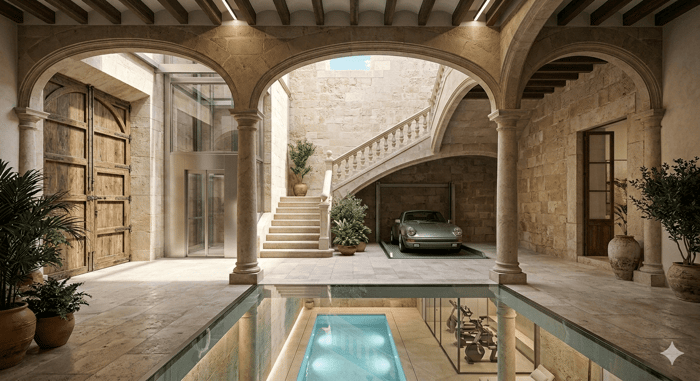
A key part of these 2026 projects is the work being done on the traditional Mallorcan patios. Historically, these areas were the lungs of the house, designed to move air through the building. Today, architects are using the space beneath these courtyards to add features that were previously impossible in the city center. Many current renovations include a spa, a lap pool, or a gym built directly under the patio level. This approach means the original arches and stone floors stay exactly where they have been for three hundred years, while the owner gains a private wellness area. It is a smart way to add value without damaging the building’s heritage or changing the street view.
Inside, the layout of these houses is being cleared of unnecessary partitions. The main floor, or "Planta Noble," is often opened up to create large living and dining areas that make the most of the high ceilings. You will still see the original wooden beams and decorative plasterwork, but they are now paired with practical additions like underfloor heating and central air conditioning that works silently in the background. Other common features in these 2026 renovations include private cinemas and temperature-controlled wine rooms. Many owners are also installing automated car lifts that take vehicles down to secure basement garages, solving the perennial problem of parking in Palma’s narrow streets.
Energy efficiency is a major part of the conversation this year. Modernizing a 17th-century stone palace involves more than just aesthetics; it requires making the building sustainable. Engineers are now installing geothermal systems that use the earth's temperature to heat and cool the house. When combined with better insulation made from natural materials, these large buildings become much cheaper and easier to run. For the local community and international buyers alike, this move toward "green" historic housing is a positive step. It shows that it is possible to maintain the island's architectural history while meeting the strict energy standards of 2026.
The real estate market in Palma has responded clearly to these finished projects. Because there are only a limited number of these palaces in the city, they hold their value well. Buyers are typically looking for a home that is ready to move into, avoiding the long and often complicated permit process that comes with doing the work themselves. Having a fully renovated palace means you get the benefit of the Old Town location—close to the Paseo del Borne and the best restaurants—without the maintenance headaches of an older, unmodernized property. It is a straightforward investment in a part of the city that isn't going to change its character.
Local craftsmanship is playing a vital role in these updates. Specialist stonemasons and carpenters are working alongside modern construction teams to ensure that new additions match the old materials. Whether it is a hand-carved staircase or a specific type of lime mortar, the goal is to make the work look like it has always been there. This careful attention to detail is what makes these homes stand out. They offer a quiet, private lifestyle in the middle of a busy city. As more of these palaces come onto the market in 2026, they continue to set the standard for what high-end urban living looks like in Mallorca.
The process of buying one of these properties involves understanding the local protection laws. Any work in the Casco Antiguo is overseen by the heritage department to make sure the historical value isn't lost. This can make renovations slow, which is why a finished, turnkey palace is so attractive. These homes are designed for people who appreciate the history of Palma but want the same level of comfort they would expect from a new-build villa in Son Vida. In 2026, the "Can" palace market is less about show and more about the quality of the build and the practicality of the space.
Finally, the community benefit of these renovations shouldn't be overlooked. By bringing these buildings back to life, the city keeps its residents in the center, preventing the Old Town from becoming a museum. These are active homes where families live and work. The 2026 renovations ensure that Palma’s architectural icons remain relevant for the next hundred years. They represent a balanced approach to urban development, where the past is respected and the future is provided for with reliable technology and sustainable design.
Property Logistics
Renovations in the Casco Antiguo are monitored by the Palma Heritage Commission. Owners must follow strict rules regarding the use of Santanyí stone and lime-based paints. Current 2026 building codes require any major renovation to include energy-efficient systems and, where possible, parking solutions for electric vehicles. All structural changes require a specific archaeological report before work can begin. For further details on local zoning and building permits, the municipal planning office provides public access to the latest heritage maps and guidelines.
Verified Official Resources:
Headline: Historic Living: Renovated "Can" Palaces Offer Modern Comfort and Sustainable Design in Palma’s Old Town
In 2026, the restoration of Palma’s historic "Can" palaces has set a new standard for urban living. These projects focus on adding modern amenities like subterranean spas, automated parking, and geothermal heating without compromising the original 17th-century architecture. With limited supply and high demand, these fully renovated homes are key assets in the Mallorca real estate market. They provide a practical solution for buyers seeking the character of the Casco Antiguo alongside the efficiency and comfort of a contemporary residence, ensuring the city's heritage remains functional for the future.
Whilst Imperial Properties makes all efforts to ensure the information in the description and listing is correct, it is the buyer's responsibility to clarify any statistical data shown.
Palacios "Can" en Palma 2026: Vida Moderna en el Casco Antiguo
El centro de Palma está experimentando un aumento constante en la restauración de sus palacios históricos "Can". Estas grandes casas familiares, conocidas por sus entradas señoriales y patios interiores, han formado parte del Casco Antiguo durante siglos. En 2026, el interés se ha desplazado de las reparaciones básicas a rediseños internos de alta calidad que permiten que estos edificios antiguos funcionen como hogares modernos. Para los compradores interesados en el mercado urbano, estos palacios ofrecen una combinación poco común de carácter histórico y estándares técnicos actuales. Ya no son solo estructuras de piedra fría; se están convirtiendo en residencias prácticas y cómodas en el corazón de la capital.
Una parte fundamental de estos proyectos en 2026 es el trabajo realizado en los patios tradicionales mallorquines. Históricamente, estas áreas eran los pulmones de la casa, diseñadas para hacer circular el aire por el edificio. Hoy en día, los arquitectos están utilizando el espacio debajo de estos patios para añadir características que antes eran imposibles en el centro de la ciudad. Muchas renovaciones actuales incluyen un spa, una piscina de carril o un gimnasio construido directamente bajo el nivel del patio. Este enfoque significa que los arcos originales y los suelos de piedra permanecen exactamente donde han estado durante trescientos años, mientras que el propietario gana un área de bienestar privada. Es una forma inteligente de añadir valor sin dañar el patrimonio del edificio ni cambiar la vista desde la calle.
En el interior, la distribución de estas casas se está liberando de tabiques innecesarios. La planta principal, o "Planta Noble", a menudo se abre para crear amplias zonas de estar y comedor que aprovechan al máximo los techos altos. Todavía se pueden ver las vigas de madera originales y las molduras decorativas, pero ahora se combinan con adiciones prácticas como calefacción por suelo radiante y aire acondicionado central que funciona silenciosamente de fondo. Otras características comunes en estas renovaciones de 2026 incluyen cines privados y salas de vino con control de temperatura. Muchos propietarios también están instalando ascensores de coches automatizados que llevan los vehículos a garajes seguros en el sótano, resolviendo el problema recurrente del aparcamiento en las estrechas calles de Palma.
La eficiencia energética es un tema principal este año. Modernizar un palacio de piedra del siglo XVII implica algo más que estética; requiere que el edificio sea sostenible. Los ingenieros están instalando sistemas geotérmicos que utilizan la temperatura de la tierra para calentar y enfriar la casa. Cuando se combinan con un mejor aislamiento fabricado con materiales naturales, estos grandes edificios resultan mucho más económicos y fáciles de mantener. Tanto para la comunidad local como para los compradores internacionales, este avance hacia viviendas históricas "verdes" es un paso positivo. Demuestra que es posible mantener la historia arquitectónica de la isla cumpliendo con los estrictos estándares energéticos de 2026.
El mercado inmobiliario de Palma ha respondido claramente a estos proyectos terminados. Debido a que solo hay un número limitado de estos palacios en la ciudad, mantienen bien su valor. Los compradores suelen buscar una casa que esté lista para entrar a vivir, evitando el largo y a menudo complicado proceso de permisos que conlleva hacer el trabajo uno mismo. Tener un palacio completamente renovado significa obtener el beneficio de la ubicación en el Casco Antiguo, cerca del Paseo del Borne y de los mejores restaurantes, sin los problemas de mantenimiento de una propiedad antigua y no modernizada. Es una inversión directa en una parte de la ciudad que no va a cambiar su carácter.
La artesanía local desempeña un papel vital en estas actualizaciones. Canteros y carpinteros especializados trabajan junto a equipos de construcción modernos para asegurar que las nuevas adiciones coincidan con los materiales antiguos. Ya sea una escalera tallada a mano o un tipo específico de mortero de cal, el objetivo es que el trabajo parezca que siempre ha estado allí. Esta atención al detalle es lo que hace que estas casas destaquen. Ofrecen un estilo de vida tranquilo y privado en medio de una ciudad concurrida. A medida que más palacios de este tipo salen al mercado en 2026, siguen estableciendo el estándar de lo que es la vida urbana de alto nivel en Mallorca.
El proceso de compra de una de estas propiedades implica conocer las leyes locales de protección. Cualquier trabajo en el Casco Antiguo es supervisado por el departamento de patrimonio para asegurar que no se pierda el valor histórico. Esto puede hacer que las renovaciones sean lentas, razón por la cual un palacio terminado y listo para usar resulta tan atractivo. Estas casas están diseñadas para personas que aprecian la historia de Palma pero desean el mismo nivel de confort que esperarían de una villa de obra nueva en Son Vida. En 2026, el mercado de los palacios "Can" se centra menos en la apariencia y más en la calidad de la construcción y la practicidad del espacio.
Finalmente, no se debe pasar por alto el beneficio comunitario de estas renovaciones. Al devolver la vida a estos edificios, la ciudad mantiene a sus residentes en el centro, evitando que el Casco Antiguo se convierta en un museo. Son hogares activos donde viven y trabajan familias. Las renovaciones de 2026 aseguran que los iconos arquitectónicos de Palma sigan siendo relevantes durante los próximos cien años. Representan un enfoque equilibrado del desarrollo urbano, donde se respeta el pasado y se garantiza el futuro con tecnología fiable y diseño sostenible.
El Casco Antiguo sigue siendo el lugar más exclusivo para aquellos que valoran la cultura y la proximidad a la vida urbana de lujo. Al invertir en un palacio renovado, no solo se adquiere una propiedad, sino una parte de la historia de Mallorca, adaptada perfectamente para el presente. La calidad de los acabados y la integración de sistemas modernos aseguran que estas casas sean tan eficientes como hermosas, consolidando a Palma como un referente mundial en la rehabilitación de edificios históricos.
Logística de la Propiedad
Las renovaciones en el Casco Antiguo son supervisadas por la Comisión de Patrimonio de Palma. Los propietarios deben seguir reglas estrictas sobre el uso de la piedra de Santanyí y pinturas a base de cal. Los códigos de edificación actuales de 2026 exigen que cualquier renovación importante incluya sistemas de eficiencia energética y soluciones de aparcamiento para vehículos eléctricos. Todos los cambios estructurales requieren un informe arqueológico específico antes de comenzar la obra. Para más detalles, la oficina municipal de urbanismo ofrece acceso público a las guías y mapas de patrimonio actualizados.
Recursos Oficiales Verificados:
Resumen: Vida Histórica: Los Palacios "Can" Renovados Ofrecen Confort Moderno y Diseño Sostenible en el Casco Antiguo de Palma
En 2026, la restauración de los históricos palacios "Can" de Palma ha marcado un nuevo estándar para la vida urbana. Estos proyectos se centran en añadir comodidades modernas como spas subterráneos, aparcamiento automatizado y calefacción geotérmica sin comprometer la arquitectura original del siglo XVII. Con una oferta limitada y una alta demanda, estas casas renovadas son activos clave en el mercado inmobiliario de Mallorca. Proporcionan una solución práctica para compradores que buscan el carácter del Casco Antiguo junto con la eficiencia y el confort de una residencia contemporánea.
Si bien Imperial Properties hace todos los esfuerzos posibles para asegurar que la información en la descripción y el listado sea correcta, es responsabilidad del comprador aclarar cualquier dato estadístico mostrado.
Palmas "Can"-Paläste 2026: Modernes Wohnen in der Altstadt
Das Stadtzentrum von Palma erlebt derzeit einen stetigen Anstieg bei der Restaurierung seiner historischen "Can"-Paläste. Diese großen Familienhäuser, bekannt für ihre prächtigen Eingänge und Innenhöfe, prägen das Casco Antiguo seit Jahrhunderten. Im Jahr 2026 hat sich der Fokus von einfachen Reparaturen hin zu hochwertigen Innendesigns verschoben, die es ermöglichen, diese alten Gebäude als moderne Wohnsitze zu nutzen. Für Käufer am Stadtmarkt bieten diese Paläste eine seltene Kombination aus historischem Charakter und aktuellen technischen Standards. Sie sind nicht mehr nur kalte Steinhüllen; sie werden zu praktischen, komfortablen Residenzen im Herzen der Hauptstadt.
Ein wesentlicher Teil dieser Projekte im Jahr 2026 ist die Arbeit an den traditionellen mallorquinischen Patios. Historisch gesehen waren diese Bereiche die Lungen des Hauses, dazu gedacht, Luft durch das Gebäude zu leiten. Heute nutzen Architekten den Raum unter diesen Höfen, um Ausstattungen hinzuzufügen, die früher im Stadtzentrum unmöglich waren. Viele aktuelle Renovierungen umfassen ein Spa, einen Pool oder einen Fitnessraum, der direkt unter der Ebene des Patios errichtet wurde. Dieser Ansatz bedeutet, dass die ursprünglichen Bögen und Steinböden genau dort bleiben, wo sie seit dreihundert Jahren sind, während der Eigentümer einen privaten Wellnessbereich gewinnt. Es ist ein kluger Weg, den Wert zu steigern, ohne das Erbe des Gebäudes zu beschädigen oder die Straßenansicht zu verändern.
Im Inneren wird die Aufteilung dieser Häuser von unnötigen Trennwänden befreit. Das Hauptgeschoss, oder "Planta Noble", wird oft geöffnet, um große Wohn- und Essbereiche zu schaffen, die die hohen Decken optimal nutzen. Man sieht immer noch die originalen Holzbalken und dekorativen Stuckarbeiten, aber sie werden nun mit praktischen Ergänzungen wie Fußbodenheizung und zentraler Klimaanlage kombiniert, die geräuschlos im Hintergrund arbeitet. Weitere häufige Merkmale dieser Renovierungen im Jahr 2026 sind private Kinos und temperierte Weinräume. Viele Eigentümer installieren zudem automatisierte Autolifte, die Fahrzeuge in sichere Tiefgaragen befördern und so das ewige Parkplatzproblem in den engen Gassen von Palma lösen.
Energieeffizienz ist in diesem Jahr ein zentrales Thema. Die Modernisierung eines Steinpalastes aus dem 17. Jahrhundert umfasst mehr als nur Ästhetik; sie erfordert, dass das Gebäude nachhaltig wird. Ingenieure installieren heute geothermische Systeme, die die Erdwärme zum Heizen und Kühlen des Hauses nutzen. In Kombination mit einer besseren Isolierung aus natürlichen Materialien werden diese großen Gebäude viel kostengünstiger und einfacher im Betrieb. Sowohl für die lokale Gemeinschaft als auch für internationale Käufer ist dieser Schritt hin zu "grünem" historischem Wohnraum ein positiver Fortschritt. Er zeigt, dass es möglich ist, die Architekturgeschichte der Insel zu bewahren und gleichzeitig die strengen Energiestandards von 2026 zu erfüllen.
Der Immobilienmarkt in Palma hat deutlich auf diese fertiggestellten Projekte reagiert. Da es nur eine begrenzte Anzahl dieser Paläste in der Stadt gibt, behalten sie ihren Wert gut bei. Käufer suchen in der Regel nach einem Haus, das bezugsfertig ist, um den langen und oft komplizierten Genehmigungsprozess zu vermeiden, der mit eigenen Umbauarbeiten verbunden ist. Ein vollständig renovierter Palast bietet die Vorteile der Lage in der Altstadt – nahe dem Paseo del Borne und den besten Restaurants – ohne die Wartungsprobleme einer älteren, nicht modernisierten Immobilie. Es ist eine solide Investition in einen Teil der Stadt, der seinen Charakter nicht verändern wird.
Lokale Handwerkskunst spielt bei diesen Updates eine entscheidende Rolle. Spezialisierte Steinmetze und Zimmerleute arbeiten mit modernen Bauteams zusammen, um sicherzustellen, dass neue Ergänzungen zu den alten Materialien passen. Ob es sich um eine handgeschnitzte Treppe oder eine bestimmte Art von Kalkmörtel handelt, das Ziel ist es, dass die Arbeit so aussieht, als wäre sie schon immer da gewesen. Diese Liebe zum Detail macht diese Häuser so besonders. Sie bieten einen ruhigen, privaten Lebensstil mitten in einer belebten Stadt. Da 2026 mehr dieser Paläste auf den Markt kommen, setzen sie weiterhin den Standard für gehobenes urbanes Wohnen auf Mallorca.
Der Kauf einer solchen Immobilie erfordert das Verständnis der lokalen Schutzgesetze. Alle Arbeiten im Casco Antiguo werden von der Denkmalbehörde überwacht, um sicherzustellen, dass der historische Wert nicht verloren geht. Dies kann Renovierungen verlangsamen, weshalb ein fertiger, schlüsselfertiger Palast so attraktiv ist. Diese Häuser sind für Menschen gedacht, die die Geschichte Palmas schätzen, aber das gleiche Komfortniveau erwarten, das sie von einer Neubauvilla in Son Vida kennen würden. Im Jahr 2026 geht es beim Markt der "Can"-Paläste weniger um Prunk als vielmehr um die Qualität der Bauausführung und die Zweckmäßigkeit des Raumes.
Schließlich sollte der gemeinschaftliche Nutzen dieser Renovierungen nicht übersehen werden. Indem diese Gebäude wieder zum Leben erweckt werden, behält die Stadt ihre Bewohner im Zentrum und verhindert, dass die Altstadt zu einem Museum wird. Dies sind aktive Häuser, in denen Familien leben und arbeiten. Die Renovierungen von 2026 stellen sicher, dass Palmas architektonische Ikonen für die nächsten hundert Jahre relevant bleiben. Sie repräsentieren einen ausgewogenen Ansatz für die Stadtentwicklung, bei dem die Vergangenheit respektiert und die Zukunft mit zuverlässiger Technologie und nachhaltigem Design gesichert wird.
Wer heute in einen dieser Paläste investiert, sichert sich einen bleibenden Wert in einer der gefragtesten Lagen Europas. Die Verbindung aus Tradition und modernster Haustechnik macht diese Objekte zu Unikaten, die sowohl als Erst- wie auch als Zweitwohnsitz ideal sind. Palma festigt damit seinen Ruf als Stadt, die ihre Geschichte pflegt und gleichzeitig offen für Innovationen und höchste Lebensqualität bleibt.
Immobilienlogistik
Renovierungen im Casco Antiguo werden von der Denkmalschutzkommission von Palma überwacht. Eigentümer müssen strenge Regeln bezüglich der Verwendung von Santanyí-Stein und kalkbasierten Farben einhalten. Die aktuellen Bauvorschriften von 2026 verlangen, dass jede größere Renovierung energieeffiziente Systeme und, wo möglich, Parklösungen für Elektrofahrzeuge umfasst. Alle strukturellen Änderungen erfordern vor Baubeginn einen spezifischen archäologischen Bericht. Weitere Einzelheiten zu lokalen Bauvorschriften bietet das städtische Planungsamt.
Verifizierte offizielle Ressourcen:
Zusammenfassung: Historisches Wohnen: Renovierte "Can"-Paläste bieten modernen Komfort und nachhaltiges Design in Palmas Altstadt
Im Jahr 2026 hat die Restaurierung von Palmas historischen "Can"-Palästen einen neuen Standard für urbanes Wohnen gesetzt. Diese Projekte konzentrieren sich auf moderne Annehmlichkeiten wie unterirdische Spas, automatisierte Parksysteme und Geothermie, ohne die ursprüngliche Architektur des 17. Jahrhunderts zu beeinträchtigen. Bei begrenztem Angebot und hoher Nachfrage sind diese renovierten Häuser Schlüsselobjekte auf dem mallorquinischen Immobilienmarkt. Sie bieten eine praktische Lösung für Käufer, die den Charakter des Casco Antiguo suchen, ohne auf den Komfort einer zeitgemäßen Residenz zu verzichten.
Obwohl Imperial Properties alle Anstrengungen unternimmt, um sicherzustellen, dass die Informationen in der Beschreibung und im Inserat korrekt sind, liegt es in der Verantwortung des Käufers, alle gezeigten statistischen Daten zu klären.