Table of Contents
Peguera and Costa de la Calma: A Complete Guide to the Quieter Side of Southwest Mallorca
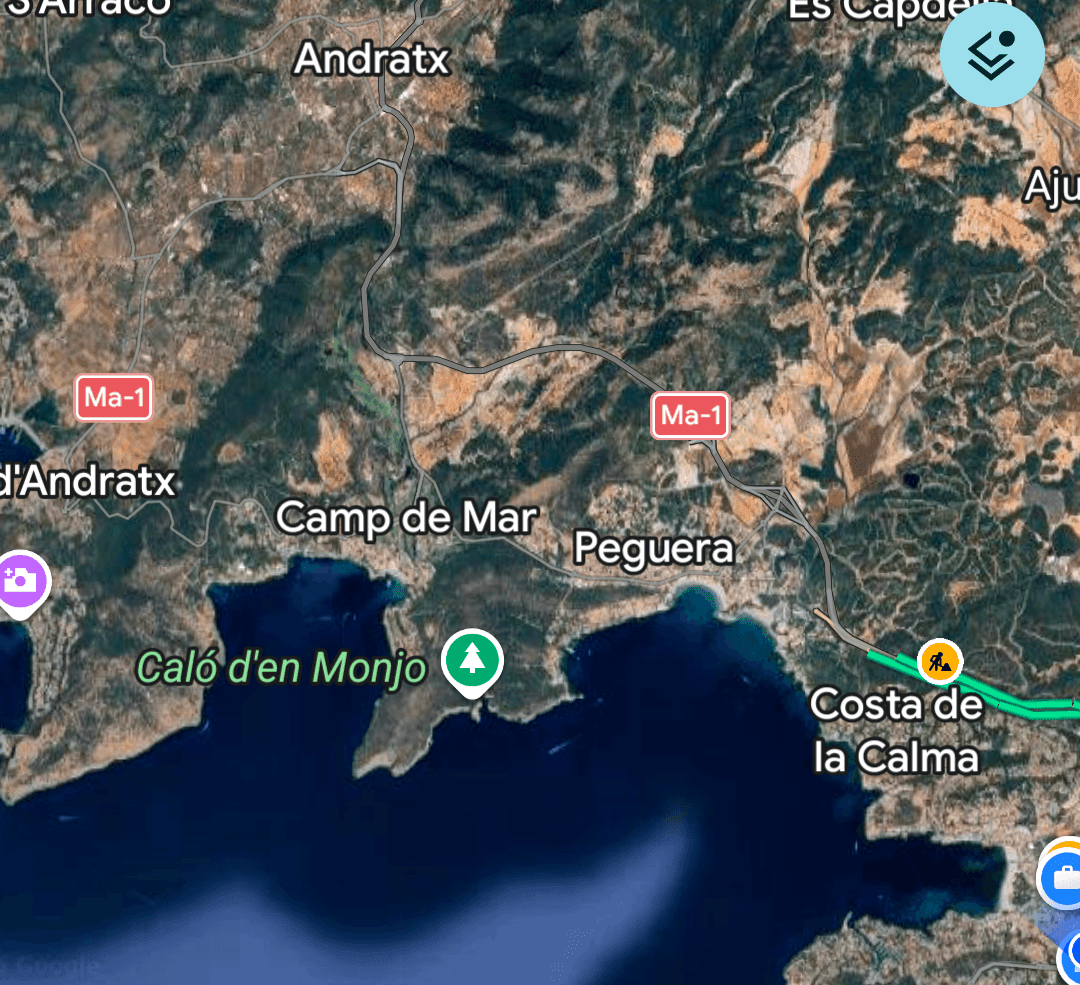
Peguera and Costa de la Calma sit on the southwestern edge of the Calvia municipality, approximately 25 kilometres from Palma, where the coastline turns a corner and the landscape shifts from the open bay of Santa Ponsa to something more intimate — smaller coves, pine-covered hillsides dropping directly to the water, and a resort character that has remained more contained and more genuinely pleasant than the bigger resorts to the east. Peguera has been one of the most popular destinations in southwest Mallorca for German visitors and residents since the late 1950s, earning the affectionate nickname "Little Germany" among the island's international community, and that long-established relationship has given the town a settled, quality-conscious residential character that newer arrivals quickly appreciate. Costa de la Calma, immediately east of Peguera, is quieter still — a residential zone that functions as a calm buffer between the Palmanova/Magaluf area and the more active Peguera resort, popular with buyers who want the convenience of both without the noise of either.
The Beaches
Peguera has three beaches, all connected by a continuous seafront promenade, and all holding Blue Flag status for water quality. The three are Platja Palmira, Platja de Tora and Platja de la Romana, running from east to west along the Peguera bay.
Platja Palmira is the largest of the three at approximately 500 metres long and 40 metres deep. It is partly man-made — the local authority installed a pump system to address algae issues caused by the shallow, warm water — and is the most popular with families for the calm, shallow conditions. Platja de Tora is the central beach, roughly the same length as Palmira and adjoining it directly. In winter months, higher waves occasionally form at Tora, making it suitable for surfing — an unusual attribute for this part of the coast. Platja de la Romana is the westernmost and smallest of the three at approximately 300 metres, but arguably the most picturesque and the easiest to reach by car, with free parking a short walk from the sand. The water at all three beaches is consistently clean and clear, and the quality is among the most reliable on the southwest coast.
Beyond the main three beaches, Cala Fornells is worth mentioning separately. A small, rocky cove a short distance west of the main resort, Cala Fornells has a quiet, unhurried atmosphere and a handful of houses and apartments set into the cliffs above the water. La Gran Tortuga restaurant at Cala Fornells has been serving Mediterranean food with views over the cove since 1974 and is one of the most characterful dining experiences in the southwest.
The Boulevard and Town Centre
Boulevard de Peguera is the main commercial street of the resort, running parallel to the beaches through the centre of town. It is pedestrianised for much of its length — cars have been progressively pushed back from the seafront area — and lined with cafes, shops, restaurants, bars and the usual practical amenities of a well-serviced resort: pharmacies, banks, supermarkets, estate agents and travel operators. The pedestrian quality of the boulevard gives Peguera a pleasantly unhurried character even in peak season, when the restaurants and cafe terraces fill with a mix of German, British and Spanish visitors and the long-term resident population that makes this a year-round address.
Unlike some resorts in the southwest that close substantially in October, Peguera maintains a meaningful level of activity through the winter, supported by its established German resident community and the year-round local population. Several cafes, restaurants and shops operate through the winter months, and the town has enough practical infrastructure — a medical centre, pharmacy, supermarkets and public transport connections — to function properly as a year-round residence rather than purely a seasonal destination.
Eating and Drinking in Peguera
The restaurant offer in Peguera is broad and suits a wide range of occasions. Spanish and Mallorcan cooking, German cuisine, Italian, Indian and British restaurants all have established presences in and around the Boulevard de Peguera. Several of the beachfront restaurants offer the kind of seafront terrace dining that works particularly well at lunch — fresh fish, paella and grilled vegetables on a promenade table with the sea directly in front.
La Gran Tortuga at Cala Fornells is the area's standout for a special occasion: Mediterranean cooking in a setting above the cove that has barely changed since the restaurant opened in 1974, with views across the water that are among the finest of any restaurant in the southwest. It represents exactly the kind of long-established, quality-consistent venue that the Peguera area specialises in. Campino at Camp de Mar, perched above the 18th hole of Golf de Andratx a short drive west, is a stylish Italian option in a more contemporary golf-and-lifestyle setting.
Outdoor Activities and Hiking
Peguera is better positioned for outdoor activities than many southwest Mallorca resorts. The Serra de Tramuntana mountains — a UNESCO World Heritage site — begin within a relatively short distance to the north, and the coastal paths and mountain trails accessible from the Peguera area give the town a dual character: beach resort by day, hiking base by weekend. Several marked routes connect Peguera directly to Costa de la Calma, to the inland village of Es Capdella and to the cliffs above Camp de Mar, with the hillside trails offering views over the bay that justify the effort considerably. Boat trips from Peguera visit the nearby coves along the southwest coast and provide access to areas that are difficult to reach on foot.
Costa de la Calma
Costa de la Calma is the residential zone immediately east of Peguera, where the resort character softens into something more quietly suburban — villas and apartment communities set on elevated terrain above the coast, with views over the bay and easy access by car to both Palmanova to the east and Peguera to the west. The area has been particularly popular with German buyers since the 1970s and has a calm, established residential character that distinguishes it from the busier resort areas on either side. There is a small local commercial centre with a supermarket, cafes and practical shops, but Costa de la Calma functions primarily as a residential address rather than an active resort — people live here and go elsewhere to eat and to the beach, which is part of its appeal. The views from the elevated streets are consistently impressive, looking out over the bay toward the Malgrats Islands and Santa Ponsa beyond.
Practical Information
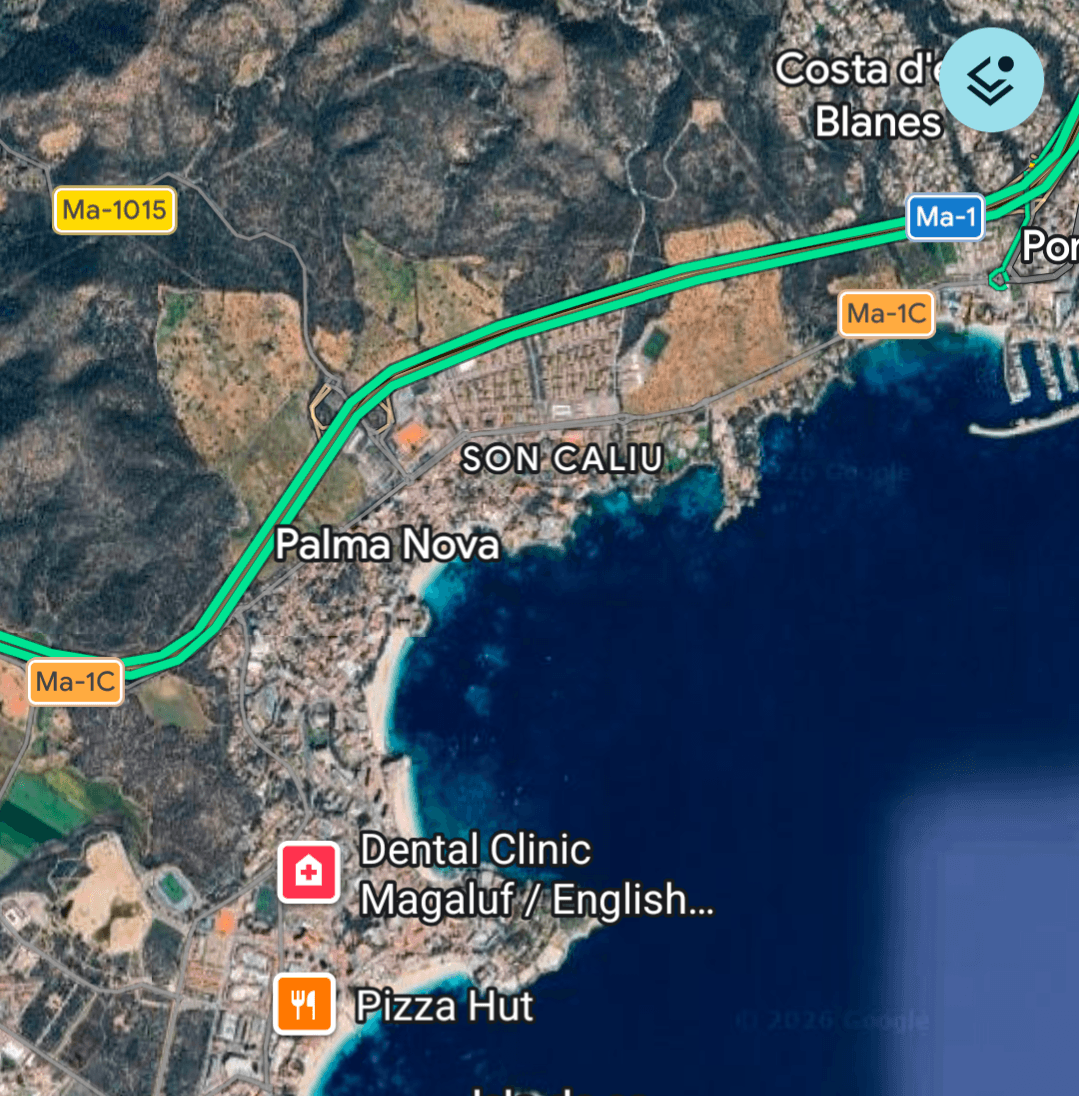
Peguera is approximately 25 kilometres from Palma city centre, around 25 to 30 minutes by car via the Ma-1 motorway. Palma airport is approximately 25 minutes. Regular bus services connect Peguera with Palma and the surrounding towns. Santa Ponsa is approximately 10 minutes east by car, Port Adriano and El Toro are around 15 minutes, and Andratx — with its popular Saturday market and some of the most dramatic scenery in the southwest — is approximately 20 minutes west.
The area has a medical centre, multiple pharmacies, supermarkets including Mercadona, banks and a full range of practical amenities for permanent residents. The annual Festes de Sant Jaume in July and the local fishing and seafood festivals bring the resident and visitor community together each summer in a way that reflects Peguera's genuinely mixed character — a resort that has never fully forgotten that it was also once a fishing village.
See all our properties for sale in Peguera and Costa de la Calma