Table of Contents
Free Public Transport Mallorca 2026: What Residents and Property Owners Need to Know
Free public transport Mallorca has been confirmed for 2026, following the Spanish Congress's formal ratification of the national subsidy scheme for the Balearic Islands and the Canary Islands. For residents of Mallorca — including foreign nationals registered as residents on the island — buses, trains and the metro are free to use throughout 2026 with the relevant travel card. For property owners spending extended periods on the island, and for those considering making Mallorca their permanent or primary residence, understanding exactly what the free public transport Mallorca scheme covers, what it does not, and how to access it is practically useful information.
What the Free Public Transport Mallorca Scheme Covers
The free travel scheme applies to three components of the island's public transport network, all operated under the umbrella of the Balearic Government's mobility programme:
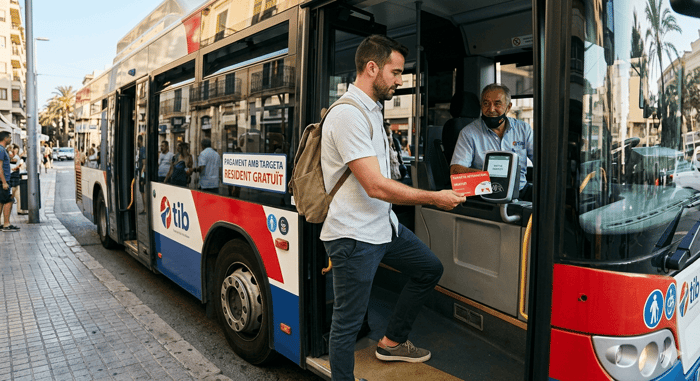
TIB intercity buses (Transports de les Illes Balears) — the network of red and yellow intercity buses connecting Palma with towns and villages across the island. Routes cover most of the island's inhabited areas, with more frequent services during the May to October tourist season. The TIB network provides connections to destinations including Soller (via the road route), Alcudia, Pollenca, Manacor, Santanyi, Andratx and the surrounding municipalities. Journeys that would cost between 3 and 13.50 euros in cash are free with the travel card.
SFM trains (Serveis Ferroviaris de Mallorca) — the island's rail network, operating from Palma's Estació Intermodal at Placa d'Espanya on three main routes: T1 to Inca (via Santa Maria, Consell and Binissalem), T2 to Sa Pobla (continuing from Inca), and T3 to Manacor (via Sineu and Petra). The trains are modern, air-conditioned, punctual and equipped with WiFi. Cash fares on SFM routes range from 1.60 to 4.10 euros single depending on zone; with the travel card, all journeys are free.
EMT Palma buses (Empresa Municipal de Transports) — the city bus network within Palma, identifiable by their blue and white livery. EMT routes connect the city centre with residential neighbourhoods, the university, industrial areas and the immediate surrounding municipalities. Free with the travel card for journeys within the EMT network.
Metro de Palma (M1 and M2) — the city's underground metro system, connecting central Palma with the University of the Balearic Islands (UIB) on Line M1 and with Marratxi on Line M2. The metro is primarily useful for commuting within the Palma urban area.
What Is Not Included
Not all transport on the island falls under the free public transport Mallorca scheme. The following are excluded and continue to operate under their own commercial pricing:
The Soller Train — the famous narrow-gauge wooden train running from Palma to Soller (and the tram connecting Soller town to Port de Soller) is operated independently and is not subsidised under the free travel scheme. As of 2026, a single ticket costs approximately 22-23 euros; a return ticket is approximately 30-40 euros. This is one of the most scenic rail journeys in Spain and well worth the price, but it is a separate commercial operation.
Taxis — taxi journeys across the island remain metered and commercially priced, as they have always been.
Visitor or tourist tickets — the free travel scheme applies exclusively to residents. Visitors and tourists pay standard cash fares on all TIB, SFM and EMT services unless they hold the qualifying card.
How to Get the Travel Card
Access to the free public transport Mallorca scheme requires holding a valid travel card — either the Targeta Intermodal (the established card that has been in use since the scheme began in 2023) or the newer Single Public Transport Card introduced as part of the 2026 rollout.
The Targeta Intermodal is issued free of charge at any of the main bus and train stations on the island — including Palma's Estació Intermodal, Inca and Manacor stations, and the main TIB bus terminals. Eligibility for the resident free travel tier requires proof of registration as a resident in Mallorca — typically demonstrated through a current padron certificate (empadronamiento) from the relevant local authority.
Different card categories exist for different resident groups: the standard resident card, a youth card for those aged 12-30 offering 50% reduction on cash fares (applicable where the free scheme does not apply), and a children's card for under-12s that provides free travel regardless of residency status. Card holders tap on at readers on buses and at station gates; where card readers are not present at smaller stops, brief identification of the card to the driver serves the same purpose.
The Funding Background: Why It Is a Political Issue
The free public transport Mallorca scheme is funded through a combination of national government subsidy, Balearic Government allocation and Palma Town Hall contribution. For 2026, the Spanish Congress confirmed a national allocation of 63 million euros to the Balearic Islands under the Sustainable Mobility Law, with 65% of that figure to be transferred during the year and the remainder in 2027.
The regional government and Palma Town Hall have consistently been critical of both the level of funding and the late timing of transfers. The Mobility Minister, Jose Luis Mateo, stated on confirmation of the scheme that most of the cost of free public transport continues to be borne by local administrations — the national subsidy covers only part of the actual operational cost. This funding tension has led to ongoing public debate about the long-term sustainability of the scheme and whether service frequency and capacity will be expanded to match demand.
For residents and property owners, the practical position for 2026 is clear: the scheme is confirmed, funded and operational. The political debates about its future are relevant to longer-term planning but do not affect the day-to-day reality of free travel throughout this year.
The Practical Network: What You Can Reach
For property owners based in the southwest — the Andratx, Calvia and Portals corridor — the free public transport Mallorca network opens up several practical journey options that are worth knowing about:
| Journey | Route | Approx. Journey Time |
|---|---|---|
| Santa Ponsa to Palma centre | TIB bus to Placa d'Espanya | 35-45 minutes |
| Palma to Inca (market town) | SFM T1 train | 40 minutes |
| Palma to Sineu (Wednesday market) | SFM T3 train | 45 minutes |
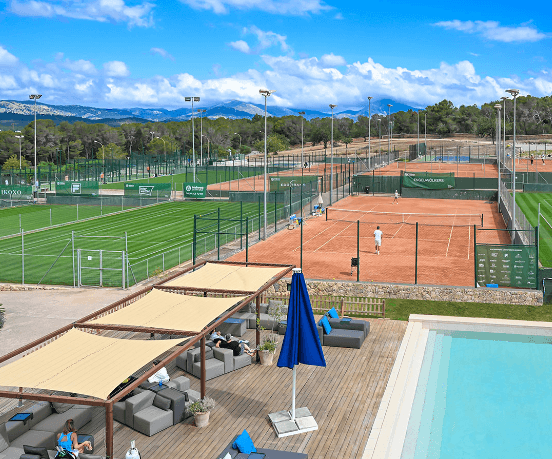
| Palma to Manacor (Rafa Nadal Academy area) | SFM T3 train | 75 minutes |
| Palma to Binissalem (wine village) | SFM T1 train | 30 minutes |
| Palma city centre (cross-town) | EMT bus or Metro M1/M2 | Variable |
The train is particularly useful for reaching the interior market towns — Sineu on a Wednesday morning, Inca on a Thursday — without the parking inconvenience of driving to a busy market day. For those visiting Palma regularly for dinners, events or shopping, taking a TIB bus into the city rather than driving and parking is a genuinely practical and cost-free alternative.
Summer Services and High Season
TIB bus services expand significantly from May through October, with more frequent departures and additional seasonal routes to beaches and popular destinations. Extra-capacity buses operate to destinations including Es Trenc and beaches on the east coast on peak summer days. This expansion makes the free public transport Mallorca network considerably more useful during the summer months than the winter timetable would suggest.
Current timetables, route maps and real-time service information are available through the TIB official website and the TIB app. SFM train information and timetables are at sfm.es. Both operate in Catalan, Spanish and English.
What It Means for Life on the Island
The free public transport Mallorca scheme has been running in its current form since 2023, and its impact on daily island life — particularly for residents who commute from the towns along the SFM rail corridor into Palma — has been significant. For property owners who have registered as residents and who move between their southwest base and Palma regularly, the scheme removes a routine travel cost and provides a practical alternative to car-dependent living on days when driving and parking in the city is more hassle than it is worth.
For those considering Mallorca as a permanent or semi-permanent base, the existence of a fully funded free public transport network is a meaningful quality-of-life factor — one that compares favourably with many other European island destinations where public transport is limited, expensive or both. Whether it will continue beyond 2026 in its current form depends on the national funding negotiations that the Balearic Government has signalled it will pursue. For now, it is in place, it works, and it is one of the more practical features of island life in 2026.