Table of Contents
Mallorca Hidden Villages: The Inland Calvia Towns You Drive Past and Should Stop In
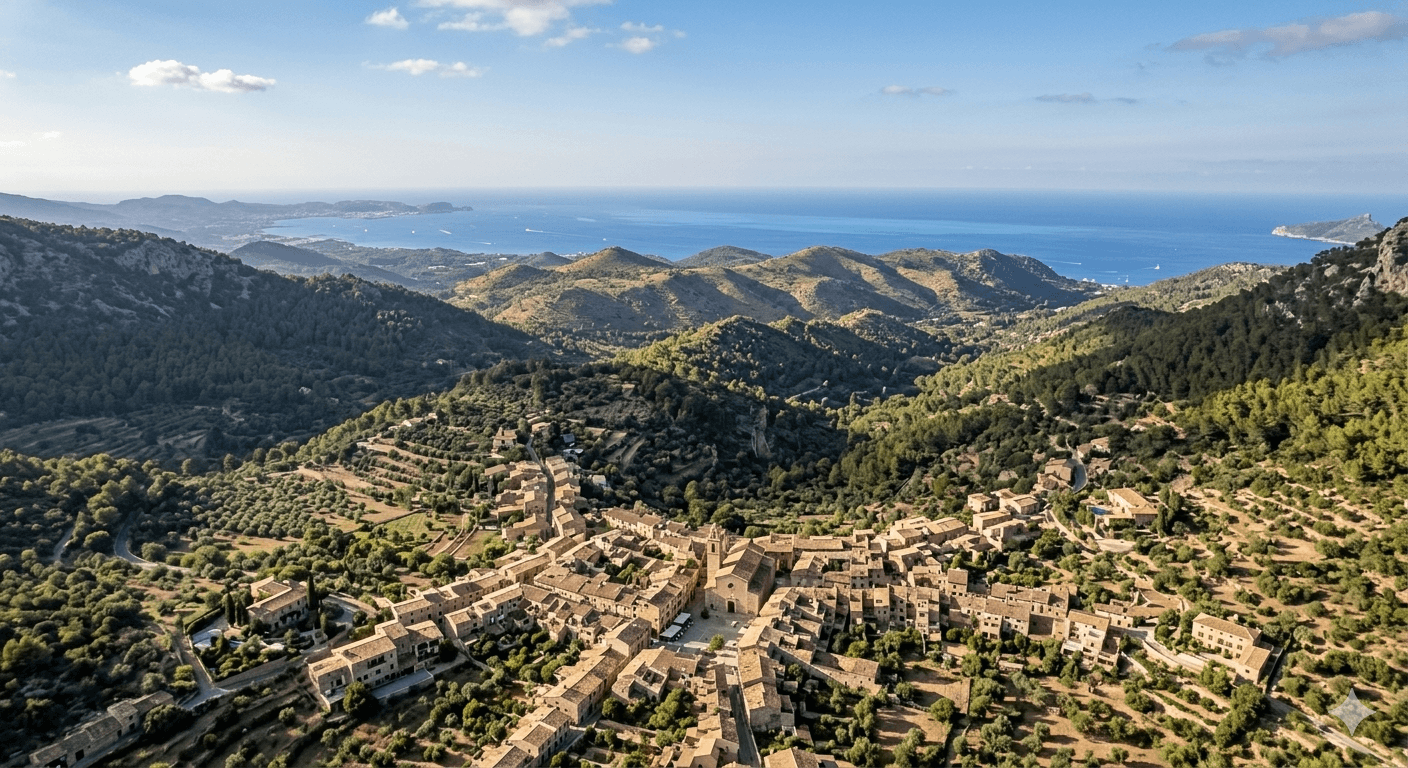
Mallorca's hidden villages in the inland Calvia municipality are among the best-kept secrets in the southwest — and the secret is kept not by distance or difficulty but simply by the gravitational pull of the coast. Calvia town, Es Capdella, Galilea and Puigpunyent are all within fifteen to twenty-five minutes of Santa Ponsa by car, all within the same municipality that governs the coastal communities where most international residents live, and all almost entirely unknown to the people who own or rent property on the beaches below them. The roads that lead inland from the Santa Ponsa roundabout pass through olive groves and pine forest, climbing steadily into a landscape that has nothing to do with the resort infrastructure of the coast, and arrive at villages of golden stone that look essentially as they have looked for centuries — unhurried, self-contained and indifferent to the tourist economy that transformed their municipality's coastline beyond recognition. Understanding these villages is one of the most rewarding ways to understand what Mallorca actually is beneath the summer surface it presents to the world.
Calvia Town — The Capital the Coastal Residents Forget
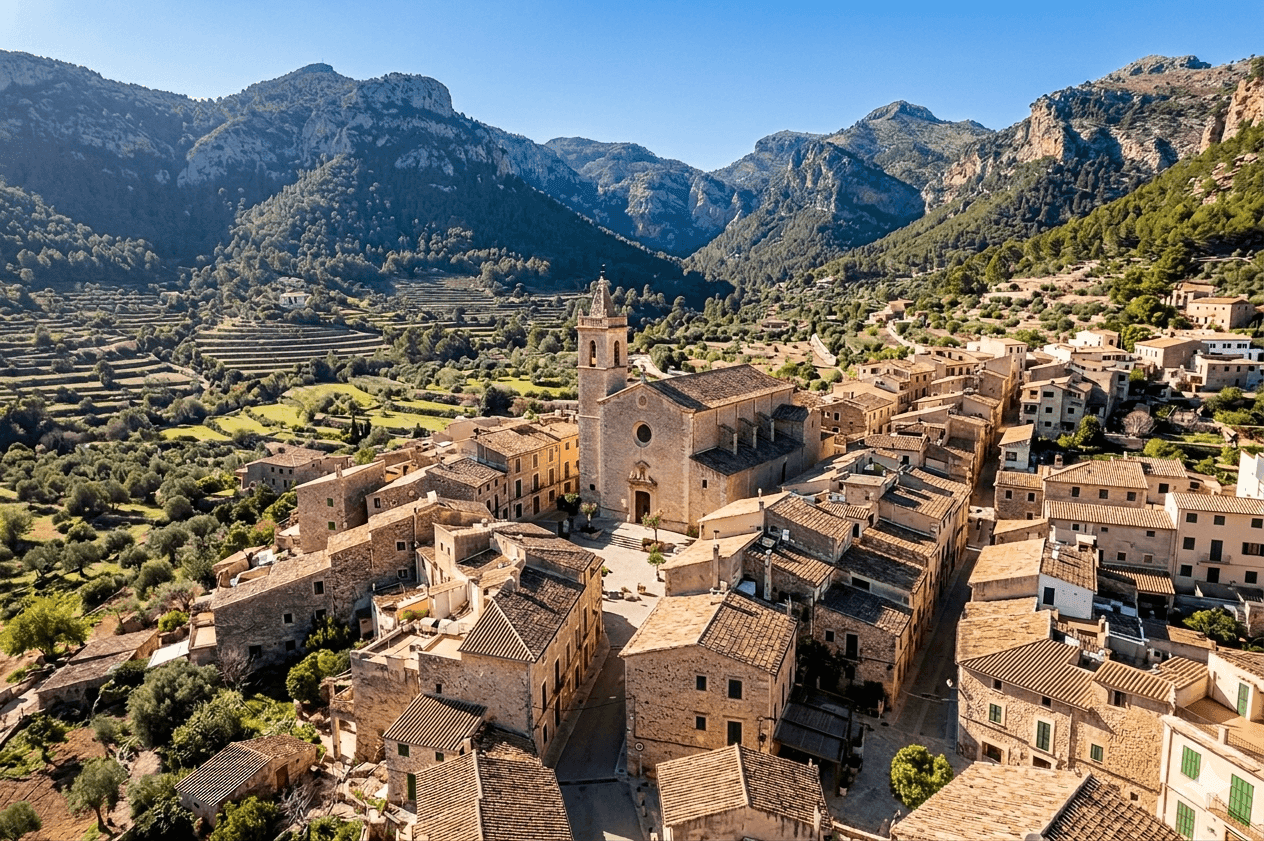
Calvia town is the administrative capital of the Calvia municipality — the local authority that governs Santa Ponsa, Portals Nous, Palmanova, Magaluf and Peguera alongside some of the most valuable residential real estate in Spain. The town hall is here, the planning department is here, the municipal services that maintain the roads and parks and public spaces of the entire southwest coastline are administered from this small hilltop village of approximately 4,000 residents, sitting on a south-facing slope surrounded by pine forest, olive groves and the characteristic red soil of the Mallorcan interior.
The town itself is quiet and traditional in a way that its coastal satellites are emphatically not. The central square, dominated by the handsome Gothic church of Sant Joan Baptista, is the kind of space that rewards sitting in for an hour rather than photographing and moving on — the shade of the surrounding buildings, the sound of the fountain and the slow pace of local life around the cafe tables create an atmosphere that the resort towns below have entirely lost. The Calvia Monday market in the square is one of the better weekly markets in the southwest — less self-conscious than the coastal markets, more genuinely oriented toward local produce and the needs of a permanent resident community. The stalls carry fresh fruit and vegetables from the island's interior, local honey, bread from the village ovens and the kind of craft and artisan produce that reflects genuine local making rather than the mass-produced souvenir trade.
Calvia has several local restaurants and tapas bars that serve the resident community rather than tourists — the cooking is honest Mallorcan rather than international in ambition, the wine is the house wine of a working Mallorcan town and the prices reflect the absence of coastal mark-up. The drive from Santa Ponsa takes fifteen minutes via the Ma-1015 and can be combined with a loop through Es Capdella, making a morning circuit that covers two villages and returns via a different road with entirely different views.
Es Capdella — The Village with the Designer Villas and the Local Soul
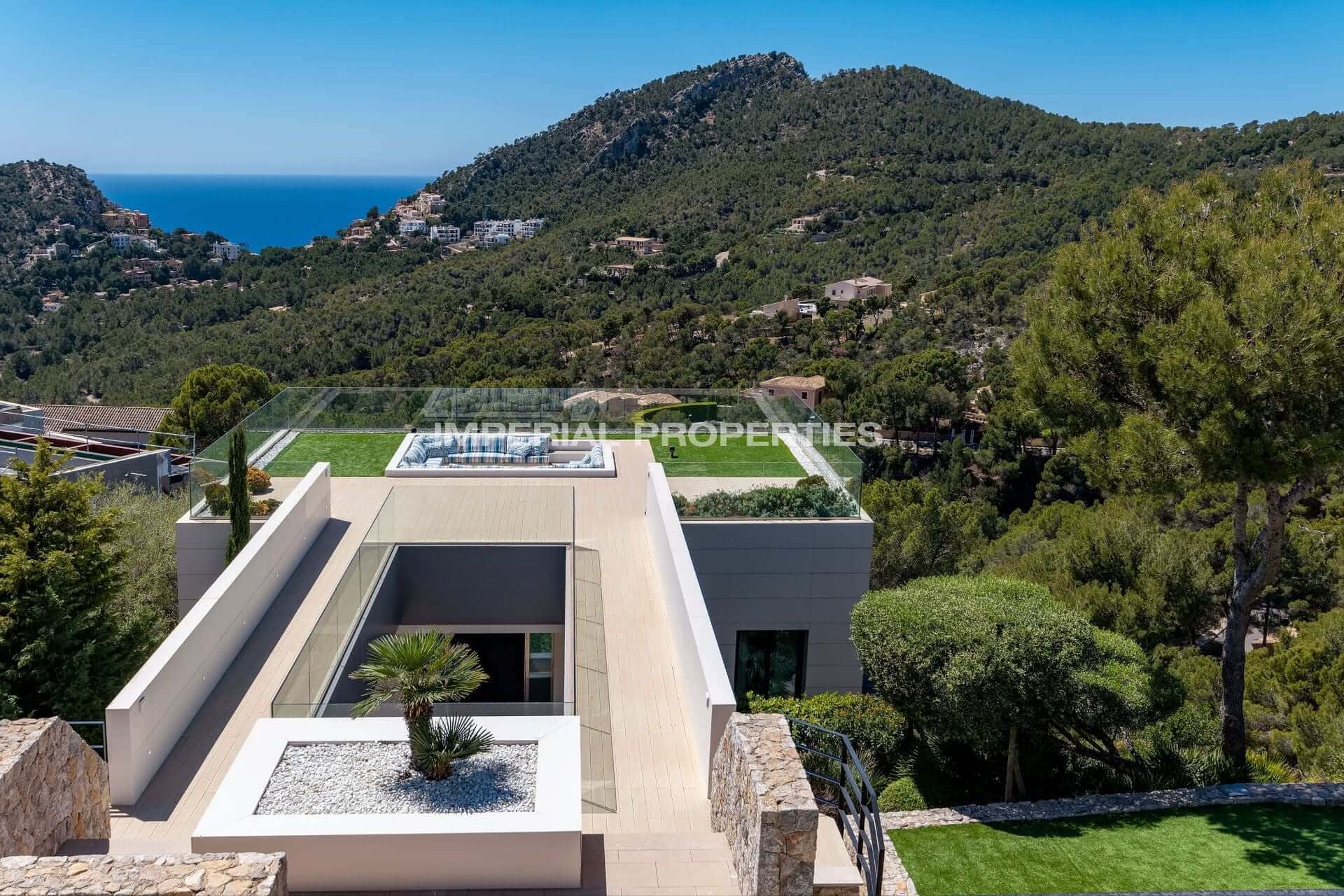
Es Capdella is a small village — approximately 1,000 residents — in the foothills of the Serra de Tramuntana, three kilometres from Calvia town and twenty-two kilometres from Palma. It sits on the lower slopes of the Puig de sa Grua at around 150 metres, with views south across the pine-covered hills toward the coast and north toward the limestone faces of the Tramuntana above. The village has attracted a disproportionate number of high-quality property investments — old fincas that have been transformed into private estates, and newer villas that use the mountain setting and the long coastal views to create something quite distinct from the architectural conversation happening on the beaches below. Several of the finest rural properties in the Calvia municipality are in or around Es Capdella, concealed behind dry-stone walls and mature gardens in a way that makes the village feel more rural than its proximity to the coast might suggest.
The village centre has narrow cobblestone streets, 18th-century stone houses and a small plaza where the church, a cafe and the rhythms of daily life create a social geography that is entirely Mallorcan in character. The church of Sant Joan Baptista, built in the 18th century and restored with care, gives the village its visual anchor. The surrounding walking trails — into the Tramuntana foothills, toward the Puig de Galatzó and across the scrubland south toward the coast — make Es Capdella one of the better bases for serious walkers who want mountain access without the drive to Sóller or Valldemossa.
The Wednesday market in Es Capdella is smaller than the Calvia Monday market but has its devoted regulars — primarily local residents and the international buyers who have properties in the area and treat the market as part of their weekly rhythm. The Santa Catarina wine bodega in the village produces local wines that reflect the particular combination of altitude, soil and climate that the Es Capdella terroir generates — worth seeking out for anyone who wants to understand what the Calvia municipality produces when it turns its attention away from the coast.
Galilea — The Viewpoint That Stops Everyone
Galilea is, in the strict geographical sense, not part of the Calvia municipality — it belongs to the neighbouring municipality of Puigpunyent — but it is so closely integrated into the inland circuit of villages that southwest Mallorca residents discover that it functions as part of the same inland world. It is twelve kilometres from Calvia town and approximately twenty-five minutes from Santa Ponsa via the mountain road through Es Capdella, and it is one of those places that has a single defining feature so overwhelming that it justifies the journey regardless of everything else: the view from the church square.
Galilea sits at approximately 400 metres on a south-facing slope of the Tramuntana foothills, and from the small square beside the church the land falls away in a great pine-covered sweep toward the coast — Santa Ponsa, Peguera, Andratx and the open sea visible on a clear day in a panorama that encompasses the entire southwest of Mallorca from a single vantage point. Most visitors who arrive at the Galilea church square stand in silence for a moment before anything else happens. The view earns that silence.
The village itself is small — around 300 permanent residents — with narrow stone streets, a handful of houses built into the hillside and a cluster of cafes in and around the church square that exist primarily to serve the people who come for the view. The coffee in the cafe closest to the church is unremarkable but the terrace table that looks south across the whole sweep of the coast is the best table in the southwest of Mallorca for the price of a coffee. The walk from the square into the village's residential streets reveals the kind of stone architecture — old fincas, converted stables, dry-stone garden walls — that Es Capdella also offers but at a higher altitude and with a more intimate scale. The surrounding terrain is excellent hiking country — the Puig de Galatzó, at 1,026 metres the highest peak in the Calvia side of the Tramuntana, is accessible from trails that begin near the village.
Puigpunyent — The Valley Village at the Foot of the Mountains
Puigpunyent sits in a broad valley between the lower Tramuntana foothills, approximately ten minutes north of Galilea and thirty minutes from Santa Ponsa by the mountain road. It is a slightly larger village — around 1,500 residents — with a more substantial town centre, a good local restaurant scene and the particular character of a place that has been discovered by the international residential community without being overwhelmed by it. Several significant rural properties and converted fincas occupy the surrounding valley, and the village has attracted a community of international residents who want mountain proximity, genuine rural character and easy access to both Palma and the southwest coast without the noise or density of any of these.
The Finca Galatzó estate, which occupies a large area of the valley north of Puigpunyent, anchors the traditional rural character of the area — a historic agricultural estate that has been at the centre of Puigpunyent's agricultural economy for centuries and continues to represent the kind of Mallorcan land use that the coastal economy has almost entirely displaced on the southwest coastline below. The estate and its surrounding landscape give walkers and cyclists access to terrain that is entirely different from the coastal routes, with the silence and scale of the mountain foothills replacing the noise and traffic of the resort zones.
How to Explore — A Morning Circuit from Santa Ponsa
The most efficient way to discover all four villages in a single outing is a morning circuit that takes approximately two and a half to three hours including stops, returning to Santa Ponsa in time for lunch. Leave Santa Ponsa via the Ma-1015 toward Calvia town — fifteen minutes. Park in the main square, walk the town for thirty minutes, have a coffee. Continue on the Ma-1016 toward Es Capdella — ten minutes. Walk the village streets. Continue on the mountain road toward Galilea — fifteen minutes of switchback climbing through pine forest. Stop at the church square for the view — allow thirty minutes minimum. Continue to Puigpunyent — ten minutes. Return to Santa Ponsa via the Palma road (through the Palma ring road or the Ma-1 motorway), which is the most direct route and takes approximately thirty-five minutes. Total circuit distance: approximately 65 kilometres. Total fuel: almost irrelevant. Total cultural distance from the coast: considerable.
Browse properties in Santa Ponsa and Nova Santa Ponsa
See all our properties for sale in Mallorca