Table of Contents
NIE, NIF, TIE, DNI: Every Document a Non-Resident Property Owner in Mallorca Actually Needs
The paperwork landscape in Spain is one of the first things that genuinely surprises people buying property in Mallorca. The terminology — NIE, NIF, TIE, DNI — gets used interchangeably in conversations, sometimes by people who should know better, and the confusion can delay transactions, cause problems at the notary, and leave buyers unsure whether they have what they actually need.
This is a plain explanation of what each document is, when you need it, and what the difference between them means in practice for a non-resident buying or owning property in Mallorca.
The NIE: The One You Definitely Need
NIE stands for Número de Identidad de Extranjero — Foreigner Identification Number. It is a unique number assigned to foreign nationals by the Spanish authorities, specifically the Dirección General de la Policía. It is not a residence permit. It is not a visa. It does not give you the right to live or work in Spain. It is an identification and tax number.
You need an NIE to buy property in Spain. In practice, the purchase cannot complete at the notary without it. You also need it to open a Spanish bank account, pay taxes, sign contracts, and handle almost any formal administrative or financial transaction in Spain. If you are buying property in Mallorca as a non-resident, getting your NIE is the first administrative step — and it should be done early, before the purchase timeline gets tight.
Your NIE number never expires and never changes. It is assigned for life. The physical certificate document, however, does have a limited validity period for presentation purposes. This is a common source of confusion: the number is permanent, but you may need a fresh certificate if yours is out of date when presenting it for a specific transaction.
Thinking about buying or selling in Mallorca?
How to Get an NIE
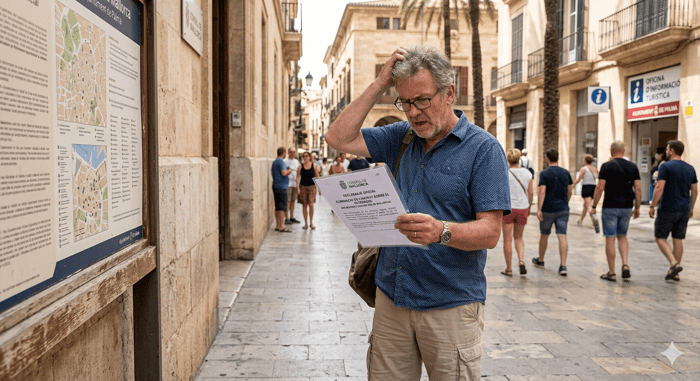
There are two routes. You can apply in person at a Spanish police station (Comisaría Nacional de Policía) or foreigners' office (Oficina de Extranjería) in Spain, which requires booking a cita previa — an appointment — in advance. Appointments can be difficult to obtain in busy periods, so plan ahead. For a non-resident application, you need your passport, the application form (EX-15), a stated reason for needing the NIE (property purchase is a standard accepted reason), and proof of address. A non-resident NIE can often be issued the same day as the appointment.
Alternatively, you can apply through the Spanish Consulate or Embassy in your home country before travelling to Spain. This is particularly useful for buyers who want to have everything in order before arriving for a property signing. You can also appoint a legal representative in Spain to apply on your behalf — many Spanish lawyers offer this service as part of a conveyancing package.
What Is the NIF — and Is It Different from the NIE?
The NIF (Número de Identificación Fiscal) is the tax identification number used in Spain for all formal tax and financial procedures — filing tax returns, property transactions at the notary, signing commercial contracts, banking. For Spanish citizens, the NIF is the same number as their DNI (national ID card), with a letter suffix. For foreigners, the NIF is the same number as their NIE. They are numerically the same: your NIE is your NIF.
In practice, the distinction matters mainly in official documents and forms. When a property deed or tax form asks for your NIF, you use your NIE number. When a police or administrative form asks for your NIE, same number. They are not two different documents — they are two names for the same identification number used in different contexts.
There is one exception worth knowing: in some circumstances, a notary can request a NIF directly from the Agencia Tributaria for a one-off transaction such as a property purchase. This results in a number prefixed with the letter M, which functions purely as a tax ID for that deed and its associated filings. It does not replace a full NIE for any other purpose — banking, utilities, future transactions all still require the proper NIE.
What Is the TIE — and Do Non-Residents Need It?
The TIE (Tarjeta de Identidad de Extranjero) is a physical identity card issued to non-EU nationals who have valid residence status in Spain. It carries your NIE number on it, but it is a different document from the NIE certificate — it is a residence card, not just an identification number.
As a non-resident property owner who does not live in Spain, you almost certainly do not need a TIE. TIEs are issued to people who have obtained a Spanish residence permit — a non-lucrative visa, a digital nomad visa, a golden visa, or similar. If your intention is simply to own property in Mallorca and visit periodically, a TIE is not relevant to you. Your NIE certificate is what you need.
If at some point you apply for residency in Spain — perhaps through the golden visa route after a qualifying property purchase, or through a long-stay visa — the TIE becomes the document you will receive as proof of residence status. It will carry your existing NIE number.
What Is the DNI?
The DNI (Documento Nacional de Identidad) is Spain's national identity card, issued only to Spanish citizens. It is not a document that foreigners receive or need. If you are not a Spanish national, the DNI is simply not relevant to you — it is mentioned here only because buyers occasionally encounter the term and wonder whether they need one. They do not.
Summary for a Mallorca Non-Resident Property Buyer
You need an NIE. You should apply for it as early in the process as possible, either through a Spanish consulate in your home country, through a Spanish lawyer appointed as your representative, or in person at a police station in Spain with a booked appointment. Your NIE number functions as your NIF for all tax and property purposes. You do not need a TIE unless you are becoming a Spanish resident. The DNI is not relevant to you as a foreign national.
Imperial Properties works with buyers through every stage of the purchase process. If you have questions about documentation or need a referral to a trusted local lawyer, contact us at help@imperial-properties.com or call +34 971 692 434. To browse available properties in Mallorca, visit imperial-properties.com.