Table of Contents
The 1229 Reconquest of Mallorca: How History Landed on Santa Ponsa Beach
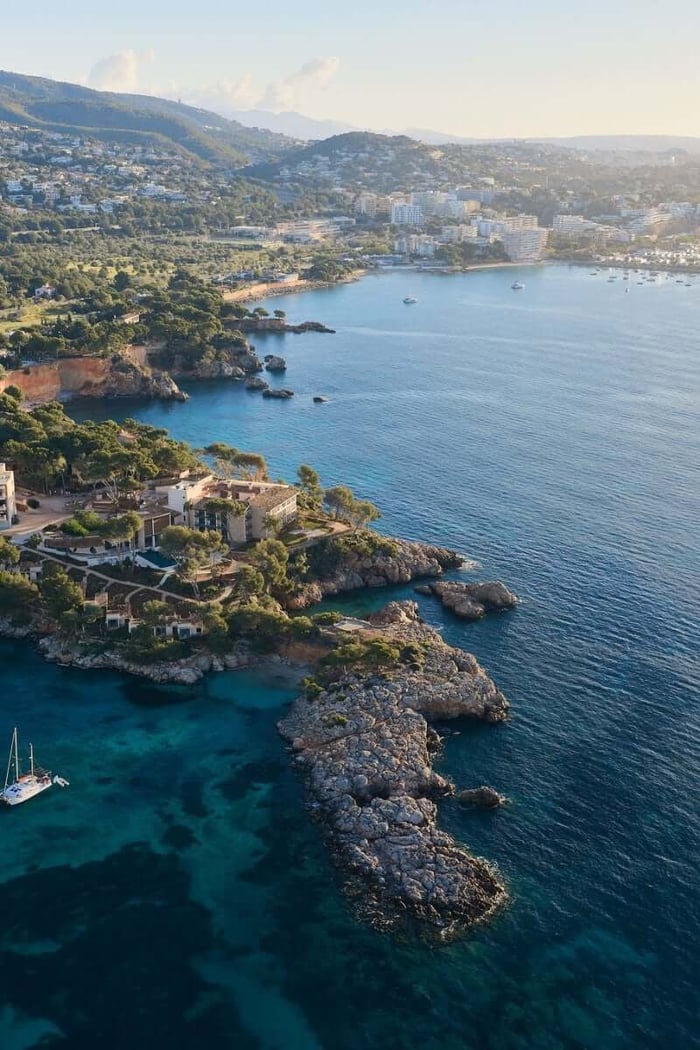
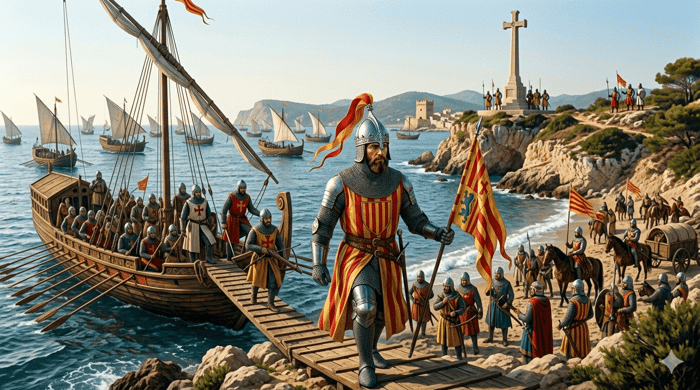
On 10 September 1229, a fleet of around 150 ships carrying the army of King James I of Aragon anchored in the bay of Santa Ponsa. The following morning, troops waded ashore onto what is now one of the southwest's most popular beaches. Within months, the eight-century Arab presence on the island would be ended, and Mallorca would be incorporated into the Crown of Aragon.
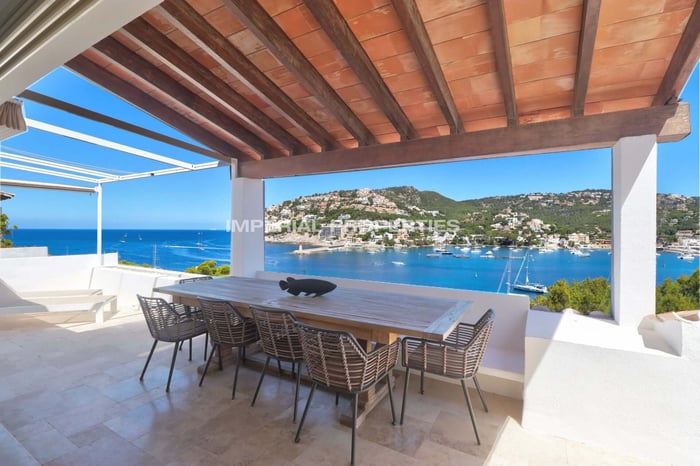
It is one of the most consequential moments in Balearic history, and it happened right here — on the beach that today fills with sun loungers each summer, in the bay that residents look out on from their terraces every morning.
Thinking about buying or selling in Mallorca?
The Background
By the early 13th century, Mallorca had been under Muslim rule for over three centuries, since the island was taken by the Moorish forces of Córdoba in 902 AD. The island sat strategically at the crossroads of western Mediterranean trade routes, and its harbour facilities and agricultural wealth made it a significant prize.
James I — known in Catalan as Jaume I and in Spanish as Jaime I, and later given the title El Conqueridor (the Conqueror) — was 21 years old when he launched the campaign. He had assembled a coalition of Aragonese and Catalan nobles, funded partly by the merchants of Barcelona who stood to gain from control of Mediterranean sea routes. The fleet that gathered at Salou and Cambrils on the Catalan coast in September 1229 was the largest assembled in the western Mediterranean in the medieval period.
The Landing at Santa Ponsa
The original plan called for landing at Pollença in the north of the island, but adverse winds drove the fleet south. The bay of Santa Ponsa — known then as Portopí de Santa Ponsa — offered a sheltered anchorage and a beach wide enough to land troops in numbers.
The landing on 10 September 1229 was contested. Muslim forces under the Wali of Mallorca, Abu Yahya, engaged the Aragonese troops on the beach and in the dunes behind it. The fighting was fierce enough that James I himself is recorded as fighting in the front line. The Aragonese eventually secured the beachhead and pushed inland.
Within days, the army had advanced toward Palma — known then as Madina Mayurqa. On 31 December 1229, after a siege of several months, the city fell. The Wali Abu Yahya was killed in the final assault. The conquest of the island's interior continued through 1230 and into 1231, with the last organised Muslim resistance ending at the mountain fortress of Alaró.
What Remains Today
A stone commemorative cross stands above Santa Ponsa bay, visible from the beach and from the water. Erected in 1929 on the 700th anniversary of the landing, it marks the approximate site of the Aragonese beachhead and is maintained by the Calvià council. The cross is inscribed with the date of the landing and a brief dedication to James I.
Each year on 12 September — two days after the anniversary of the landing — Calvià holds a commemorative event at the site. The annual ceremony is modest but genuine: local officials, historical re-enactors in period dress, and a formal acknowledgement of the event that set the course of Mallorcan history.
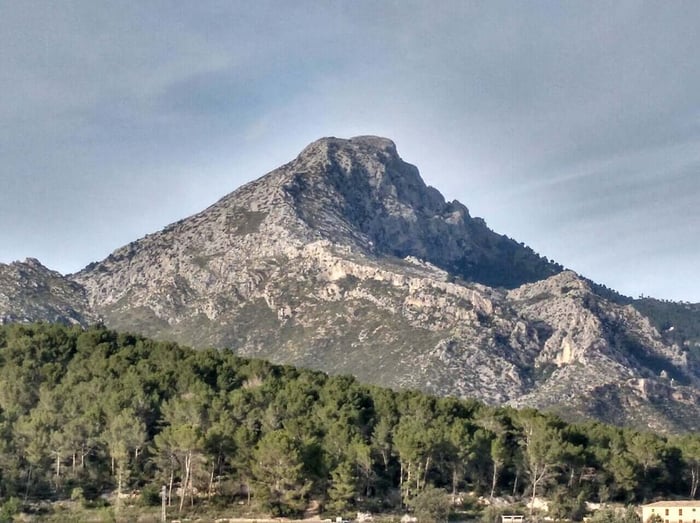
The Puig de Sa Morisca, the Bronze Age and Talayotic hill above Santa Ponsa, was also occupied during the Moorish period and may have served as a lookout point in the days before the landing. Its position overlooking the bay makes it likely that the approaching fleet was spotted from its summit.
James I and His Legacy
James I went on to become one of the most significant monarchs in medieval Iberian history. Beyond Mallorca, he conquered Valencia and Ibiza, expanded Aragonese territory into southern France, and left a legal and administrative legacy that shaped the institutions of Catalonia, Valencia and the Balearic Islands for centuries.
In Mallorca, his conquest established the framework for the island's linguistic, architectural and cultural character. The Catalan language spoken on the island — Mallorquí — descends directly from the language brought by his settlers. The Gothic architecture of Palma's old town, including the Cathedral begun under his son James II, reflects the building traditions of the Crown of Aragon. The island's network of defensive towers and watchtowers along the coast dates from the centuries following the conquest, built to protect the newly Christian population from corsair raids.
Visiting the Site
The commemorative cross is accessible on foot from Santa Ponsa town centre, a short climb above the western end of the bay. The views from the cross over the bay and the surrounding coastline are worth the walk regardless of the historical interest — it is one of the better vantage points in the southwest.
The Calvià municipal museum in the historic village of Calvià holds documentation and exhibits related to the island's history including the conquest period, and is open to visitors during normal municipal hours.
For those who live in Santa Ponsa or the surrounding southwest — and for buyers considering making it home — the story of the 1229 landing is a reminder that this particular stretch of coastline has been considered worth having for the better part of a thousand years.
Imperial Properties has been selling in Santa Ponsa and the southwest since 1985. Browse current listings at imperial-properties.com or get in touch directly.