Table of Contents
S'Arraco and Sant Elm: The Quiet End of the Southwest That Most People Never Reach
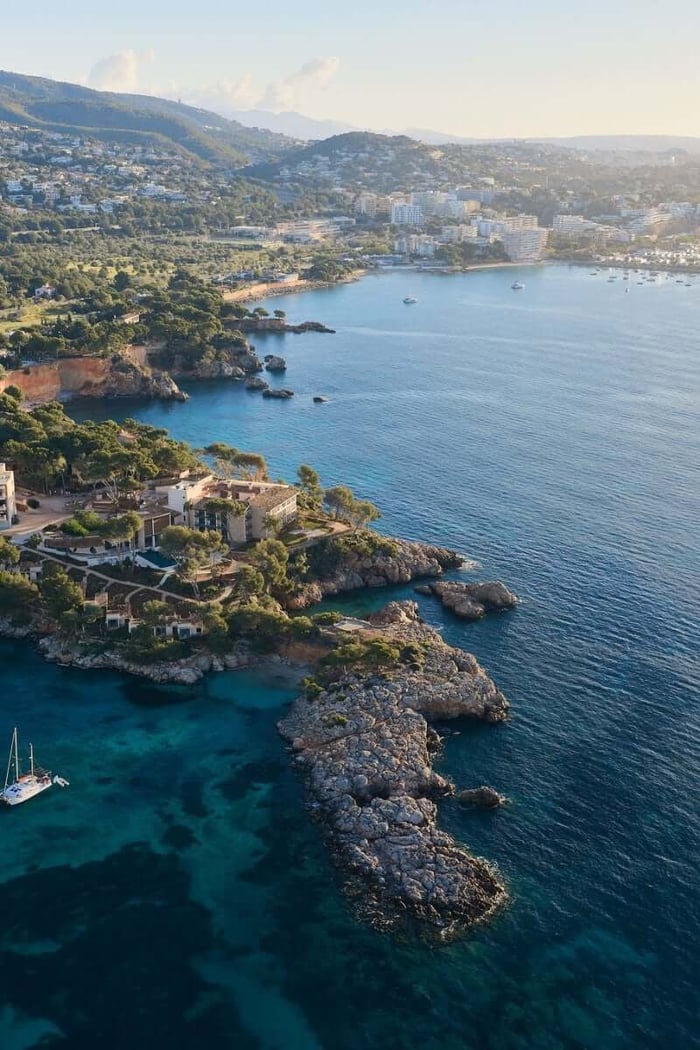
Drive west from Andratx, past the last roundabout, and the road narrows into a winding descent through pine and scrub toward the far tip of the island. Most people turn back before this point. The ones who carry on arrive at S'Arraco and then Sant Elm, two places that together represent something increasingly hard to find on Mallorca: the coast as it has always been, without the infrastructure built around it.
S'Arraco sits about five kilometres inland from the sea. Sant Elm is the coastal village at the end of the road. They belong to the municipality of Andratx, and they are part of the southwest's fabric without quite being what most visitors mean when they say southwest Mallorca. Andratx Town and Port d'Andratx have their own character. S'Arraco and Sant Elm are something quieter again.
S'Arraco: The Village That Built Itself Abroad
S'Arraco is a small village of traditional Mallorcan houses and, unusually, a number of ornate modernist buildings that look slightly out of place in the mountain setting. The explanation is a local history that repeated itself across many Mallorcan villages in the late nineteenth and early twentieth centuries: emigration, success overseas, and money sent back home. In the case of S'Arraco, many families moved to France. The income they remitted built the mansions along Carrer Franca — France Street — that give the village its distinctive character. The main street is worth walking slowly.
The village has a small Saturday market, cafes, and a quiet daily rhythm that has not changed much with tourism. It feels like a place people live in rather than visit, which is its appeal.
Thinking about buying or selling in Mallorca?
Sant Elm: The Sea and Sa Dragonera
Sant Elm is small enough to walk across in fifteen minutes. Two compact sandy beaches — Platja de Sant Elm and the smaller Platja Sa Petita — flank a short seafront promenade. A few restaurants serve good local food: paella, grilled fish, the kind of lunch that takes two hours and feels like exactly the right use of the day. Kitchens tend to open around 19:30 or 20:00 in the evening; booking ahead on summer weekends is advisable.
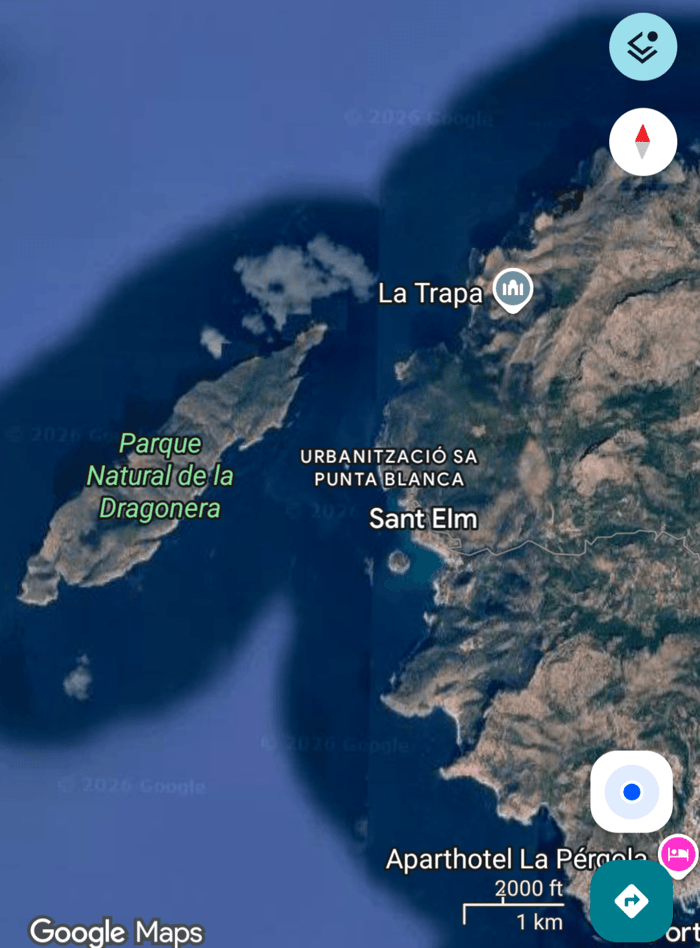
What makes Sant Elm distinctive from every other small Mallorcan beach resort is the view. Sitting directly offshore, close enough to swim to if conditions allow and your stamina is considerable, is Sa Dragonera — a long, uninhabited island shaped like a sleeping dragon, with Tramuntana peaks as its backdrop. Sa Dragonera is a protected natural park. Boat shuttles cross from Sant Elm in about fifteen minutes and run during the summer months, taking visitors to walk its lighthouse paths and see the lizards, shearwaters and coastal flora that have returned since the island was protected from development in the 1980s.
The view of Sa Dragonera from the Sant Elm waterfront — changing colour through the day, dramatic at dusk — is one of those sights that becomes a reference point. People who have seen it once plan to return.
Walking from Sant Elm
For walkers, Sant Elm is a serious base. The most rewarding route from the village leads to Sa Trapa, the ruins of a Trappist monastery founded in 1810 on a high coastal terrace above the sea. The monks left after a few years, but the dry-stone terracing, the old chapel walls and the mill they built remain. The round trip takes about three hours and passes through coastal scrubland and pine forest, emerging at viewpoints where Sa Dragonera fills the horizon.
The coastal path to Cala en Basset is shorter and gives direct views of the channel between the coast and the island. The GR221 — the long-distance Dry Stone Route that runs the length of the Serra de Tramuntana from Port d'Andratx to Port de Pollença — starts near here, making Sant Elm the literal starting point of one of Spain's most celebrated walking trails.
Getting There and Practical Notes
Sant Elm is approximately 50 to 55 kilometres west of Palma and takes about 50 minutes to drive via the Ma-1 to Andratx and then the local road through S'Arraco. The road from Andratx to Sant Elm is narrow and winding; it is not especially difficult, but it is slow. A hire car is the practical choice. Bus line 100 connects Palma to Sant Elm via Andratx and S'Arraco, stopping close to the main beach.
Parking near the beach carries a charge at the private car park beside the sand — around five euros for the day. Street parking in the village is possible but limited in summer. Arriving before mid-morning in July and August avoids the worst of it.
Sant Elm is essentially a summer destination. In winter, the village quietens significantly. The restaurants and cafes close or reduce their hours, and the ferry to Sa Dragonera does not operate. For anyone visiting between June and September, the village is at its best: the water is calm, the promenade has life in the evenings, and the light on Sa Dragonera at sunset is worth planning a day around.
What This Corner of the Southwest Means for Property
Property in S'Arraco and Sant Elm tends to appear as traditional houses and small apartments rather than new development, which reflects the character of both places. The area attracts buyers who want something genuinely quiet — no main road noise, no resort scale, the western tip of the island with the feeling that the world has not quite caught up yet.
For anyone based in Santa Ponsa or Andratx town, S'Arraco and Sant Elm are under 20 minutes away and feel like a different Mallorca. That distance, and what it contains, is part of what the southwest offers that no other part of the island quite replicates. To explore property available in S'Arraco and Sant Elm, visit imperial-properties.com.