The Great Spanish Eclipse of 2026: An Unforgettable Sunset Spectacle in Mallorca
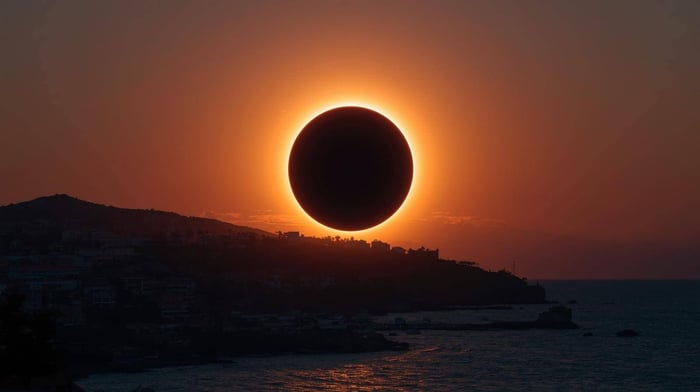
Get ready for August next year, being in Mallorca will provide an incredible spectacle and is already creating huge levels of interest with many thousands of visitors already planning trips to take advantage of the direct path of the eclipse being on top of the island.
On the evening of Wednesday, August 12, 2026, Mallorca will become a prime location for one of the most anticipated astronomical events of the century: a total solar eclipse. This will be the first total solar eclipse visible from mainland Spain in over a century, and the Balearic Islands, in particular, will offer a unique and dramatic viewing experience as totality occurs just as the sun is setting. This event is not only a celestial spectacle but a major cultural and tourism opportunity for the island, attracting a diverse crowd of astronomers, photographers, and curious onlookers from around the globe.
The Celestial Mechanics of the Eclipse
A total solar eclipse occurs when the Moon passes between the Sun and Earth, completely blocking the face of the Sun. From the perspective of viewers in the path of totality, the sky darkens as if it were dawn or dusk, and the Sun's faint, outer atmosphere—the corona—becomes visible. On August 12, 2026, the path of totality will begin in the Arctic and cross over Greenland and Iceland before reaching Spain in the late afternoon. As the eclipse shadow sweeps across the Iberian Peninsula, it will pass over several cities, including Valencia, Zaragoza, and Bilbao.
What makes the Mallorca eclipse particularly special is its timing. Totality will happen with the Sun just a few degrees above the western horizon. This low altitude creates a dramatic effect, as the eclipsed Sun appears distorted into an oval shape by atmospheric refraction. While this low angle necessitates a clear and unobstructed view of the western horizon, it also offers a unique and visually stunning backdrop for the event, combining the celestial wonder with the breathtaking beauty of a Mediterranean sunset. In Palma de Mallorca, the partial eclipse will begin at 7:38 PM CEST, with totality starting at 8:31 PM CEST and lasting for approximately one minute and 36 seconds before the Sun sets.
Prime Viewing Locations: Finding Your Spot in the Shadow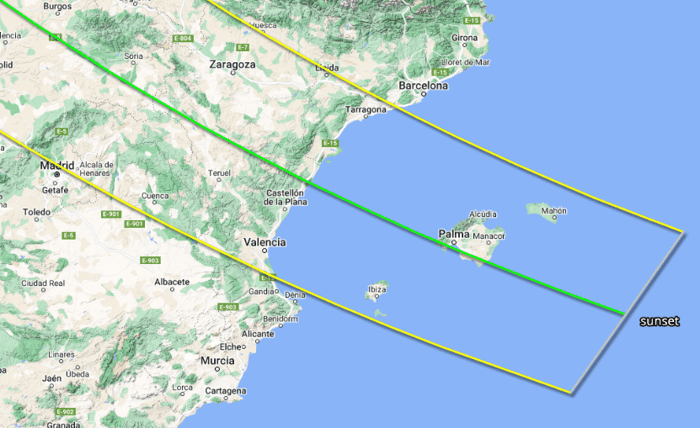
Given that the eclipse occurs near sunset, choosing a viewing location with an unobstructed, panoramic view to the west is crucial. Mallorca’s diverse landscape offers a variety of exceptional vantage points.
The Serra de Tramuntana: The mountainous region of the Serra de Tramuntana, a UNESCO World Heritage Site, provides elevated viewpoints that are perfect for watching the eclipse. Locations such as Port de Sóller and Sant Elm offer direct, sweeping views of the western horizon over the sea. The dramatic cliffs and rugged coastline here will provide a spectacular foreground for the eclipse.
Coastal Promenades and Beaches: In Palma, the coastal promenade offers a long, open stretch with clear views of the bay and the setting sun. For a more natural setting, beaches like Es Trenc or those along the west coast near Andratx and Port d'Andratx are ideal, providing wide, sandy expanses with no visual obstructions.
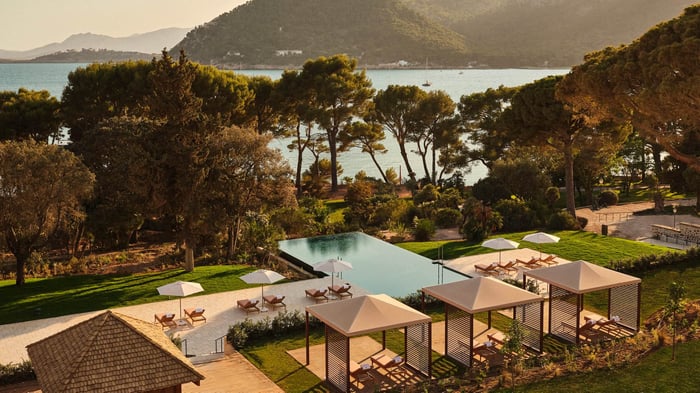
Villas and High-Altitude Spots: Many of the luxury villas and hotels in the northern and western parts of the island, particularly in areas like Pollença, Deià, and Soller, are strategically positioned on hillsides with expansive terraces. These locations offer a private, comfortable, and often-elevated experience, allowing for an intimate and exclusive viewing of the event.
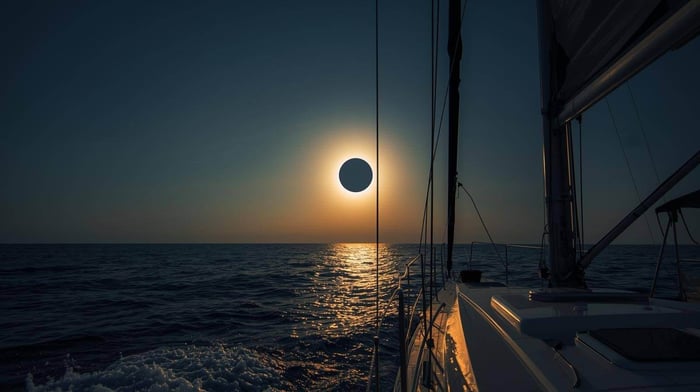
Sailing at Sea: For the most unique and unobstructed view, consider watching the eclipse from a boat. Sailing away from the coast eliminates any potential land-based obstructions and offers a 360-degree view of the sky and the surrounding ocean. Several charter companies are already offering special eclipse-viewing excursions.
Coast of Calvia: The west facing coastal areas of Calvia will be one of the best places to views, spots like the canon viewing point in Santa Ponsa, the Malgrat islands and if you are lucky enough to have access to a boat, the seas in the South West of the isalnd will be afloat hundreds of eclipse watchers.
The Economic Impact and Visitor Influx
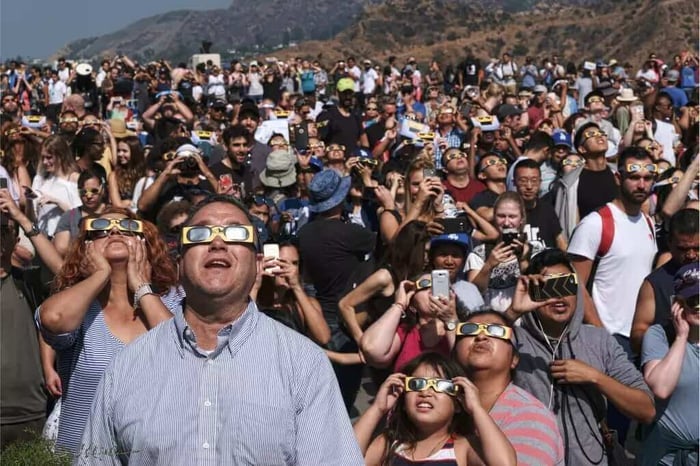
The 2026 eclipse is expected to generate a massive surge in tourism, attracting millions of visitors to Spain and the Balearic Islands. The 2017 total solar eclipse in the United States serves as a powerful precedent for this kind of "eclipse tourism." During that event, an estimated 4 to 5 million people traveled into the path of totality, generating an economic impact of over $1.5 billion. Hotel occupancy rates in the path of the eclipse surged, and prices for accommodations and services skyrocketed. Some rural markets saw a revenue jump of over 1,600 percent.
In anticipation of this event, Spain has already formed a national Eclipse Tourism Commission to manage the influx of visitors and coordinate everything from security and mobility to infrastructure. The Balearic Islands are expected to be a major hub for international visitors due to the dramatic nature of the sunset eclipse and the reliability of clear August skies (with a reported 75% chance of clear weather). Accommodations across Mallorca, particularly in the northern and western regions, are already seeing a steep increase in demand and price.
For those planning to visit, it is highly recommended to book travel and accommodation well in advance, as rooms and flights are expected to sell out. Local businesses are preparing to host eclipse-themed events, festivals, and cultural programs, transforming the island into a vibrant hub for both seasoned eclipse chasers and casual travelers. The 2026 total solar eclipse is a once-in-a-lifetime opportunity to witness a truly spectacular natural phenomenon in one of the most beautiful settings in the Mediterranean.