Table of Contents
Hierbas Mallorquinas: The Island's Herbal Liqueur and Where to Find the Real Thing
Every serious meal in Mallorca ends the same way. The plates are cleared, someone produces a small glass, and a greenish or amber liquid arrives at the table without being ordered. This is hierbas mallorquinas — the island's own herbal digestif, made from wild plants gathered in the hills and macerated in local spirit. It has been produced on the island for centuries and remains one of the most distinctly Mallorcan things you can drink.
It is not the same as hierbas ibicencas from Ibiza, though the two are often confused. The Mallorcan version has its own character, its own production traditions, and its own IGP designation in progress. Understanding the difference is part of understanding the island.
Thinking about buying or selling in Mallorca?
What Is Hierbas Mallorquinas?
Hierbas mallorquinas is a liqueur made by macerating a blend of aromatic herbs in alcohol, typically with added sugar to balance the bitterness. The core botanical mix almost always includes wild fennel (fonoll), rosemary (romaní), thyme (farigola) and lemon verbena (marialluïsa), though producers vary in what else they add — camomile, peppermint, rue, anise, coriander and dozens of other local plants appear in different recipes.
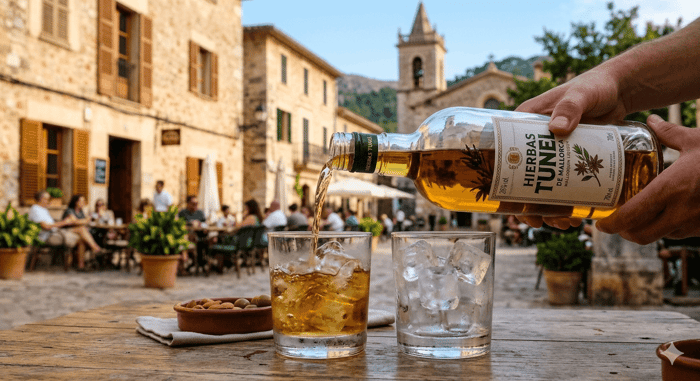
The result ranges in colour from pale green through dark amber depending on which herbs dominate and how long the maceration runs. Sweetness also varies considerably: seco (dry) versions are bitter and complex, dulce (sweet) versions lean toward dessert territory, and semi-seco sits between them. Most Mallorcans drink it straight, cold, often from the freezer.
Hierbas Mallorquinas vs Hierbas Ibicencas
The two are made differently and taste different. The Ibizan version typically uses a lighter base spirit and a fresher, more herbal profile dominated by anise and sweet herbs. The Mallorcan version tends toward more complex, earthier botanicals — fennel plays a bigger structural role, and the overall effect is drier and more savoury.
Ibiza's hierbas has had protected geographic status for longer and is more widely exported. Mallorca's version is better known locally, more variable between producers, and in many ways more interesting precisely because there is no single standardised recipe — each producer's version reflects their own hills, their own herb sources, their own family tradition.
The Producers Worth Knowing
Several established producers make hierbas mallorquinas commercially. Túnel, based in Palma, is the island's oldest and most recognised producer, operating since 1898 — their range covers both seco and dulce styles and is widely available across the island. Mesquida Mora and other artisan producers have developed their own versions in recent years, often using organically grown botanicals from their own land.
Smaller family producers sell direct from their properties in the interior, particularly around Consell, Santa Maria del Camí and the foothills of the Tramuntana, where many of the aromatic herbs grow wild. These versions are rarely bottled for supermarket distribution and are found at local markets or by visiting the producers directly.
In Santa Ponsa and the southwest, hierbas mallorquinas appears on virtually every restaurant menu as the default digestif. Most establishments source from one of the established commercial producers — Túnel is the most common — though some of the more food-focused restaurants source artisan versions from smaller suppliers.
How to Drink It
The default in Mallorca is straight and cold — kept in the freezer and poured into a small glass after eating. Some people add ice, which works better with the sweeter styles. A slice of lemon is sometimes added to the seco versions. Mixing it into cocktails is less traditional but not unusual in Palma's bar scene, where it appears in spritz-style drinks and long serves with tonic.
The digestif ritual is genuine here rather than performative — locals actually drink it after meals because the herbal blend genuinely aids digestion, and the practice goes back long enough that it's simply part of how meals end on the island.
Where to Buy It
Every supermarket on the island stocks Túnel hierbas and usually a couple of other commercial brands. For artisan versions, the best options are the weekly markets: the Saturday market in Santa Ponsa, the Sunday market in Alcúdia, and the Mercat de l'Olivar in Palma all typically have producers or specialist food stalls selling local spirits alongside olive oil, sobrasada and cheese.
If you're bringing a bottle home as a gift, the seco style travels better — it's more complex, ages gracefully, and tends to interest people who haven't encountered it before more than the sweeter version.
Part of the Island
Hierbas mallorquinas is one of those things that residents absorb quickly. Within a few months of living on the island you have a preferred style, a preferred producer, and a bottle in the freezer. It's a small thing, but it's part of what living in Mallorca actually feels like rather than visiting it.
If you're curious about what daily life on the island involves — the rhythms, the food, the local habits — Imperial Properties has been helping people make the move to the southwest since 1985. Browse current properties at imperial-properties.com or get in touch directly.