Table of Contents
The Santa Ponsa Saturday Market: What Actually Happens and Why Residents Shop Nowhere Else
Every Saturday morning, the streets around the commercial centre of Santa Ponsa fill up in a way that has nothing to do with the beach season. Stalls go up from around 8am, the pace is unhurried, the prices are reasonable, and by 11am the serious shoppers have already been home and back. This is the Santa Ponsa weekly market — one of those genuinely local institutions that gives the southwest its residential character.
Most visitors to the island never find it. Most people who move here discover it within a few weeks and never quite stop going. Here is what to expect.
Thinking about buying or selling in Mallorca?
Where and When
The market takes place every Saturday in the commercial centre of Santa Ponsa, centred on the streets around Avinguda del Rei Jaume I and the adjacent pedestrian area. Stalls begin setting up from around 8am. The busiest period is between 9am and 11am, after which the market winds down and is cleared by early afternoon.
It runs year-round. The summer market is larger — more stalls, more visitors, more variety — but the winter market is in some ways better: quieter, easier to navigate, and patronised almost exclusively by residents rather than summer visitors. In January and February, going to the market on a Saturday morning is a reliable way to run into most of your neighbours.
What You Find
The Santa Ponsa market covers a broad range of goods, divided fairly cleanly into food and non-food sections.
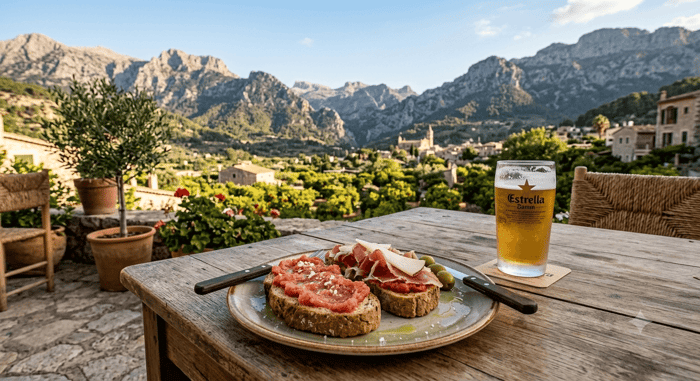
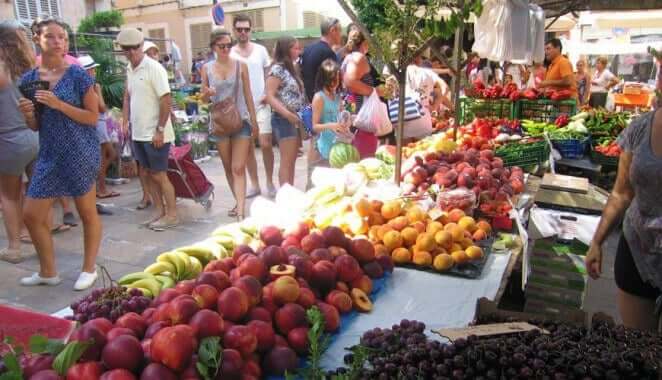
On the food side, the market is where many residents buy their weekly produce. A reliable selection of seasonal fruit and vegetables, typically sourced from Mallorcan and Spanish mainland farms: tomatoes, peppers, aubergines, courgettes in summer; citrus, root vegetables and greens in winter. In July and August, the ramellet tomato — the small wrinkled variety grown specifically for Mallorcan pa amb oli — appears at several stalls at a price and quality you won't find in any supermarket. Olives, pickles and cured products feature prominently, and there is usually at least one stall selling fresh eggs from local farms.
Local food producers appear periodically rather than every week — artisan honey, homemade jams, occasionally a small batch of Mallorcan ensaïmada or coca de patata. These stalls are worth checking for because they come and go; asking a regular stallholder whether a particular producer appears every week or intermittently is the practical approach.
On the non-food side, the market has a mix of clothing (ranging from practical workwear to beach cover-ups and casual summer wear), shoes, household goods, tools, plants, flowers, and the kind of miscellaneous low-cost items that every weekly market carries and that turn out to be surprisingly useful. There are usually two or three stalls selling handmade jewellery and leather goods aimed at the tourist market, though these sit comfortably alongside the more functional stalls.
What the Regulars Know
The best produce goes early. If you want the first pick of the tomatoes or the best selection of peppers, arriving at 9am rather than 10:30am makes a real difference. Most of the food stallholders know their regular customers by face within a few weeks — this is one of those markets where the transaction has a social dimension that a supermarket cannot replicate.
Prices are generally lower than the supermarket for seasonal produce and competitive for most household items. Bargaining is not standard practice on food stalls, but on clothing, household goods and the more general merchandise, there is some flexibility if you are buying multiple items.
Parking around the market can be tight from 9:30am onwards. The practical approach is to park slightly further from the centre — the streets behind the main commercial area are usually quieter — and walk the five minutes to the market. The walk back with bags is also more manageable than trying to park at the stall.
The market has its own coffee rhythm. Several of the bars adjacent to the market do their best Saturday morning trade with residents who combine the market with a coffee and a read of the newspaper. El Periódico de Mallorca, the island's Spanish-language daily, is at the kiosks from around 8am. Sitting outside one of the adjacent bars at 10am on a Saturday morning, with market bags and a coffee, is one of those small daily pleasures that is difficult to describe to someone who hasn't done it but immediately understood by anyone who has.
Other Markets Worth Knowing in the Southwest
The Santa Ponsa market is the most convenient for residents of the town itself, but the southwest has several other weekly markets within easy reach. The Calvià village Monday market sets up near Bar Rosita in the village centre — a smaller, more local affair that serves the inland community. Andratx has a Wednesday market in the town centre. For a more substantial market experience, the Inca Thursday market (around 30 minutes by road or train) is one of the largest on the island, with a particularly strong leather goods section alongside the food and produce.
Why the Market Matters
A weekly market is a good indicator of how genuinely residential a place is. Resorts that function only in summer do not sustain weekly markets year-round — there is no consistent local population to support them. Santa Ponsa does, which is part of what distinguishes it as a community rather than simply a tourism destination.
For buyers researching the southwest, spending a Saturday morning at the market is one of the most practical ways to understand how the area actually functions as a place to live. You see who the residents are, how the town operates at 10am on a weekend, and what the everyday texture of life in Santa Ponsa looks like when the tourists are not the main event.
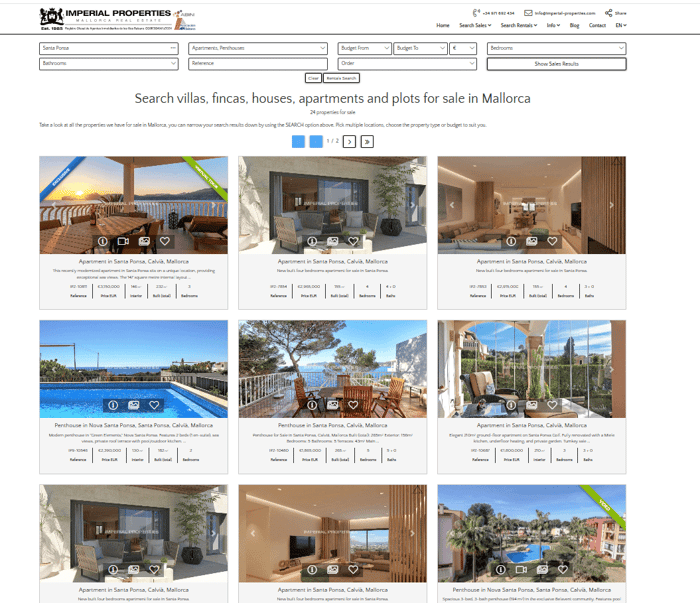
Imperial Properties has been part of that community since 1985. If you'd like to know more about what living in Santa Ponsa involves, or to browse current properties, the team is here. Visit imperial-properties.com or call us on +34 971 692 434.