Table of Contents
Cabrera National Park: The Boat Trip From Southwest Mallorca You Haven't Taken
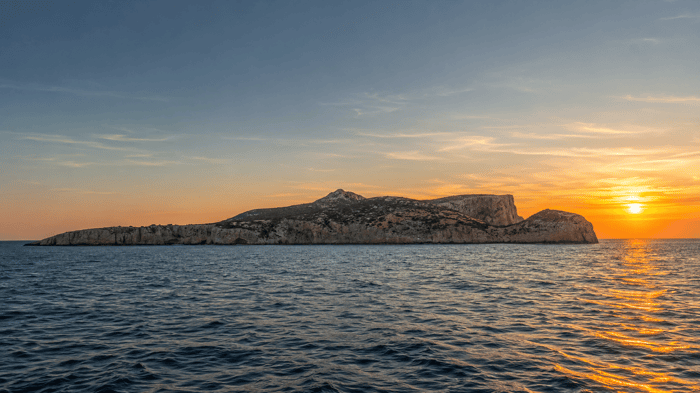
Ten nautical miles south of Mallorca sits an archipelago most residents of the southwest coast have heard of but never actually visited — despite it being one of the most significant protected natural areas in Spain. Cabrera is easy to reach and genuinely worth the trip, and this is what's actually there.
What Cabrera Actually Is
The Parque Nacional Marítimo-Terrestre del Archipiélago de Cabrera was declared Spain's first island national park on 29 April 1991, under Law 14/1991 — the first piece of legislation in Spanish history written specifically for an island national park. Since a major expansion in February 2019, which increased its protected area eightfold, Cabrera has become the largest marine protected area in Spain: roughly 90,000 hectares in total, the overwhelming majority of it sea rather than land. The main island itself covers just 16km², with 18 smaller islets making up the rest of the archipelago.
What makes Cabrera unusual isn't just its size — it's how untouched it remains. The seabed holds some of the densest and best-preserved Posidonia oceanica meadows in the western Mediterranean, and the coastline is considered one of the best-conserved stretches of any Spanish coast, largely because almost nobody has been allowed to build on it.
Thinking about buying or selling in Mallorca?
A History Stranger Than Most Nature Reserves
Cabrera's 14th-century castle was built to watch for Berber pirate raids, using smoke and fire signals to warn the mainland of approaching ships — being posted as a lookout there was, by contemporary accounts, considered one of the harshest punishments short of the galleys. But the island's darkest chapter came in 1809, after the Spanish victory at the Battle of Bailén, when several thousand captured French soldiers were sent to Cabrera as prisoners of war. With almost no fresh water, minimal food supplies and no infrastructure, only a fraction of the prisoners were still alive when the war ended in 1814. A monolith on the island commemorates them today.
In 1916, Cabrera was expropriated for military use, and a small garrison remained until the island became a national park. That military presence, almost by accident, is precisely what saved Cabrera from the property speculation and hotel development that shaped so much of the rest of the Balearic coastline through the 20th century.
What You Can Actually See
Day-trip boats give visitors around four to five hours ashore, which is enough time to see the highlights: the castle itself, with a small museum on the Napoleonic prisoners; Es Celler, a 19th-century winery-turned-ethnographic-museum built by the Feliu family, who once owned the island and tried unsuccessfully to grow vines here; the Ensiola Lighthouse, the southernmost lighthouse in the Balearics; and a botanical garden modelled on Sóller's, showcasing the archipelago's endemic flora. Most tours also stop at Sa Cova Blava — the Blue Cave — for a swim, weather permitting.
The wildlife is the real draw for many visitors. Cabrera is a designated Special Protection Area for Birds, historically home to the Balearic shearwater and, in past centuries, the Mediterranean monk seal. Dolphins are a fairly common sighting on the crossing itself, particularly through summer and autumn.
How to Actually Get There
The only departure point for Cabrera is Colonia de Sant Jordi, on Mallorca's south coast — a genuine day trip from the southwest, roughly 45 minutes to an hour by boat once underway. Several licensed operators run daily excursions in summer, from fast circumnavigation trips that also visit the Blue Cave, to longer premium tours that give more time ashore. There's no accommodation, restaurant or shop on the island itself, so day visitors need to bring everything they'll need, though some boat operators offer pre-ordered picnic lunches. Private boat owners can apply for a limited number of overnight anchoring permits through the National Park office, but casual mooring isn't permitted — access to Cabrera is deliberately restricted to protect what's still there.
Why It Matters for the Southwest
For residents of Santa Ponsa, Bendinat or Port d'Andratx, Cabrera is a useful reminder of how much of Mallorca's natural character survives entirely because development was kept out of it — the same principle, on a much smaller scale, that keeps the green corridors and protected coastline around the southwest's own established addresses valuable. If Mallorca's protected landscapes and quieter corners are part of what drew you to the island, browse our current listings across Mallorca or get in touch.