Table of Contents
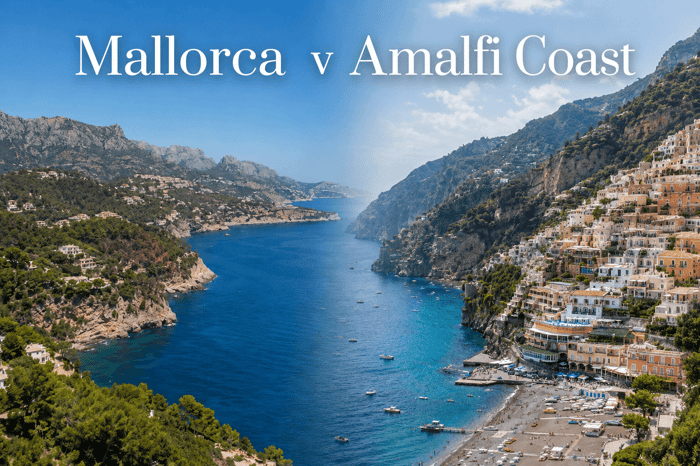
Mallorca vs the Amalfi Coast: How Two Mediterranean Icons Actually Compare for Buyers
Both are UNESCO-recognised Mediterranean coastlines with decades of international buyer demand behind them. Beyond that similarity, Mallorca and the Amalfi Coast are close to opposites — in how you get there, what you can actually buy, and what daily life looks like once you own something. Here's an honest comparison, not a sales pitch for either.
Getting There — and Getting Around Once You're There
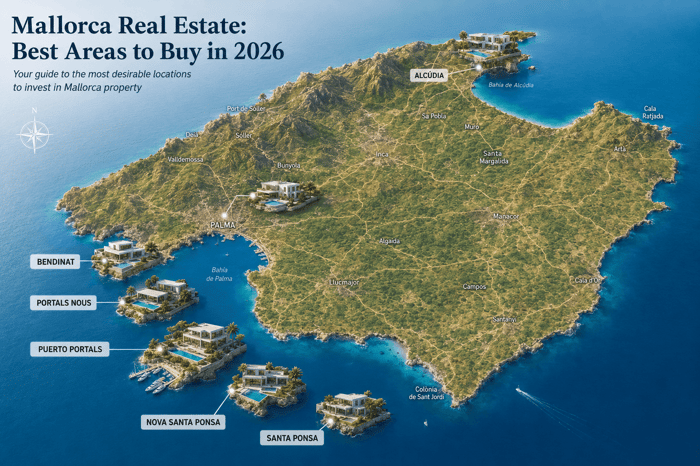
Mallorca's Palma airport takes direct flights of two to three hours from most major European cities, and from there, most of the southwest coast — Santa Ponsa, Bendinat, Port d'Andratx, Portals Nous — is a straightforward 20 to 40-minute drive on modern dual carriageway. There's no seasonal restriction on when or how you drive it.
The Amalfi Coast works very differently. The nearest airport is Naples, and depending on your destination, the drive along the SS163 Amalfitana — a single-lane coastal road carved into cliffside, shared with SITA buses on the same tight hairpins — runs 90 to 105 minutes in good conditions, stretching to two or three hours in peak summer traffic. From 1 June to 30 September 2026, an alternating licence-plate system restricts which cars can use the SS163 on any given day, and rental cars aren't exempt. On top of that, each of the coast's ten municipalities — Positano, Amalfi, Ravello, Praiano and the rest — enforces its own separate ZTL restricted-traffic zone, with no single permit valid across all of them. Parking in town centres, where it exists at all, can run to around €10 an hour.
Thinking about buying or selling in Mallorca?
The Price Picture
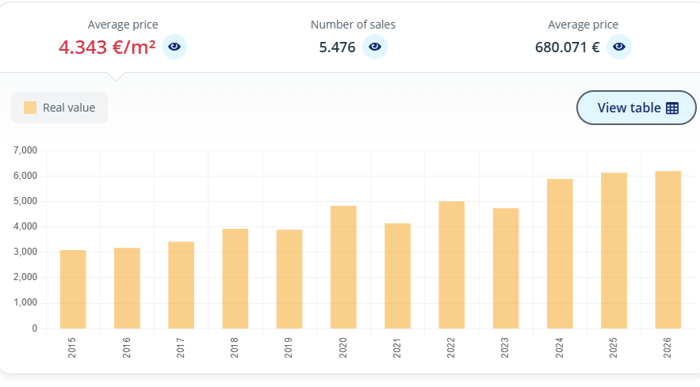
Tinsa's IMIE appraisal index put Palma's citywide average across all housing types at €3,449/m² in the first quarter of 2026, with the established southwest coast running above that, and true frontline or elevated sea-view villas commanding a further premium on top. It's a wide spread across a large island, with entry points at multiple price levels depending on area and property type.
The Amalfi Coast's price structure looks different because the coast itself is so much smaller. Asking prices in Amalfi town itself averaged around €7,236/m² in May 2026, against a Salerno provincial average of just €1,963/m² — a gap that shows how concentrated the premium is into a handful of cliffside kilometres. In Positano and Capri specifically, prices for the best positions run to €14,000/m² or more, and the median house price across the coast sits close to $3.9 million. Renovated homes in the most sought-after spots have risen roughly 10% in a single year, driven by scarcity as much as demand — there is simply very little land left to build on along a UNESCO-protected cliff edge.
What You Can Actually Buy
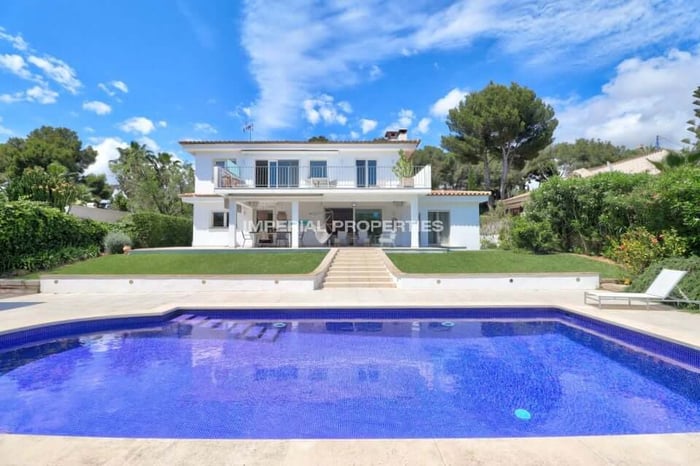
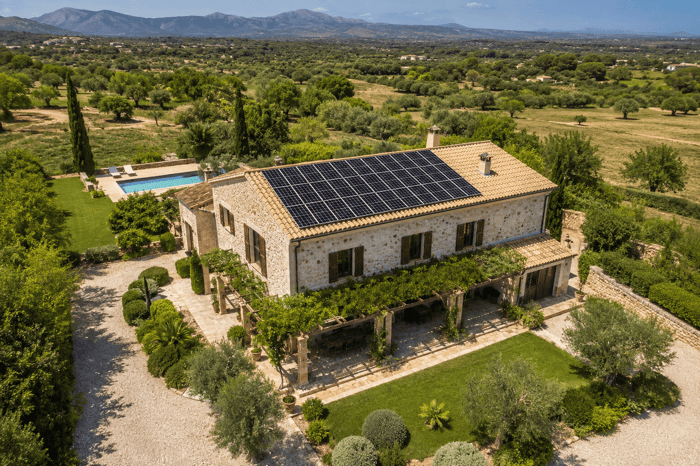
Mallorca's property stock spans an entire island: city apartments in Palma, family villas in Santa Ponsa, golf-community houses, fincas on inland agricultural plains, and everything between. That range means a genuine choice of lifestyle and budget within the same broader market.
On the Amalfi Coast, the choice is narrower by geography alone — a strip roughly 50km long wedged between cliff and sea, where nearly every buildable plot was built on generations ago. What comes to market tends to be older stock — centuries-old townhouses, terraced villas built into the hillside — rather than new construction, since there's very little undeveloped land left to build on at all.
Day-to-Day Living
This is where the two destinations diverge most for anyone actually living in a property rather than visiting it. Mallorca's southwest coast functions as a normal, year-round community: international schools, private healthcare, supermarkets, and a road network that works the same way in August as it does in February. The Amalfi Coast's infrastructure is built primarily around tourism rather than permanent residents, and its narrow, congested single road means even a routine supermarket run can mean navigating SITA buses, parking scarcity and, for part of the year, licence-plate restrictions.
Which Is Right for You
Neither destination is simply "better" — they suit different buyers. The Amalfi Coast offers a level of cinematic, historic glamour that's genuinely singular, concentrated into a tiny footprint that will likely never expand. Mallorca offers something more livable at scale: a full-size island with real infrastructure, a much wider range of property types and price points, and day-to-day practicality that doesn't disappear the moment the summer crowds arrive.
If straightforward access, year-round livability and a genuine range of property options matter as much to you as the view, browse our current listings across Mallorca or get in touch — we're happy to talk through how the island compares to wherever else you're considering.