Table of Contents
Pa Amb Oli: The One Dish That Defines Mallorcan Food Culture
Every food culture has a foundational dish — the thing that everything else is built around, that appears at every table regardless of the occasion, and that tells you more about a place than any restaurant menu. In Mallorca, that dish is pa amb oli.
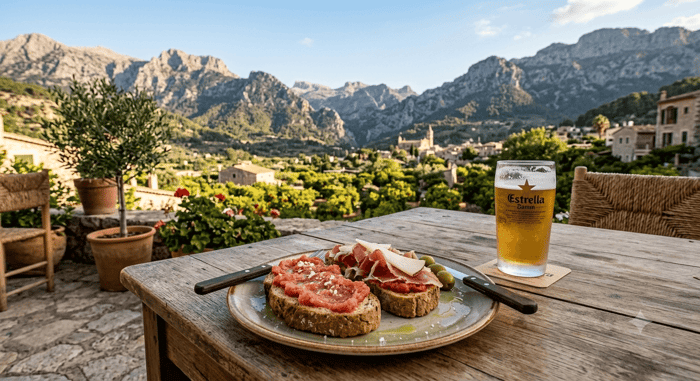
Literally translated as bread with oil, pa amb oli is the act of rubbing ripe tomato onto a thick slice of rustic bread, drizzling it with Mallorcan olive oil, adding a pinch of salt, and eating it as it is or topped with whatever happens to be good that day. The description sounds simple to the point of self-evident. The reality — when the bread is right, the tomato is right and the oil is right — is one of the finest things you can eat in the Mediterranean.
Thinking about buying or selling in Mallorca?
The Bread: Pa de Pagès
Pa amb oli begins with the right bread. The standard Mallorcan choice is pa de pagès — literally farmer's bread — a dense, round, slightly sour loaf with a hard crust and an open, chewy crumb. It is made with wheat flour, water, salt and sourdough culture, shaped by hand and baked at high temperature. The crust is thick enough to hold up to vigorous tomato rubbing without disintegrating; the crumb is porous enough to absorb the oil without becoming soggy.
Most bakeries across the southwest make their own version, though quality varies. The bread is at its best on the day of baking — slightly stale bread actually works for pa amb oli because the drier texture absorbs the tomato juice and oil more evenly. In Mallorca, bread from two days ago is not a problem; it is often preferable.
Toast or no toast is a genuine point of debate. Purists eat it untoasted, arguing that the tomato needs a slightly yielding surface. Pragmatists toast it lightly, arguing that the warmth releases the tomato flavour more effectively. Both are correct. The important thing is that the bread is sliced thickly — thin slices collapse under the weight of a well-laden pa amb oli and miss the point entirely.
The Tomato: Tomàtiga de Ramellet
The tomato is where pa amb oli becomes specific to Mallorca rather than a generic Mediterranean preparation. The traditional tomato for this dish is the tomàtiga de ramellet — a small, oval, deeply flavoured variety that keeps well on the vine for months after harvest, stored hanging in bunches in cool, dry conditions.
The ramellet has a thick skin, concentrated sweetness, low water content and an intensity of flavour that fresh summer tomatoes dilute when used for this purpose. You rub the cut face of a ramellet directly onto the bread, pressing firmly, until the flesh has transferred to the surface and only the skin remains in your hand. The result is a layer of intensely flavoured tomato pulp rather than a watery smear.
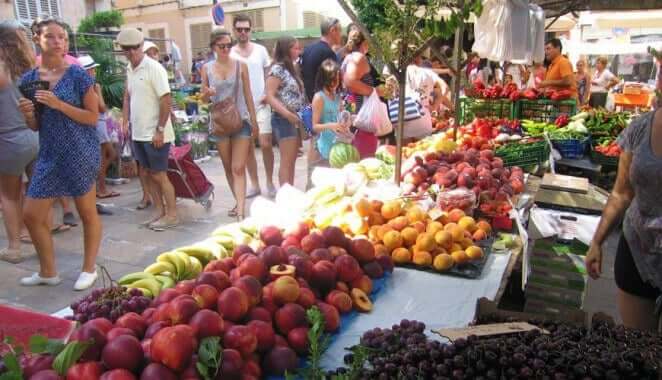
In July and August, fresh ramellet tomatoes appear at the Santa Ponsa Saturday market, at the Calvià village Monday market, and at local grocery shops throughout the southwest. They are also available year-round from the dried or preserved stock that keeps through winter. A Mallorcan household typically has a bunch of ramellet hanging in the kitchen from October to May.
Using a regular salad tomato for pa amb oli — while not forbidden — produces a different and lesser result. The water content is too high, the flavour too mild. If you cannot find ramellet, the best substitute is a very ripe, high-summer vine tomato that has had time to develop flavour in the sun. The ramellet, when you find it, is another category entirely.
The Oil: Oli de Mallorca DOP
The third element is the oil. Pa amb oli is not an occasion for a light, delicate oil — it wants character, a slight pepperiness and genuine depth of flavour. Mallorcan olive oil, produced from the island's native Mallorquina (Empeltre) variety or from a blend with Arbequina and Picual, delivers this when freshly pressed.
The quantity matters. Pa amb oli is not lightly dressed — a generous pour, enough to pool slightly in the bread's cavities and glisten on the surface, is the correct amount. A timid drizzle produces a dry and unsatisfying result. A generous one produces something entirely different.
On the island, Oli de Mallorca DOP is the standard reference, available at supermarkets, markets and specialist food shops throughout the southwest. The autumn-pressed oil — oli nou, available from October — is the most intensely flavoured of the year and the best version to use if you can find it.
What Goes on Top
Pa amb oli is complete with bread, tomato, oil and salt. Everything else is optional but not arbitrary. The most common additions in Mallorca are:
Sobrasada — the island's spreadable cured sausage, made from minced pork, paprika and spices. Sobrasada and pa amb oli is the combination that appears at every celebration, every informal gathering and every bar menu on the island. The heat of the paprika in the sobrasada cuts through the richness of the oil; the bread holds the whole thing together.
Cheese — typically Mallorcan semi-curado (semi-cured) sheep's cheese, sliced thin. The island's cheese tradition is less celebrated than its other food products but the better local examples are genuinely good, with a clean saline character that works well with the sweet tomato.
Jamón ibérico or serrano — thin slices of cured ham. The combination of pa amb oli and jamón is the closest thing to a universal Mallorcan social food — it appears at everything from village fiestas to marina restaurant terraces.
Anchovies — salt-packed, oil-rinsed, laid across the bread. The combination of anchovy and ramellet tomato on oil-soaked pa de pagès is extraordinary and completely logical; the salt of the anchovy amplifies the sweetness of the tomato in a way that is difficult to improve on.
Less conventional but worth knowing: escalivada (roasted peppers and aubergine, dressed in oil) on pa amb oli is a preparation that appears throughout the island and is one of the most complete things on any table that carries it.
Where to Eat Pa Amb Oli in the Southwest
Pa amb oli appears on virtually every Mallorcan and Spanish restaurant menu in the southwest, and on the menus of most bars that serve food. The quality varies with the quality of the three core ingredients — bread, tomato, oil — and with how seriously the kitchen treats what might appear to be a simple item.
The best versions tend to come from places that source their bread fresh and their oil locally rather than from bulk catering suppliers. Asking the waiter which oil they use is not eccentric — it is a reasonable question that a good kitchen will answer with a specific name.
At home, making pa amb oli well is entirely achievable with decent ingredients. The Saturday market in Santa Ponsa is the place to source all three core elements in season: pa de pagès from a local baker, ramellet tomatoes from a produce stall, and Mallorcan olive oil from a DOP-certified producer. Assembling them correctly takes about two minutes and costs very little. Doing it well, with good ingredients, produces something that is difficult to better.
Why Pa Amb Oli Matters
Food cultures reveal themselves through their simplest preparations. Pa amb oli is not Mallorca's most technically demanding dish or its most expensive. It is the dish that appears at every table, in every season, at every income level. Understanding it — the specific bread, the specific tomato, the specific oil, the correct assembly — is one of the most direct routes into understanding what makes Mallorca's food culture distinct from the mainland Spanish tradition and from the generic Mediterranean cooking that fills tourist menus across the island.
Residents of the southwest who learn to make pa amb oli well and source the ingredients from the Saturday market or a local producer are doing something that connects them to the island in a way that eating at restaurants alone does not. It is a small thing. It is also very much the point.
Imperial Properties has been helping people make the move to the southwest since 1985. Browse current listings at imperial-properties.com or contact us on +34 971 692 434.