Table of Contents
Snorkelling and Diving in Southwest Mallorca: The Best Spots from Santa Ponsa and Port Adriano
The southwest coast of Mallorca between Santa Ponsa and the Cap de Andritxol is one of the most rewarding stretches of coastline in the western Mediterranean for anyone who wants to get into the water properly rather than paddle at the edge of a beach. The combination of clear, warm water, a rugged limestone coastline with sea caves and underwater rock formations, healthy Posidonia oceanica seagrass meadows and the relatively light boat traffic compared with the busier tourist beaches of the east makes this part of the island genuinely good for underwater exploration. Some of the best spots are accessible from the beach or the rocks. The best ones — the sea caves, the outer reefs, the more remote calas — you can only reach by boat, which gives them a quality of solitude and pristine water that the accessible spots can no longer match in summer. What follows is an honest guide to where to go, what to expect and what you will actually find when you get there.
Why the Southwest Water Is Worth the Effort
The Balearic Sea temperature around Mallorca has been running above its historical average for almost the entire year in 2026, and the southwest in particular benefits from the warming that the summer sun builds through June. By mid-June the sea surface temperature off Santa Ponsa and Peguera is typically 22 to 24 degrees — warm enough to stay in for hours without a wetsuit, clear enough to see the bottom at 15 metres on a calm morning before the afternoon breeze picks up and stirs the surface slightly. The visibility in this part of the coast on a good day, with no wind and no recent rain, regularly reaches 20 to 25 metres — conditions that are not guaranteed anywhere but that this coast produces more reliably than most.
The Posidonia oceanica seagrass meadows that cover much of the sandy seabed between the rocky headlands are worth understanding rather than dismissing. Posidonia is not the seaweed that washes onto beaches and smells unpleasant — it is a flowering plant, not an alga, and the meadows it forms are among the most biodiverse marine habitats in the Mediterranean. The clarity of the water in the southwest is partly a function of healthy Posidonia — the plant filters and oxygenates the water column in a way that bare sandy seabeds do not. The Balearic Islands have some of the most extensive and best-preserved Posidonia meadows in the Mediterranean, and the southwest coast is a good place to see them at their best.
Cala Fornells and the Peguera Coastline
Cala Fornells, ten minutes by boat west of Santa Ponsa, is a good introduction to what the southwest coast offers. The cala itself is a small, sheltered inlet with rocky sides and a sandy bottom at 3 to 5 metres — easy snorkelling from the rocks at the entrance, with sea bream, wrasse and the occasional octopus visible without going deep. The more interesting underwater terrain is along the outer rocky walls either side of the cala entrance, where the rock drops more steeply and the marine life becomes denser. Moray eels are a regular sight in the crevices along the south-facing wall, and the rocky overhangs provide shelter for schools of smaller fish that are not found in the open sandy areas.
The stretch of coast between Cala Fornells and Cala Blava to the west includes several small sea caves at or just below the waterline — accessible by snorkelling in calm conditions, best approached from a dinghy or paddleboard rather than swimming the full distance from shore. The caves are shallow but atmospheric, with filtered light coming through the entrance and the rocky walls colonised by sponges, anemones and the purple sea urchins that are ubiquitous along this coast. You do not need a dive tank to see any of this — a mask and fins are sufficient for the surface-accessible caves.
The Waters Around Cap de Cala Figuera
The headland of Cap de Cala Figuera — the rocky promontory that marks the eastern boundary of the bay of Palma and separates the Palma bay from the open southwest coast — is one of the genuinely good dive and snorkelling sites accessible from Santa Ponsa by boat, though it requires a bit more of a journey than the closer calas. The headland creates a concentration of underwater life on its seaward faces because the currents around a cape tend to bring nutrients from deeper water, and the rocky substrate provides the structure that sessile marine organisms need to establish. The outer walls of Cap de Cala Figuera drop to 20 to 30 metres on the southwest face, and the density of fan corals, sponges and encrusting organisms on these walls in the right conditions is considerable. For snorkellers, the interest is in the shallower reef zone at 2 to 8 metres where the rock is heavily colonised and the fish life is active — but a dive here in settled conditions with good visibility is as rewarding as anything accessible from the southwest shore without heading to the nature reserve at Sa Dragonera.
Sa Dragonera — The Best Underwater Experience from the Southwest
Sa Dragonera is a 288-hectare island and protected nature reserve lying two kilometres off the western tip of Mallorca, about an hour and a half from Santa Ponsa by boat at a comfortable cruising speed. It is one of the few places in the western Mediterranean where you can anchor in clear, unpolluted water and snorkel or dive in a protected environment where fishing has been prohibited for decades and the marine life has recovered accordingly. The waters around Sa Dragonera are materially different from the coastal waters closer to Santa Ponsa — cleaner, more biodiverse, with larger fish, healthier coral communities and the particular quality of underwater light that only very clear, very deep-blue water produces.
The north and northeast coast of Sa Dragonera, sheltered from the prevailing southwest summer swell, offers the most accessible snorkelling — shallow rocky areas at 1 to 8 metres with dense marine life, schools of salema, sea bass moving along the bottom, and the occasional large grouper in the deeper sections of the rocks. The south and southwest coast, exposed to more swell and accessible only in settled conditions, has the more spectacular topography — sea caves, rock arches, walls dropping to 40 metres — and is where the serious diving is done. Both aspects of the island are worth a dedicated day trip rather than a brief stop, and the anchorage on the northeast coast in the small bay of Cala Lledoner is one of the more peaceful places you will find on or near the water in southwest Mallorca in summer.
Snorkelling the Santa Ponsa Bay Itself
The bay of Santa Ponsa, for all its familiarity to residents, has decent snorkelling on its rocky margins that most people who have lived here for years have never properly explored. The rocky headlands at either end of the main beach — Punta de Sa Caleta to the east and the rocks extending from the Club Náutico breakwater to the west — both have accessible snorkelling from the shore. The water is clear on calm mornings before the wind picks up, the rocky bottom on the western side of the bay drops to 8 to 10 metres and supports a reasonable range of the common Mediterranean species, and the Posidonia meadows that extend from the sandy beach into deeper water provide cover for seagrass-dwelling species including seahorses, though finding one requires patience and a slow, careful approach at low depths. The eastern headland has a shallow reef extending from the rocks that is genuinely accessible even for children with basic snorkelling equipment and provides a reliable introduction to what the southwest coast offers in a setting that requires no boat and no advance planning.
What You Will Actually See
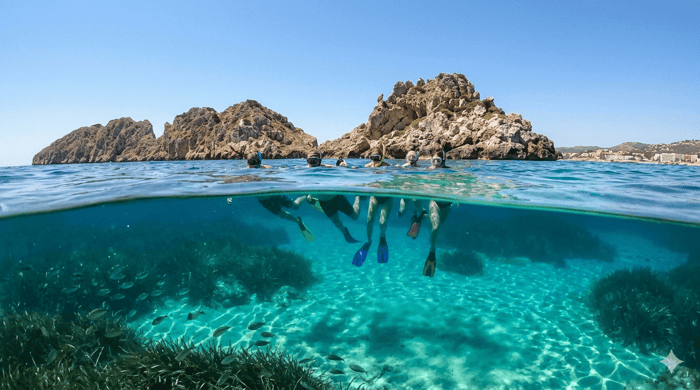
The Mediterranean is not the Red Sea or the Maldives — the coral is not as colourful, the fish are not as numerous, and if you approach snorkelling in southwest Mallorca expecting the tropics you will be disappointed. But that is the wrong comparison. The southwest Mallorcan coast offers something different and in its own way just as rewarding: rocky underwater landscapes of considerable character, crystal-clear water in calm conditions, and a marine community that is genuinely diverse even if individual species are less visually spectacular than their tropical counterparts.
The species you will reliably encounter in the shallow rocky zones include: sea bream (dorada and sargo) in schools along the rocky walls; wrasse in several species and sizes, including the large Mediterranean rainbow wrasse which is one of the more visually striking fish on the reef; octopus in the rocky crevices, most active in the early morning before the water warms; moray eels visible from their cave entrances, though they are far more shy than their reputation suggests; sea bass (lubina) moving along the bottom in ones and twos; starfish in several species on the sandy areas; sea urchins on virtually every piece of rock below the waterline; and in the Posidonia meadows, the occasional seahorse, pipefish and cuttlefish. In late summer and early autumn, large schools of pelagic fish sometimes move through the bay when conditions are right — bonito, amberjack and occasionally bluefin tuna — which is a different kind of underwater experience from the reef snorkelling but one that the southwest coast can produce.
Getting to the Best Spots
The spots closest to shore — the rocky margins of Santa Ponsa bay, Cala Fornells, the accessible sections of the Peguera coast — can be reached by swimming from the beach or the rocks, though a paddleboard or inflatable kayak makes access to the more interesting sections of the outer reefs significantly easier. For the outer headlands, the sea caves, and Sa Dragonera, a boat is necessary and makes the difference between seeing a fraction of what is available and accessing the full range of what this coast offers.
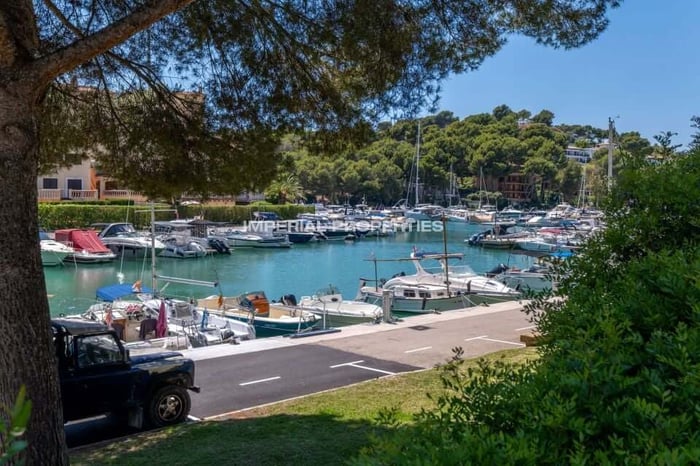
The Club Náutico Santa Ponsa and Port Adriano both have charter and rental options ranging from small RIBs suitable for a family day of cala-hopping to larger vessels capable of the Sa Dragonera crossing in comfort. For residents who own their own boats, the Club Náutico's facilities — fuel, travelift, 24-hour security, 522 berths — make Santa Ponsa a natural base for exactly this kind of coastal exploration. The freedom to anchor off a sea cave, spend an hour in the water, move on to the next spot and be back at the marina for lunch is one of the things that makes living in Santa Ponsa with a boat a genuinely different proposition from simply being a beach resident.
Read about the frontline marina villa for sale at Club Nautico Santa Ponsa
Browse properties in Santa Ponsa and Nova Santa Ponsa