Stability and Maturity: The Definitive Market Forecast for Mallorca in 2026
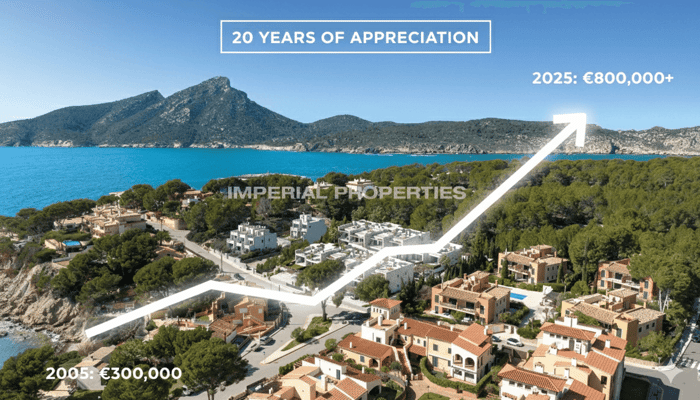
As we close the chapter on 2025, the conversation among serious property investors has shifted. The frenetic energy of the post-pandemic boom has settled, replaced by something far more valuable for long-term wealth preservation: certainty. Leading market analysts and real estate data indicate that Mallorca is entering 2026 as a "mature, low-volatility market". This new phase is characterized by steady, sustainable growth rather than speculative spikes, reinforcing the island’s status as a safe haven for international capital.
At Imperial Properties, we have analyzed the end-of-year reports to provide our clients with a clear, fact-based outlook for the coming 12 months. The data points to a year of consolidation, where quality assets in prime locations will continue to outperform broader European averages.
The Key Metric: Sustainable Growth in Prime Areas
The headline forecast for 2026 is one of continued appreciation, specifically in the luxury sector. While the broader market is expected to see moderate growth of 3-5%, the forecast for the premium and luxury segments—where supply is most constrained—is notably higher, with analysts predicting growth between 5% and 8%.
This divergence is driven by scarcity. The supply of high-end homes, particularly in the Southwest (Bendinat, Puerto Portals) and the historic center of Palma, remains tight. New build activity increased slightly in 2025, but strict planning regulations ensure that inventory levels never flood the market. For the homeowner, this creates a formidable floor for property values. The "boom and bust" cycles seen in other Mediterranean destinations are absent here because the physical capacity to overbuild simply does not exist.
Volume and Demand: The International Factor
Transaction volumes are forecast to stabilize around the long-term 10-year average of approximately 10,000 to 10,500 annual sales. This return to a "normalized" volume is a healthy indicator; it suggests a liquid market where buyers and sellers are acting with confidence rather than urgency.
Crucially, the demand profile remains exceptionally diverse. Foreign buyers continue to account for approximately 33% of all transactions in the Balearics. This international spread—dominated by German, British, and increasingly Northern European and American buyers—acts as a buffer against economic headwinds in any single country. Even as some European economies face challenges, the appetite for Mallorcan real estate among high-net-worth individuals remains robust. This global demand ensures that the market remains active year-round, not just seasonally.
The Era of the "Mature" Market
The term "maturity" is appearing frequently in 2026 forecasts. In real estate terms, a mature market is one with high transparency, established legal frameworks, and consistent demand. It is the opposite of a volatile, emerging market. For our clients, this maturity reduces risk. It means that purchasing a villa in Son Vida or an apartment in Santa Catalina is a calculated, defensive investment strategy comparable to buying blue-chip stock.
Looking ahead to 2026, the strategy for buyers is clear: focus on "A-grade" assets. Properties with energy efficiency (a growing priority for 2026 buyers), sea views, or prime locations will continue to command premiums and sell quickly. The market is no longer about finding a quick flip; it is about securing a piece of Europe’s most stable residential real estate for the medium to long term. As we enter this new year, the fundamental strengths of Mallorca—scarcity, desirability, and stability—have never been clearer.
Estabilidad y Madurez: La Previsión Definitiva del Mercado para Mallorca en 2026
Al cerrar el capítulo de 2025, la conversación entre los inversores inmobiliarios serios ha cambiado. La energía frenética del auge pospandémico se ha asentado, reemplazada por algo mucho más valioso para la preservación de la riqueza a largo plazo: la certeza. Los principales analistas del mercado y los datos inmobiliarios indican que Mallorca entra en 2026 como un "mercado maduro y de baja volatilidad". Esta nueva fase se caracteriza por un crecimiento constante y sostenible en lugar de picos especulativos, reforzando el estatus de la isla como un refugio seguro para el capital internacional.
En Imperial Properties, hemos analizado los informes de fin de año para ofrecer a nuestros clientes una perspectiva clara y basada en hechos para los próximos 12 meses. Los datos apuntan a un año de consolidación, donde los activos de calidad en ubicaciones privilegiadas continuarán superando los promedios europeos más amplios.
La Métrica Clave: Crecimiento Sostenible en Zonas Prime
La previsión principal para 2026 es de una apreciación continua, específicamente en el sector de lujo. Mientras que se espera que el mercado general experimente un crecimiento moderado del 3-5%, la previsión para los segmentos premium y de lujo —donde la oferta es más limitada— es notablemente mayor, con analistas que predicen un crecimiento entre el 5% y el 8%.
Esta divergencia está impulsada por la escasez. La oferta de viviendas de alta gama, particularmente en el Suroeste (Bendinat, Puerto Portals) y el centro histórico de Palma, sigue siendo ajustada. La actividad de obra nueva aumentó ligeramente en 2025, pero las estrictas regulaciones de planificación aseguran que los niveles de inventario nunca inunden el mercado. Para el propietario, esto crea un suelo formidable para los valores de las propiedades. Los ciclos de "auge y caída" vistos en otros destinos mediterráneos están ausentes aquí porque la capacidad física para construir en exceso simplemente no existe.
Volumen y Demanda: El Factor Internacional
Se prevé que los volúmenes de transacciones se estabilicen alrededor del promedio a largo plazo de 10 años de aproximadamente 10.000 a 10.500 ventas anuales. Este retorno a un volumen "normalizado" es un indicador saludable; sugiere un mercado líquido donde compradores y vendedores actúan con confianza en lugar de urgencia.
Crucialmente, el perfil de la demanda sigue siendo excepcionalmente diverso. Los compradores extranjeros continúan representando aproximadamente el 33% de todas las transacciones en las Baleares. Esta dispersión internacional —dominada por compradores alemanes, británicos y cada vez más del norte de Europa y estadounidenses— actúa como un amortiguador contra los vientos económicos en contra en cualquier país individual. Incluso cuando algunas economías europeas enfrentan desafíos, el apetito por los bienes raíces mallorquines entre las personas de alto patrimonio neto sigue siendo robusto. Esta demanda global asegura que el mercado permanezca activo todo el año, no solo estacionalmente.
La Era del Mercado "Maduro"
El término "madurez" aparece frecuentemente en las previsiones de 2026. En términos inmobiliarios, un mercado maduro es aquel con alta transparencia, marcos legales establecidos y demanda constante. Es lo opuesto a un mercado volátil y emergente. Para nuestros clientes, esta madurez reduce el riesgo. Significa que comprar una villa en Son Vida o un apartamento en Santa Catalina es una estrategia de inversión calculada y defensiva comparable a comprar acciones de primera línea.
Mirando hacia 2026, la estrategia para los compradores es clara: centrarse en activos de "Grado A". Las propiedades con eficiencia energética (una prioridad creciente para los compradores de 2026), vistas al mar o ubicaciones privilegiadas continuarán exigiendo primas y vendiéndose rápidamente. El mercado ya no se trata de encontrar una reventa rápida; se trata de asegurar una pieza de los bienes raíces residenciales más estables de Europa a medio y largo plazo. Al entrar en este nuevo año, las fortalezas fundamentales de Mallorca —escasez, deseabilidad y estabilidad— nunca han estado más claras.
Stabilität und Reife: Die definitive Marktprognose für Mallorca im Jahr 2026
Während wir das Kapitel 2025 schließen, hat sich das Gespräch unter ernsthaften Immobilieninvestoren verlagert. Die frenetische Energie des Booms nach der Pandemie hat sich gelegt und wurde durch etwas ersetzt, das für den langfristigen Vermögenserhalt weitaus wertvoller ist: Gewissheit. Führende Marktanalysten und Immobiliendaten deuten darauf hin, dass Mallorca das Jahr 2026 als "reifer Markt mit geringer Volatilität" betritt. Diese neue Phase ist durch stetiges, nachhaltiges Wachstum anstelle von spekulativen Spitzen gekennzeichnet und stärkt den Status der Insel als sicherer Hafen für internationales Kapital.
Bei Imperial Properties haben wir die Jahresendberichte analysiert, um unseren Kunden einen klaren, faktenbasierten Ausblick für die kommenden 12 Monate zu geben. Die Daten deuten auf ein Jahr der Konsolidierung hin, in dem Qualitätsanlagen in erstklassigen Lagen weiterhin besser abschneiden werden als der breitere europäische Durchschnitt.
Die Schlüsselkennzahl: Nachhaltiges Wachstum in Top-Lagen
Die Schlagzeilenprognose für 2026 ist eine anhaltende Wertsteigerung, insbesondere im Luxussektor. Während für den Gesamtmarkt ein moderates Wachstum von 3-5 % erwartet wird, liegt die Prognose für das Premium- und Luxussegment – wo das Angebot am stärksten begrenzt ist – deutlich höher, wobei Analysten ein Wachstum zwischen 5 % und 8 % vorhersagen.
Diese Divergenz wird durch Knappheit getrieben. Das Angebot an hochwertigen Häusern, insbesondere im Südwesten (Bendinat, Puerto Portals) und im historischen Zentrum von Palma, bleibt knapp. Die Neubautätigkeit nahm 2025 leicht zu, aber strenge Planungsvorschriften stellen sicher, dass die Lagerbestände den Markt nie überschwemmen. Für den Hausbesitzer schafft dies einen formidable Untergrenze für Immobilienwerte. Die "Boom-und-Bust"-Zyklen, die in anderen mediterranen Zielen zu sehen sind, fehlen hier, weil die physische Kapazität zum Überbauen schlicht nicht existiert.
Volumen und Nachfrage: Der internationale Faktor
Es wird prognostiziert, dass sich das Transaktionsvolumen um den langfristigen 10-Jahres-Durchschnitt von etwa 10.000 bis 10.500 Verkäufen pro Jahr stabilisiert. Diese Rückkehr zu einem "normalisierten" Volumen ist ein gesunder Indikator; sie deutet auf einen liquiden Markt hin, in dem Käufer und Verkäufer mit Zuversicht statt Dringlichkeit handeln.
Entscheidend ist, dass das Nachfrageprofil außergewöhnlich vielfältig bleibt. Ausländische Käufer machen weiterhin etwa 33 % aller Transaktionen auf den Balearen aus. Diese internationale Streuung – dominiert von deutschen, britischen und zunehmend nordeuropäischen und amerikanischen Käufern – wirkt als Puffer gegen wirtschaftlichen Gegenwind in einem einzelnen Land. Selbst wenn einige europäische Volkswirtschaften vor Herausforderungen stehen, bleibt der Appetit auf mallorquinische Immobilien unter vermögenden Privatpersonen robust. Diese globale Nachfrage stellt sicher, dass der Markt das ganze Jahr über aktiv bleibt, nicht nur saisonal.
Die Ära des "reifen" Marktes
Der Begriff "Reife" taucht in den Prognosen für 2026 häufig auf. In Immobilienbegriffen ist ein reifer Markt einer mit hoher Transparenz, etablierten rechtlichen Rahmenbedingungen und konstanter Nachfrage. Es ist das Gegenteil eines volatilen, aufstrebenden Marktes. Für unsere Kunden reduziert diese Reife das Risiko. Es bedeutet, dass der Kauf einer Villa in Son Vida oder einer Wohnung in Santa Catalina eine kalkulierte, defensive Anlagestrategie ist, die mit dem Kauf von Blue-Chip-Aktien vergleichbar ist.
Mit Blick auf 2026 ist die Strategie für Käufer klar: Konzentration auf "A-Grade"-Assets. Immobilien mit Energieeffizienz (eine wachsende Priorität für Käufer im Jahr 2026), Meerblick oder erstklassigen Lagen werden weiterhin Aufschläge erzielen und sich schnell verkaufen. Der Markt dreht sich nicht mehr darum, einen schnellen Wiederverkaufsgewinn zu finden; es geht darum, sich mittel- bis langfristig ein Stück der stabilsten Wohnimmobilien Europas zu sichern. Wenn wir in dieses neue Jahr eintreten, waren die fundamentalen Stärken Mallorcas – Knappheit, Begehrlichkeit und Stabilität – noch nie klarer.