Beyond the Shoreline: Ten Fascinating Facts That Define Mallorca
Mallorca is often celebrated for its sun-kissed beaches and vibrant nightlife, but beneath this well-known facade lies a captivating history and a wealth of unique stories that are a testament to its enduring charm. For the discerning audience seeking a deeper understanding of the island, this expanded article uncovers ten fascinating facts that go beyond the typical tourist narrative, revealing the cultural, architectural, and historical intricacies that make Mallorca so special.
1. The Moorish Legacy in Stone and Symbolism: La Seu's Hidden Orientation
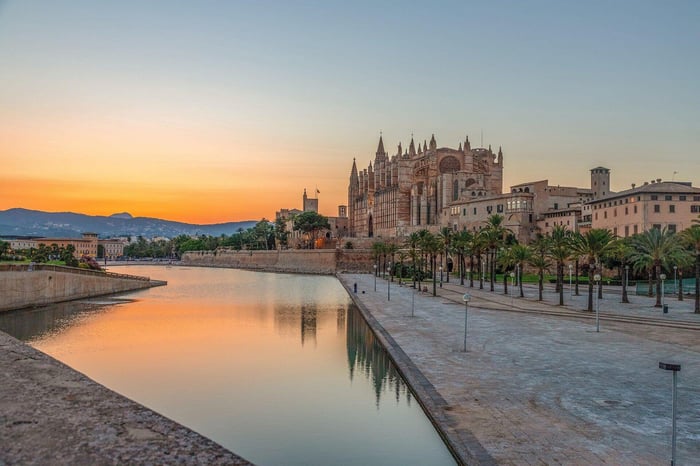
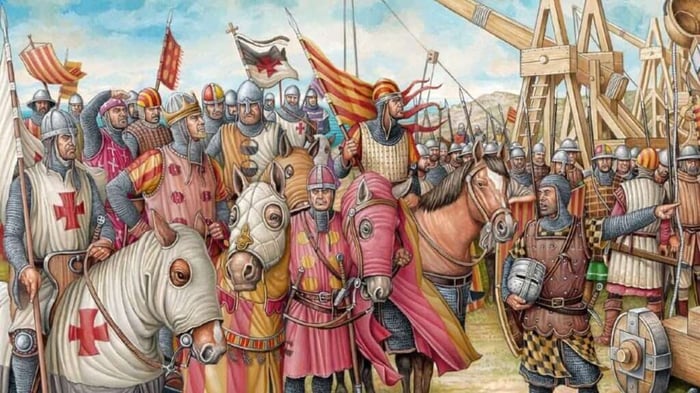
The history of Mallorca is a mosaic of different cultures, with the Moorish occupation from 902 to 1229 AD leaving an indelible mark that continues to influence the island's identity. While many of the physical structures of the powerful Taifa of Majorca were later repurposed, their influence remains in surprising and symbolic ways. A prime example is the iconic Palma Cathedral, La Seu. Although it is a masterpiece of Catalan Gothic architecture, its foundation was deliberately built on the site of the former Great Mosque of Medina Mayurqa, the Aljama mosque. This act by King Jaume I was a powerful statement of Christian reconquest. However, an intriguing historical secret lies within its sacred space: the main altar of the cathedral is oriented not towards Jerusalem, as is traditional for Christian churches, but towards Mecca, aligning with the orientation of the original mosque's mihrab. This unique architectural alignment is a silent, yet profound, tribute to the layers of history that coexist in Mallorca's most sacred space, a symbol of the island's layered past. The cathedral's construction, which began in 1306 and took nearly 300 years to complete, strategically repurposed the existing site, with the Aljama mosque initially serving as a church before the Gothic masterpiece took its final form.
2. A Hidden Architectural Marvel and a Story of Revenge: Bellver Castle and the Sculptures of Palma City Hall
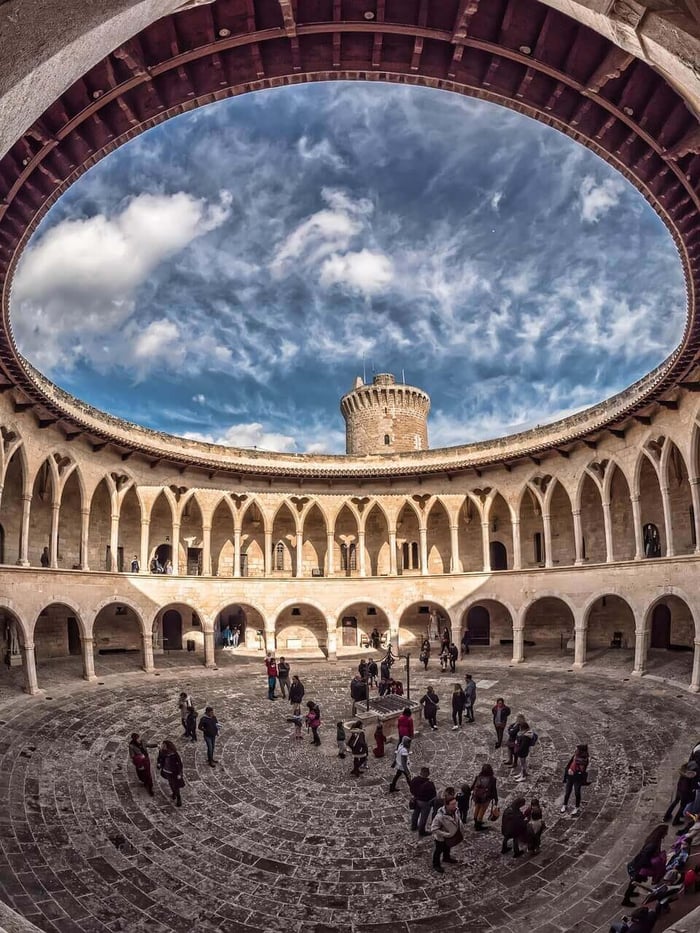
The island is dotted with unique architectural gems, but few have a story as intriguing as the Bellver Castle. Constructed in the early 14th century for King Jaume II of Mallorca, it is one of the few circular castles in Europe, a design rarity that offers a spectacular 360-degree panoramic view of Palma and the surrounding bay. Originally a royal residence, it later served as a military prison, adding a layer of somber history to its beautiful facade. Another curious architectural feature can be found on the façade of the Palma City Hall, where two unusual sculptures—a dragon and a snail—are carved into the stone. Legend has it that when the mayor of the time refused to pay the builders for their work, the stonemason, Jaume Caragol (whose surname means "snail" in Mallorcan), and the sculptor, Francesc Dragó ("dragon"), sought a subtle form of revenge. They secretly embedded their names into the stone in this symbolic fashion, creating a lasting and humorous reminder of a historical dispute, hidden in plain sight for those who know where to look.
3. The Ancient Roots of the Talayots: Mallorca's Prehistoric Megalithic Culture
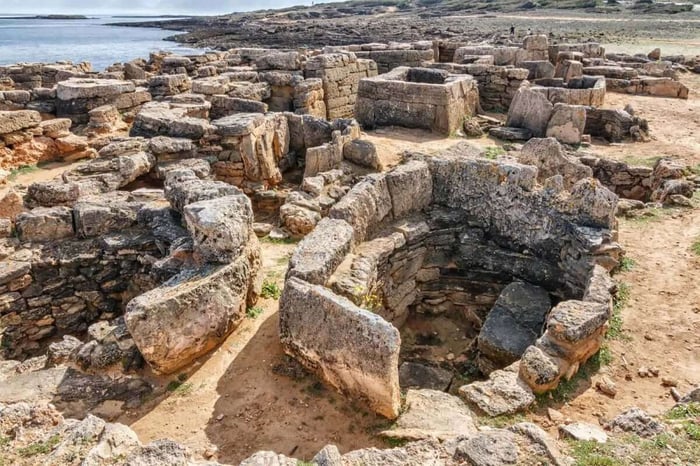
Long before the Romans and Moors, Mallorca was inhabited by ancient peoples who left behind a mysterious and captivating legacy. Around 2000 BC, the Talayotic culture emerged, flourishing from the late Bronze Age through to the Roman conquest. They are defined by their unique, large, rectangular or circular stone monuments known as talaiots. The purpose of these massive stone structures, built without mortar, is still a subject of debate among archaeologists. They could have served as watchtowers, ceremonial centers, or even as parts of fortified settlements. These talaiots are a powerful link to the island's prehistoric past, providing a rare glimpse into the social structure and sophisticated engineering of its earliest inhabitants. One of the most important and well-preserved archaeological sites is the Son Real Necropolis near Can Picafort, a burial ground with 143 tombs. Other significant Talayotic sites include Ses Païsses in Artà, a large village with a massive central talaiot, and Capocorb Vell in Llucmajor, one of the most extensive settlements on the island. The sheer number of these sites—more than 400 are scattered across Mallorca—indicates a dense population and a complex society with a clear emphasis on communal gatherings, rituals, and territorial markers.
4. The Drac de Na Coca: Mallorca's Legendary Crocodile and a Wedding Gift
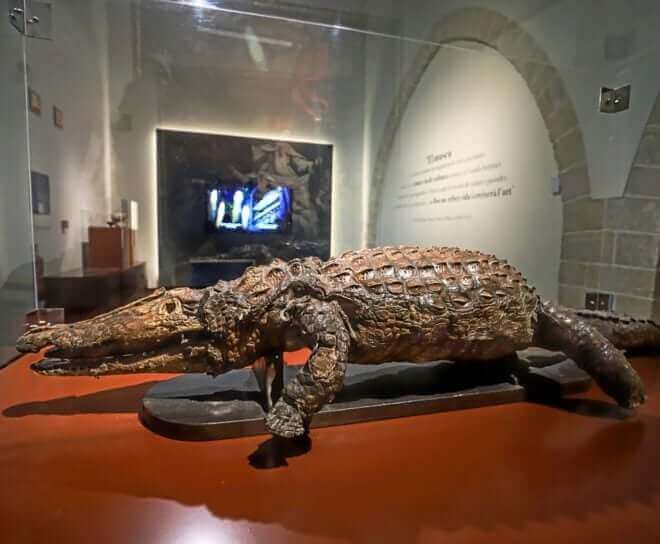
The legend of a dragon terrorizing Mallorca is a popular local tale, but the truth is even more fascinating. The "dragon" in question was actually a fearsome crocodile that was said to have lived in the sewers beneath Palma, emerging at night to prey on the city's inhabitants and livestock. According to the story, it was a knight named Bartomeu Coc who, with the help of a sword and a great deal of courage, successfully hunted and killed the beast, bringing an end to the city's terror. The mummified remains of this crocodile, now known as the Drac de Na Coca, are today displayed in a glass case at the Diocesan Museum of Palma, a grotesque and captivating artifact that brings the folklore to life. This bizarre and charming tale is a wonderful example of how local legend can be built around a kernel of truth, adding a touch of whimsical history to the island's narrative and becoming a cherished part of its cultural heritage. The story goes that after slaying the beast, Bartomeu had it embalmed and presented it to his bride as a unique wedding gift, a testament to his bravery.
5. Antoni Gaudí's Singular Mallorcan Legacy: The Palma Cathedral's Modernist Touch
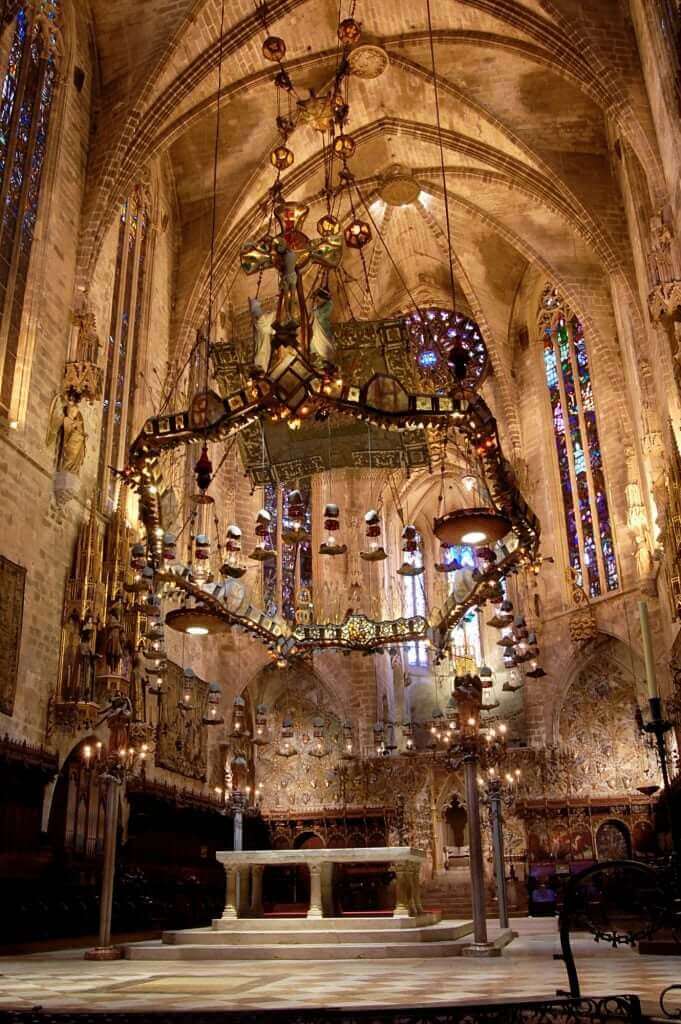
While most of Antoni Gaudí's famous works are in Barcelona, the celebrated Catalan architect left a significant and often-overlooked mark on Mallorca. During the early 20th century, he was commissioned by Bishop Pere Campins to oversee a renovation of the interior of Palma Cathedral, a project that lasted from 1904 to 1914. Gaudí's work, though never fully completed, is still strikingly visible today. His most notable contributions include the removal of the old Gothic choir, which had been obstructing the nave, and the creation of the monumental wrought-iron canopy that hangs suspended over the main altar. This was the only time Gaudí worked outside of his native Barcelona, and his unique artistic vision transformed the cathedral's interior, introducing a new sense of light and space. His intricate redesign, which also included new stained-glass windows and decorative elements, is a testament to his genius and the cathedral's status as a major architectural and historical landmark. His work included opening up windows that had been bricked up, designing new lighting fixtures, and the creation of a stunning seven-sided canopy with a large crucifix and hanging lamps.
6. The "Festival of Light": The Rose Window's Double Sunset
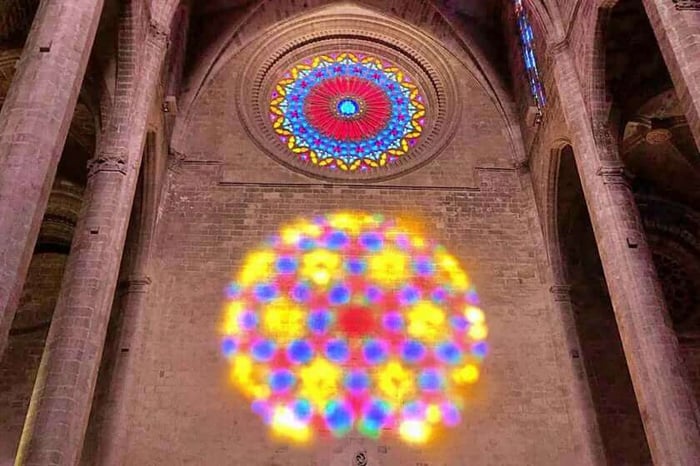
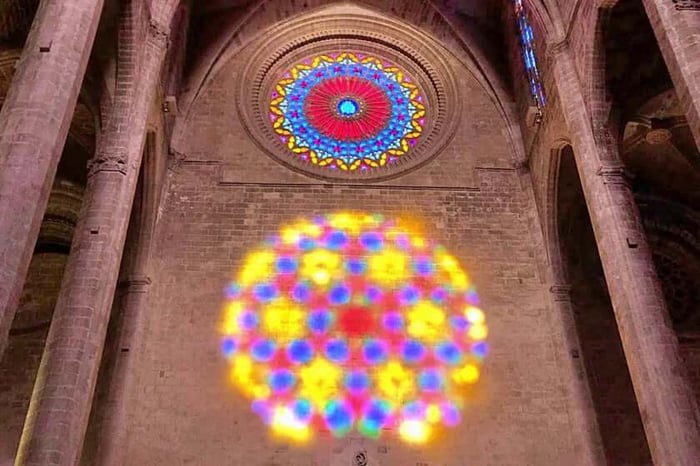
The Palma Cathedral, also known as "La Seu," is home to one of the world's largest Gothic rose windows, measuring 13 meters in diameter. But what makes it truly exceptional is a phenomenon that occurs twice a year, on November 11th and February 2nd. On these dates, the sun rises and shines through the main rose window, casting its colorful reflection on the interior wall opposite, directly beneath the smaller rose window on the western facade. This creates a spectacular visual effect known as the "Festival of Light" or the "Eight of Light," as the two rose windows' reflections overlap to form a figure eight. This celestial alignment, which draws thousands of visitors, is a testament to the masterful engineering and astronomical knowledge of the medieval architects.
7. The Labyrinthine Streets of the Old Town: A Roman and Arab Blueprint
The charming and intricate layout of Palma's Old Town is not a random jumble of streets but a carefully preserved historical blueprint. The city's structure is a layered testament to its various occupiers, beginning with the Romans, who established the city of Palmaria. Their grid-like street plan, known as a "decumanus" and "cardo," is still visible in some of the wider, straighter streets. However, the subsequent Moorish occupation transformed the city, creating the narrow, winding, and often shaded streets that characterize the Old Town today. This labyrinthine layout was a deliberate architectural strategy designed to provide protection from both the sun and potential invaders. As you wander through these streets, you are walking on a foundation laid by Romans and navigating a maze designed by Moors, a living history of urban planning.
8. The "Patrimoni de la Humanitat" Dry Stone Walls: UNESCO-listed Landscape
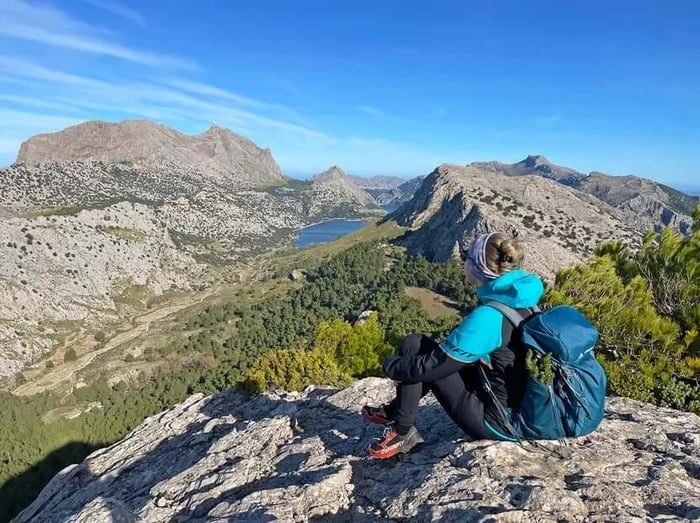
The breathtaking landscape of the Serra de Tramuntana, a mountain range that runs along the northwest coast of Mallorca, is a UNESCO World Heritage site, but not for its natural beauty alone. It was granted this status for its "cultural landscape" and specifically for the incredible network of dry-stone walls (pedra en sec) that crisscross the terrain. These walls, built without mortar, are a testament to centuries of human ingenuity and perseverance. They were constructed by Mallorcan farmers to create terraced fields for agriculture, primarily for olive and citrus trees, on the steep mountain slopes. This ancient agricultural practice, which has been passed down through generations, created a stunning, man-made landscape that is both functional and beautiful, defining the character of the region.
9. The Art of Llengües Fabric: Mallorca's Enduring Textile Tradition

Mallorca is famous for its unique textile tradition, particularly a fabric known as Llengües (which translates to "tongues" in Catalan). This distinctive, ikat-style fabric features a pattern of flames or tongues and is a testament to the island's historical ties to the Silk Road. The technique, believed to have arrived in the Mediterranean from the East, involves tying and dyeing threads before weaving, creating a blurred, feather-like design. Historically used for everything from bedspreads and curtains to clothing, Llengües fabric is still produced in traditional workshops across the island today. Its vibrant colors and unique patterns are a cherished part of Mallorcan design and a beautiful example of an artisanal craft that has survived for centuries.
10. The Tren de Sóller: A Historical Journey Through the Mountains
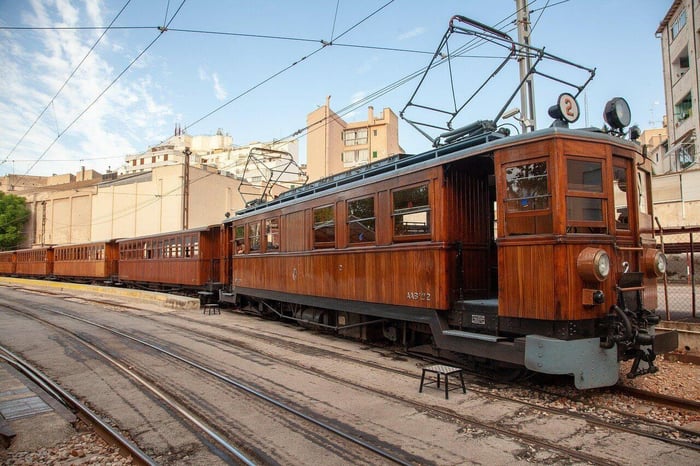
One of the most memorable ways to experience Mallorca's diverse landscape is by taking a ride on the Tren de Sóller. This vintage train, which has been operating since 1912, connects Palma with the picturesque town of Sóller, a journey of approximately 27 kilometers. What makes this trip so special is its route, which winds its way through the stunning Serra de Tramuntana mountains, passing through 13 tunnels, including the longest at nearly 3 kilometers, and crossing several dramatic viaducts. The train, with its polished mahogany interiors and brass fittings, is a piece of living history, offering a nostalgic journey back in time. It was originally built to transport Sóller's citrus harvests to Palma, but today, it is a popular tourist attraction that provides a unique perspective on the island's rugged and beautiful interior, an unforgettable blend of engineering marvel and natural beauty.