Mallorca’s Cycling Season 2026: A Record Start and What It Means for the Island
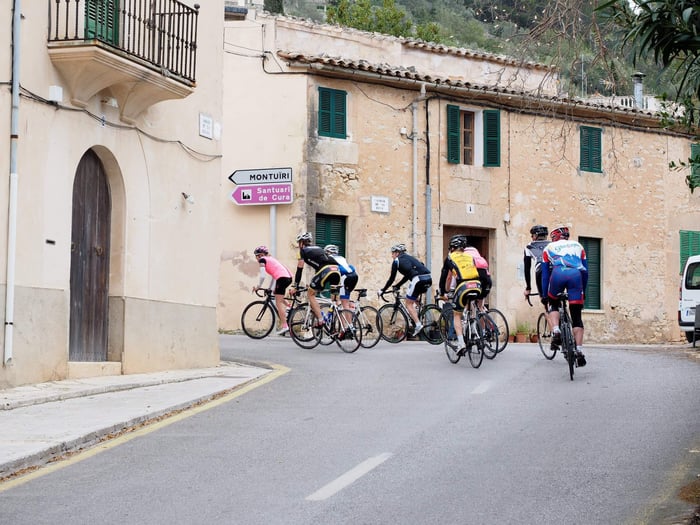
Every February, the first pelotons appear on the roads around Alcudia and Port de Pollensa, and the island shifts gear. By April, cycling has a grip on the north and northwest of Mallorca that is unlike anything else in European sports tourism. In 2026, that grip is tighter than ever. This spring is shaping up to be one of the strongest starts to a cycling season on record, with hotels opening earlier, airlines adapting their operations, and demand extending well beyond Mallorca’s traditional European base.
The numbers tell the story clearly. In the Playa de Muro area alone, 80 per cent of hotels were open by Easter 2026 — a 16 per cent increase compared to the same period in 2025, when the figure stood at 63 per cent despite Easter falling later in the calendar that year. Cycling tourism is, once again, the primary engine behind that early opening, with the hotel, bike rental, restaurant and retail sectors all activating weeks ahead of the general summer season.
The Mallorca 312: Europe’s Cycling Jewel
The centrepiece of the spring season is the Mallorca 312, which takes place on 25 April 2026. Now in its fifteenth edition, this gran fondo is one of the most significant mass-participation cycling events in Europe. Last year more than 8,500 riders took part, with entry places selling out within seconds of opening. The event offers three route options — 312 kilometres, 225 kilometres and 167 kilometres — all starting and finishing in Playa de Muro near Port d’Alcudia, and all taking in the roads of the Serra de Tramuntana on closed public highways. The 312-kilometre route climbs more than 5,000 metres in total, including the legendary ascents of Sa Calobra and Puig Major, Mallorca’s highest point at 1,445 metres.
The wider economic impact of the Mallorca 312 and the cycling season it anchors is significant. Hotels, specialist bike shops, physiotherapy clinics, sports nutrition retailers, cafes and restaurants in the north of the island all report the spring cycling period as one of their most important trading windows of the year. Pepe Luna, president of the Playa de Muro Hotel Association, noted that the early-season hotel openings driven by cycling tourism are “very positive for everyone, as it means the activation of not only the hotel sector, but also restaurants, shops and all complementary services.”
Airlines Respond to Growing Global Demand
What is particularly notable about the 2026 season is the geographical breadth of demand. North American cyclists are arriving in increasing numbers, and the shift is already registering with airlines. Air Canada has responded to the surge in bookings between Montreal and Palma by deploying a larger aircraft on the route — a Boeing 787 Dreamliner, replacing a smaller aircraft — to accommodate greater passenger capacity and, crucially, more bicycles. This is a direct commercial response to demand, not a speculative one, and it signals clearly that Mallorca’s reputation as a world-class cycling destination has broken well beyond its traditional European audience.
Palma Airport already connects the island to 166 destinations served by 52 airlines, with direct links to London, Amsterdam, Frankfurt, Stockholm, Copenhagen and, in the summer season, New York. The combination of excellent connectivity, spring weather in the low-to-mid twenties, and an infrastructure built specifically around the needs of cyclists — specialist hotels with bike storage, workshop facilities, guided rides and high-end hire fleets — makes Mallorca exceptionally well positioned to capture this growing global market.
What Makes Mallorca so Good for Cycling
The answer lies in a combination of terrain, climate and infrastructure that is genuinely difficult to replicate elsewhere in Europe. The Serra de Tramuntana offers climbs that range from the accessible to the genuinely demanding — Sa Calobra, with its 9.5-kilometre ascent and hairpin bends, is one of the most celebrated climbs in the sport. Puig Major, the roads above Valldemossa, and the Coll de Sa Batalla each offer different characters. The coastal routes — around Cap de Formentor, or the flat sweep of the Bay of Alcudia — offer recovery days with scenery that is as good as anything the Mediterranean has to offer.
The island has invested heavily in the infrastructure around cycling. Hotels in Playa de Muro, Puerto Pollensa and Palma have built dedicated bike garages and repair areas, indoor training facilities, and comprehensive recovery services. There are more than 110 active cycling clubs in the Balearic Islands, and the island hosts over 150,000 cycle tourists each year. Professional teams from across Europe — including some of the most decorated squads in the sport — use Mallorca as their winter training base precisely because the conditions, the roads and the support infrastructure are unmatched.
Spring Is the Season to Be Here
For those visiting the island in spring, the cycling season adds a dimension to Mallorca that is unlike any other time of year. The roads in the north are alive with riders of every level — from professionals on training camps to groups of friends on a first cycling holiday — and the cafe culture that grows up around this community is genuinely warm and welcoming. Stopping for a coffee in Lluc, or at the famous Bar Coll in the mountains, has become part of the ritual of cycling in Mallorca.
April and May are the finest months for those who want to ride without the summer heat. Temperatures between 17 and 23 degrees, reliable sunshine and roads that are busy with cyclists but largely free of summer car traffic create conditions that are hard to better anywhere in Europe. The early mornings are particularly fine — clear light, cool air, and roads that are quiet until the day trips begin.
The Balearic Government’s Position
Cycle tourism is not without its debates on the island. Some residents and political parties have raised concerns about the volume of cyclists on roads not designed for the scale of current traffic. The Balearic Minister for Tourism, Culture and Sport, Jaume Bauzá, addressed the issue directly in April 2026, arguing that cycle tourism is “an opportunity, not a problem,” and noting its significant role in extending the tourist season beyond the summer months and bringing economic benefit to inland villages. The El Pi party has separately called for an improved cycle path network across the island to separate riders from vehicle traffic and improve safety for all road users. That conversation is ongoing.
What is not in debate is the economic contribution. Cycle tourists tend to stay longer, spend more per day than many other visitor types, and arrive in the shoulder season when hotel rooms and restaurant tables that would otherwise be empty are filled. For Mallorca’s broader tourism model, cycling represents exactly the kind of high-value, seasonally distributed visitor it has been seeking to attract.
Property and the Cycling Season
For those considering property in Mallorca, the cycling season offers a useful lens through which to understand the island in spring. The areas most associated with cycle tourism — the north coast around Alcudia and Pollensa, the northwest around Sóller and the Serra de Tramuntana, and increasingly the roads of the southwest through Calvià and Andratx — are all areas where property values have shown consistent strength. The combination of lifestyle appeal, international visitor demand and strong seasonal rental potential makes these areas particularly attractive to buyers who are thinking about how a Mallorca property works across the full year, not just in August.
At Imperial Properties we are happy to discuss which areas of the island suit your requirements best, whether you are looking to cycle, to invest, or simply to enjoy everything that spring on this island has to offer. The roads are open, the weather is outstanding, and the season is well underway.
Q&A
When is the Mallorca 312 in 2026 and how do I enter?
What is the best area of Mallorca to base yourself for a cycling holiday?
What are the best cycling climbs in Mallorca?
Do I need to bring my own bike or can I hire one in Mallorca?
What months are best for cycling in Mallorca?
Temporada ciclista 2026 en Mallorca: un inicio de récord y lo que significa para la isla
Cada febrero, los primeros pelotones aparecen en las carreteras de Alcudia y Puerto Pollensa, y la isla cambia de marcha. En abril, el ciclismo tiene un dominio sobre el norte y el noroeste de Mallorca que no tiene parangón en ninguna otra forma de turismo deportivo europeo. En 2026, ese dominio es mayor que nunca. Esta primavera se perfila como uno de los inicios de temporada ciclista más sólidos de los últimos años, con hoteles abriendo antes, aerolineas adaptando sus operaciones y una demanda que se extiende mucho más allá de la base europea tradicional de Mallorca.
Las cifras hablan por sí solas. Solo en la zona de Playa de Muro, el 80 por ciento de los hoteles estaba abierto en Semana Santa 2026 — un aumento del 16 por ciento respecto al mismo periodo de 2025, cuando la cifra se situaba en el 63 por ciento a pesar de que la Semana Santa caía más tarde en el calendario ese año. El turismo ciclista es, una vez más, el principal motor de esa apertura anticipada, con los sectores hotelero, de alquiler de bicis, la restauración y el comercio activando su actividad semanas antes de la temporada estival general.
La Mallorca 312: la joya ciclista de Europa
El plato fuerte de la temporada de primavera es la Mallorca 312, que se celebra el 25 de abril de 2026. En su decimoquinta edición, esta gran fondo es uno de los eventos ciclistas de participación masiva más relevantes de Europa. El año pasado participaron más de 8.500 ciclistas, con plazas de inscripción agotadas en cuestin de segundos desde su apertura. El evento ofrece tres opciones de recorrido — 312 kilómetros, 225 kilómetros y 167 kilómetros —, todos con salida y llegada en Playa de Muro, junto a Port d’Alcudia, y todos discurriendo por las carreteras de la Serra de Tramuntana cortadas al tráfico. El recorrido de 312 kilómetros acumula más de 5.000 metros de desnivel positivo, incluyendo las legendarias subidas a Sa Calobra y al Puig Major, el punto más alto de Mallorca con 1.445 metros.
El impacto económico de la Mallorca 312 y de la temporada ciclista que ancla es significativo. Hoteles, tiendas especializadas en bicicletas, clínicas de fisioterapia, tiendas de nutrición deportiva, cafés y restaurantes del norte de la isla señalan el periodo ciclista de primavera como una de sus ventanas comerciales más importantes del año. Pepe Luna, presidente de la Asociación Hotelera de Playa de Muro, destacó que las aperturas tempranas de hoteles impulsadas por el turismo ciclista son “muy positivas para todos, ya que supone la activación no solo del sector hotelero, sino también de restaurantes, comercios y todos los servicios complementarios.”
Las aerolineas responden a la creciente demanda global
Lo particularmente destacable de la temporada 2026 es la amplitud geográfica de la demanda. Los ciclistas norteamericanos llegan en números crecientes, y el cambio ya se nota en las aerolineas. Air Canada ha respondido al aumento de reservas entre Montreal y Palma desplegando un avión de mayor capacidad en la ruta — un Boeing 787 Dreamliner, en sustitución de un avión más pequeño — para acomodar más pasajeros y, lo que es fundamental, más bicicletas. Se trata de una respuesta comercial directa a la demanda, no especulativa, y señala claramente que la reputación de Mallorca como destino ciclista de primer nivel ha trascendido ampliamente su audiencia europea tradicional.
El aeropuerto de Palma ya conecta la isla con 166 destinos operados por 52 aerolineas, con enlaces directos a Londres, Ámsterdam, Fráncfort, Estocolmo, Copenhague y, en temporada estival, Nueva York. La combinación de excelente conectividad, clima primaveral entre 17 y 23 grados, e infraestructura construida específicamente para las necesidades de los ciclistas — hoteles especializados con almacenamiento de bicicletas, talleres, salidas guiadas y flotas de alquiler de alta gama — sitúa a Mallorca en una posición excepcionalmente favorable para captar este mercado global en expansión.
Por qué Mallorca es tan buena para el ciclismo
La respuesta reside en una combinación de terreno, clima e infraestructura genuinamente difícil de replicar en otro lugar de Europa. La Serra de Tramuntana ofrece subidas que van desde las accesibles hasta las verdaderamente exigentes — Sa Calobra, con sus 9,5 kilómetros de ascenso y sus horquillas, es una de las subidas más célebres del deporte. El Puig Major, las carreteras sobre Valldemossa y el Coll de Sa Batalla tienen cada uno su propio carácter. Las rutas costeras — alrededor del Cap de Formentor o la llanura de la bahía de Alcudia — ofrecen jornadas de recuperación con paisajes que están a la altura de los mejores del Mediterráneo.
La isla ha invertido considerablemente en la infraestructura ciclista. Los hoteles de Playa de Muro, Puerto Pollensa y Palma han construido garájes y áreas de taller dedicados a bicicletas, instalaciones de entrenamiento cubierto y servicios de recuperación completos. Hay más de 110 clubes ciclistas activos en las Islas Baleares, y la isla recibe más de 150.000 turistas ciclistas cada año. Equipos profesionales de toda Europa utilizan Mallorca como base de entrenamiento invernal precisamente porque las condiciones, las carreteras y la infraestructura de apoyo no tienen rival.
La primavera es la estación para estar aquí
Para quienes visitan la isla en primavera, la temporada ciclista añade una dimensión a Mallorca que no tiene comparación con ningún otro momento del año. Las carreteras del norte están vivas con ciclistas de todos los niveles, y la cultura del café que crece en torno a esta comunidad es genuinamente cálida y acogedora. Detenerse a tomar un café en Lluc, o en el famoso Bar Coll en la sierra, se ha convertido en parte del ritual del ciclismo en Mallorca.
Abril y mayo son los mejores meses para quienes quieren rodar sin el calor estival. Temperaturas entre 17 y 23 grados, sol fiable y carreteras animadas con ciclistas pero en su mayoría libres del tráfico de verano crean unas condiciones difíciles de superar en Europa. Las primeras horas de la mañana son especialmente hermosas: luz clara, aire fresco y carreteras tranquilas.
La posición del Gobierno balear
El turismo ciclista no está exento de debates en la isla. Algunos residentes y partidos políticos han expresado su preocupación por el volumen de ciclistas en carreteras no diseñadas para la escala del tráfico actual. El Conseller de Turismo, Cultura y Deporte de las Islas Baleares, Jaume Bauzá, abordó la cuestión directamente en abril de 2026, argumentando que el turismo ciclista es “una oportunidad, no un problema”, y destacando su papel en la extensión de la temporada turística más allá de los meses de verano. El partido El Pi ha pedido por separado una red de carriles bici mejorada en toda la isla para separar a los ciclistas del tráfico de vehículos y mejorar la seguridad vial. Ese debate sigue abierto.
Propiedad y temporada ciclista
Para quienes consideran una propiedad en Mallorca, la temporada ciclista ofrece una perspectiva útil para entender la isla en primavera. Las zonas más asociadas al turismo ciclista — la costa norte en torno a Alcudia y Pollensa, el noroeste alrededor de Sóller y la Serra de Tramuntana, y cada vez más las carreteras del suroeste a través de Calvià y Andratx — son áreas donde los valores inmobiliarios han mostrado una solidez constante. La combinación de atractivo de estilo de vida, demanda internacional de visitantes y un sólido potencial de alquiler estacional hace que estas zonas sean especialmente interesantes para compradores que piensan en cómo funciona una propiedad en Mallorca a lo largo de todo el año, no solo en agosto.
En Imperial Properties estamos encantados de comentar qué zonas de la isla se adaptan mejor a sus necesidades, tanto si quiere rodar en bicicleta como si quiere invertir o simplemente disfrutar de todo lo que la primavera en esta isla tiene que ofrecer.
Preguntas frecuentes
¿Cuándo es la Mallorca 312 en 2026 y cómo me inscribo?
¿Cuál es la mejor zona de Mallorca para una vacaciones ciclistas?
¿Cuáles son los mejores puertos ciclistas de Mallorca?
¿Necesito traer mi propia bici o puedo alquilar una en Mallorca?
Mallorcas Radsaison 2026: Ein Rekordstart und was er für die Insel bedeutet
Jeden Februar tauchen die ersten Pelotons auf den Straßen rund um Alcudia und Port de Pollensa auf, und die Insel schaltet einen Gang höher. Im April hat der Radsport eine Präsenz im Norden und Nordwesten Mallorcas, die im europäischen Sporttourismus ihresgleichen sucht. In 2026 ist diese Präsenz stärker denn je. Dieser Frühling entwickelt sich zu einem der stärksten Saisonstarts seit Jahren, mit früher öffnenden Hotels, angepassten Flugverbindungen und einer Nachfrage, die weit über Mallorcas traditionelle europäische Stammkundschaft hinausgeht.
Die Zahlen sprechen eine deutliche Sprache. Allein in der Region Playa de Muro waren zu Ostern 2026 80 Prozent der Hotels geöffnet — ein Anstieg von 16 Prozent im Vergleich zum gleichen Zeitraum 2025, als die Quote bei 63 Prozent lag, obwohl Ostern in jenem Jahr später im Kalender fiel. Der Radtourismus ist einmal mehr der Haupttreiber dieser frühen Öffnung, wobei Hotel-, Fahrradverleih-, Gastronomie- und Einzelhandelssektor Wochen vor der allgemeinen Sommersaison aktiv werden.
Die Mallorca 312: Europas Radsport-Juwel
Das Herzstück der Frühjahressaison ist die Mallorca 312, die am 25. April 2026 stattfindet. Nun in ihrer fünfzehnten Ausgabe ist diese Gran Fondo eine der bedeutendsten Massenteilnahme-Radveranstaltungen Europas. Im vergangenen Jahr nahmen mehr als 8.500 Fahrer teil, wobei die Startplätze binnen Sekunden nach der Eröffnung ausverkauft waren. Die Veranstaltung bietet drei Streckenvarianten — 312 Kilometer, 225 Kilometer und 167 Kilometer — alle mit Start und Ziel in Playa de Muro bei Port d’Alcudia, und alle führen über die gesperrten Straßen der Serra de Tramuntana. Die 312-Kilometer-Strecke sammelt über 5.000 Höhenmeter, einschließlich der legendären Aufstiege nach Sa Calobra und zum Puig Major, dem höchsten Punkt Mallorcas mit 1.445 Metern.
Die wirtschaftlichen Auswirkungen der Mallorca 312 und der von ihr getragenen Radsaison sind beträchtlich. Hotels, Fahrradfachgeschäfte, Physiotherapiekliniken, Sportnahrungsgeschäfte, Cafés und Restaurants im Norden der Insel berichten allesamt, dass der Frühjahrs-Radsportzeitraum eines ihrer wichtigsten Handelsfenster des Jahres ist. Pepe Luna, Präsident des Hotelverbands Playa de Muro, wies darauf hin, dass die frühzeitigen Hoteleröffnungen, die durch den Radtourismus angetrieben werden, “sehr positiv für alle sind, da sie nicht nur den Hotelsektor, sondern auch Restaurants, Geschäfte und alle ergänzenden Dienstleistungen aktivieren.”
Airlines reagieren auf wachsende globale Nachfrage
Besonders bemerkenswert an der Saison 2026 ist die geografische Breite der Nachfrage. Nordamerikanische Radfahrer kommen in wachsender Zahl, und der Wandel macht sich bereits bei den Airlines bemerkbar. Air Canada hat auf den Anstieg der Buchungen zwischen Montreal und Palma reagiert, indem es auf der Route ein größeres Flugzeug einsetzt — einen Boeing 787 Dreamliner, der ein kleineres Flugzeug ersetzt — um mehr Passagierkapazität und vor allem mehr Fahrräder zu transportieren. Dies ist eine direkte kommerzielle Antwort auf die Nachfrage, keine spekulative, und signalisiert klar, dass Mallorcas Ruf als Weltklasse-Radsportdestination weit über sein traditionelles europäisches Publikum hinaus bekannt ist.
Der Flughafen Palma verbindet die Insel bereits mit 166 Destinationen, die von 52 Airlines bedient werden, mit Direktverbindungen nach London, Amsterdam, Frankfurt, Stockholm, Kopenhagen und in der Sommersaison nach New York. Die Kombination aus hervorragender Konnektivität, Frühlingstemperaturen zwischen 17 und 23 Grad und einer Infrastruktur, die speziell auf die Bedürfnisse von Radfahrern ausgelegt ist, positioniert Mallorca außergewöhnlich gut für diesen wachsenden globalen Markt.
Was Mallorca für Radfahrer so herausragend macht
Die Antwort liegt in einer Kombination aus Gelände, Klima und Infrastruktur, die in Europa nur schwer zu replizieren ist. Die Serra de Tramuntana bietet Anstiege, die von zugänglich bis wirklich anspruchsvoll reichen — Sa Calobra mit seinem 9,5-Kilometer-Anstieg und den Haarnadelkurven ist einer der gefeiertsten Anstiege im Radsport. Der Puig Major, die Straßen über Valldemossa und der Coll de Sa Batalla haben jeweils eigene Charaktere. Die Küstenrouten — rund um Cap de Formentor oder die flache Bucht von Alcudia — bieten Erholungstage mit Landschaften, die zu den schönsten des Mittelmeers gehören.
Die Insel hat erheblich in die Radfahrinfrastruktur investiert. Hotels in Playa de Muro, Puerto Pollensa und Palma haben dedizierte Fahrradgaragen und Werkstattbereiche, überdachte Trainingsbereiche und umfassende Erholungsservices eingebaut. Es gibt mehr als 110 aktive Radsportklubs auf den Balearen, und die Insel empfängt jährlich über 150.000 Radtouristen. Profiteams aus ganz Europa nutzen Mallorca als Wintertrainingslager genau deshalb, weil die Bedingungen, die Straßen und die Unterstützungsinfrastruktur unerreicht sind.
Frühling ist die Saison, um hier zu sein
Für diejenigen, die die Insel im Frühjahr besuchen, fügt die Radsaison Mallorca eine Dimension hinzu, die zu keiner anderen Jahreszeit vergleichbar ist. Die Straßen im Norden sind belebt mit Fahrern aller Niveaus, und die Cafekultur, die sich rund um diese Gemeinschaft entwickelt hat, ist aufrichtig herzlich. An einem Kaffee in Lluc oder am berühmten Bar Coll in den Bergen innezuhalten ist Teil des Rituals des Radfahrens auf Mallorca geworden.
April und Mai sind die besten Monate für alle, die ohne die Sommerhitze fahren möchten. Temperaturen zwischen 17 und 23 Grad, zuverlässige Sonne und Straßen, die mit Radfahrern belebt, aber weitgehend frei vom Sommerautoverkehr sind, schaffen Bedingungen, die in Europa nur schwer zu übertreffen sind. Die frühen Morgenstunden sind besonders schön — klares Licht, kühle Luft und ruhige Straßen.
Die Position der Balearen-Regierung
Der Radtourismus ist auf der Insel nicht ohne Debatten. Einige Einwohner und politische Parteien haben Bedenken wegen des Volumens von Radfahrern auf Straßen geäßert, die nicht für den heutigen Verkehrsumfang ausgelegt sind. Der balearische Tourismusminister Jaume Bauzá sprach das Thema im April 2026 direkt an und argumentierte, dass Radtourismus “eine Chance, kein Problem” sei und eine wichtige Rolle bei der Verlängerung der Tourismussaison über die Sommermonate hinaus spiele. Die Partei El Pi hat separat ein verbessertes Radwegnetz über die gesamte Insel gefordert. Diese Diskussion ist noch im Gange.
Immobilien und die Radsaison
Für diejenigen, die über Immobilien auf Mallorca nachdenken, bietet die Radsaison eine nützliche Perspektive, um die Insel im Frühjahr zu verstehen. Die Gebiete, die am stärksten mit dem Radtourismus assoziiert werden — die Nordostküste rund um Alcudia und Pollensa, der Nordwesten rund um Sóller und die Serra de Tramuntana, und zunehmend die Straßen des Südwestens durch Calvià und Andratx — sind allesamt Gebiete, in denen die Immobilienwerte konstante Stärke gezeigt haben. Die Kombination aus Lifestyle-Appeal, internationaler Besuchernachfrage und starkem saisonalen Vermietungspotenzial macht diese Gebiete besonders attraktiv für Käufer, die darüber nachdenken, wie eine Mallorca-Immobilie über das gesamte Jahr funktioniert.
Bei Imperial Properties besprechen wir gerne, welche Gegenden der Insel Ihren Anforderungen am besten entsprechen, ob Sie radfahren, investieren oder einfach alles genießen möchten, was der Frühling auf dieser Insel zu bieten hat.