Table of Contents
Peguera and Costa de la Calma: The Southwest's Original Resort and Its Quiet Neighbour
Drive the coast road between Santa Ponsa and Andratx and you pass through two places that sit side by side but feel like they belong to different decades of Mallorca's tourism story. Peguera is the older, established resort, built up in earnest from the late 1950s onward. Costa de la Calma, squeezed between Peguera and Santa Ponsa on a stretch of rockier coastline, grew up quietly beside it, never developing the same scale of hotels and never losing the calm that gives it its name.
Together they offer a useful contrast for anyone weighing up where to buy or rent in this part of Calvià: one place built for a lively holiday trade, and one built almost by circumstance to avoid it.
Peguera: From Fishing Village to Resort
The first buildings on this stretch of coast date to the 1920s, but Peguera's real transformation began in the late 1950s and accelerated through the 1960s, as Mallorca's wider tourism boom reached the southwest. Hotels and holiday apartment blocks replaced what had been a modest fishing and agricultural settlement, and the town earned a lasting nickname, "Little Germany," for the sheer weight of German visitors and second-home owners who have made it their own over the decades.
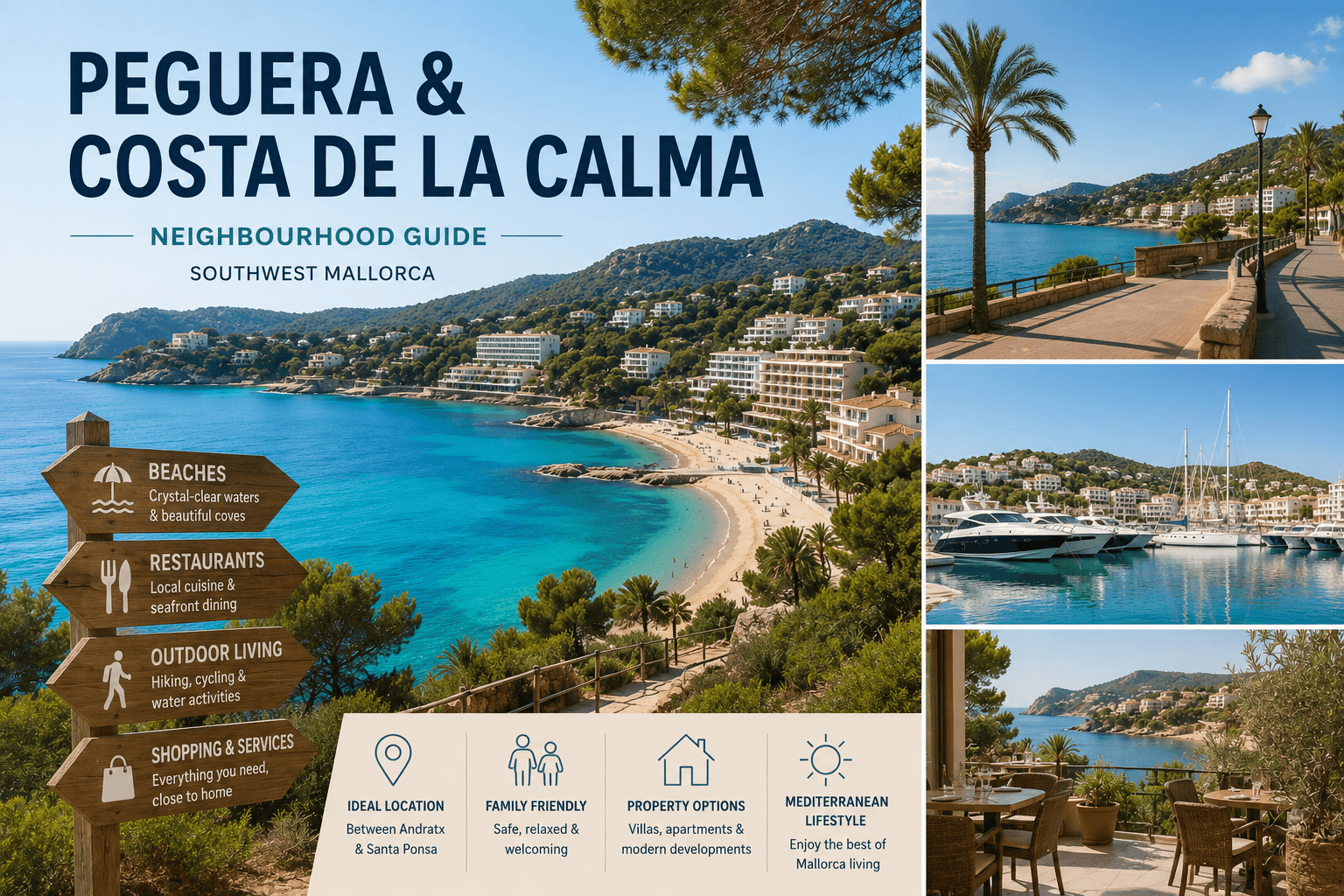
Peguera was the first resort in Mallorca to build an artificial beach, importing sand to create the sheltered bay that now anchors the town centre. Three beaches, Palmira, Torà and Romana, sit side by side along a seafront promenade opened in 1996, which finally linked them into a single continuous stretch and turned scattered development into a coherent resort. Away from that centre, the district of Cala Fornells has kept a different, older character: a small development of terracotta-roofed houses set around a genuinely pretty cove, distinct from the main tourist strip.
Thinking about buying or selling in Mallorca?
Costa de la Calma: The Quiet Neighbour
A few minutes up the coast toward Santa Ponsa, Costa de la Calma tells a different story. Its coastline is rockier and less suited to the kind of large sandy beach that anchors a mass tourism resort, and that single geographic fact shaped everything that followed. Rather than hotels, Costa de la Calma grew through the twentieth century as a residential area, favoured by Mallorcan families and, later, by expatriates and second-home owners who wanted the convenience of the southwest coast without the nightlife and crowds of its bigger neighbours.
The name translates literally as "coast of calm," and locals will tell you it is not just marketing: the area is genuinely more sheltered from wind than the open bays nearby, which makes its waters particularly good for swimming. Life here centres on quieter mornings, a swim before or after work, and sunset drinks rather than late nights out, and that rhythm is precisely what draws people to live here year-round rather than just visit for a week in August.
What Links the Two Areas
Both places sit within the municipality of Calvià, alongside Santa Ponsa, Palmanova and El Toro among others, and both benefit from the same infrastructure that has made this stretch of coast so consistently popular with international buyers: easy motorway access to Palma, a well-established network of golf courses inland, including Golf de Andratx and the Santa Ponsa courses nearby, and a mix of restaurants ranging from beachfront chiringuitos to more considered dining rooms.
What differs is pace. Peguera's centre is unashamedly geared toward its holiday trade, with a compact core of shops, bars and restaurants built for a summer crowd, while Costa de la Calma stays low-key even in August. For buyers, this often comes down to a straightforward choice: do you want to be in the middle of resort life, or a short drive from it.
The Property Market in Peguera and Costa de la Calma
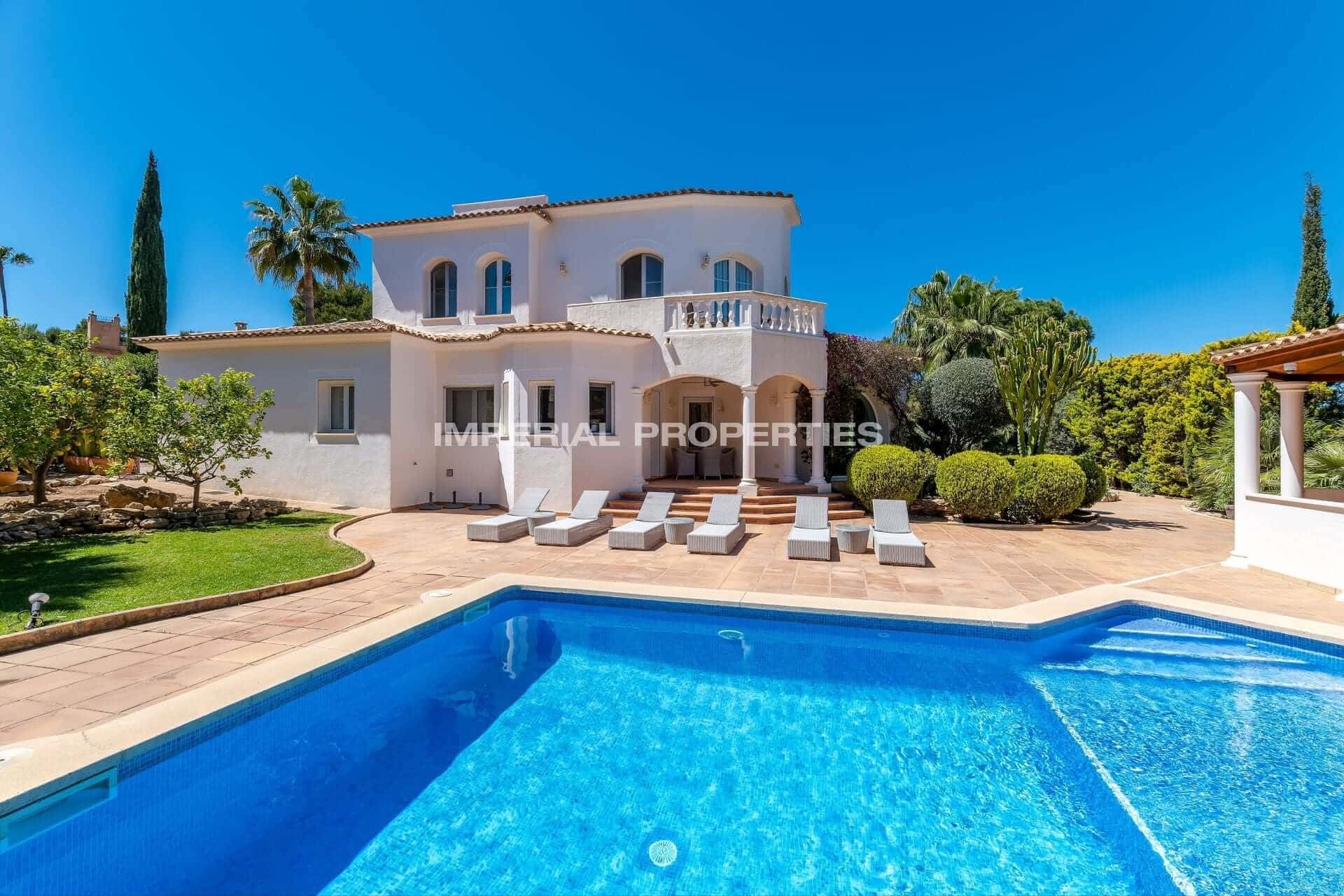
Peguera's property stock reflects its development history, with a mix of older apartment blocks from the 1960s and 1970s tourism boom alongside newer villas, particularly in the hillside areas around Cala Fornells where privacy and sea views command a premium. Costa de la Calma, having developed more slowly and more residentially, tends toward villas and townhouses on somewhat larger plots than the immediate Santa Ponsa resort strip, appealing to buyers who want a permanent or long-stay home rather than a holiday let investment.
Both areas sit within a short drive of Santa Ponsa's marina, Saturday market and beach, as well as the golf courses and international schools further inland, which keeps demand steady across both the holiday rental and permanent residence markets.
Visiting Peguera and Costa de la Calma
If you are weighing up this stretch of coast, it is worth spending time in both areas at different points in the day and the season. Peguera's promenade is at its best in the early evening as the beach crowd thins and the cafés fill up; Costa de la Calma rewards a slower look, ideally at sunset, when the shelter from the wind that gives the area its name becomes obvious. For anyone considering a purchase in either location, our team at Imperial Properties can talk through current listings and how each area compares on price, plot size and rental potential.