Table of Contents
The Total Solar Eclipse in Santa Ponsa: What Actually Happened
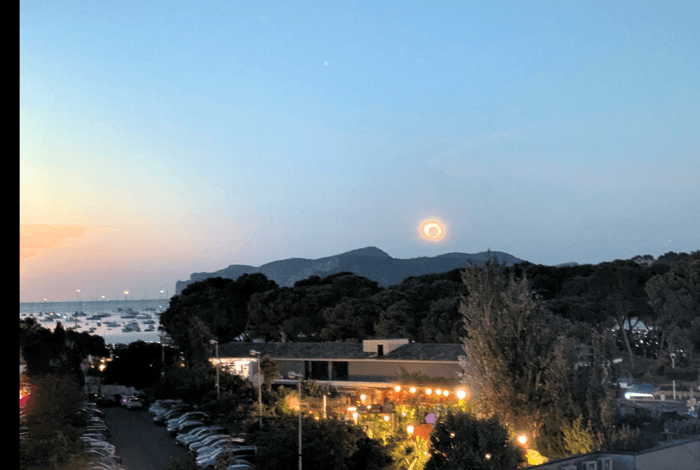
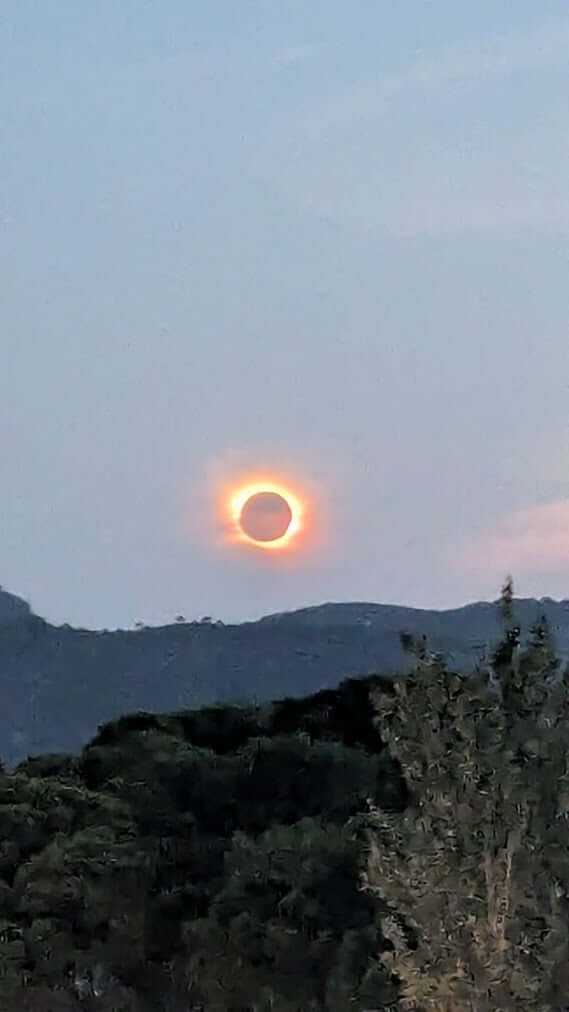
Last night, Santa Ponsa did something it has never done before. At 20:31 on Wednesday 12 August, the sun disappeared over the bay for one minute and thirty-six seconds, and thousands of people watched it happen from the beach, the marina, the surrounding hillsides and more than a few rooftop terraces. Mallorca sat inside the path of totality for Spain's first total solar eclipse since 1905, and Santa Ponsa was one of the island's official viewing points for it.
What Happened in Santa Ponsa on Eclipse Night
The Balearic Government designated Santa Ponsa beach as Calvià's Official Observation Zone for the eclipse, one of 26 such zones spread across the islands. Calvià Council ran a full safety operation from 3pm the day before, with around 60 local police officers plus Civil Protection and Guardia Civil deployed to manage access. By mid-morning on the 12th, the public car park at Santa Ponsa was already full, and police were turning drivers away. On the beach itself, umbrellas covered the sand from the tideline back to the pine trees, and the crowd kept growing through the afternoon as the heat gradually gave way to the evening light.
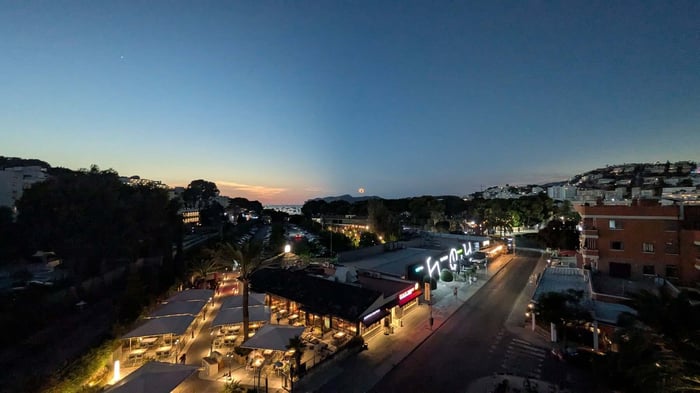
Nearby viewpoints, including Puig de sa Morisca and the cliffs above El Toro, were closed by the council in advance because their access roads couldn't be evacuated quickly in an emergency. That funnelled much of the local viewing crowd toward the beach itself and toward private terraces and balconies across Santa Ponsa and Nova Santa Ponsa, which turned out to be some of the best seats in town.
Thinking about buying or selling in Mallorca?
The Numbers Behind the Evening
Before the eclipse, the Balearic Government estimated that as many as two million people, residents and visitors combined, might try to reach a viewing point somewhere across the archipelago on the day. The 26 official observation zones were built to hold roughly 300,000 people between them, which gives some sense of scale: authorities were planning for a crowd many times larger than the official capacity, spread across beaches, headlands and town squares from Palma to Menorca.
What we don't have, as of this morning, is a confirmed final headcount for Santa Ponsa itself, or for the island as a whole. Neither Calvià Council nor the regional government has published an official attendance figure, and we won't invent one. What is confirmed is that Santa Ponsa's beach and car park reached capacity and access was restricted well before totality, which by any measure points to one of the busiest evenings the town has seen.
On the Beach and Around the Marina
Local reporting from the evening described a genuinely international crowd on the sand, with visitors from across Europe mixing with residents who'd walked down from nearby streets. Out in the bay, boats of every size anchored to watch from the water, echoing scenes reported along much of Mallorca's west coast. As totality approached, the noise on the beach dropped noticeably, and when the light finally went, several accounts described a mix of applause, gasps and a few people in tears. It lasted well under two minutes. Then the light came back, the applause started again, and Santa Ponsa spent the rest of the evening in an atmosphere closer to New Year's Eve than an ordinary Wednesday, with restaurants and bars around the marina reporting strong late trade.
What It Means for Santa Ponsa
Being chosen as one of Calvià's official observation zones put Santa Ponsa in front of an audience it doesn't always get, even in a busy August. For anyone who owns or is considering property here, last night was a useful reminder of what the town does well under pressure: a genuinely walkable beachfront, a marina with real capacity for boats and diners, and a layout that let a very large crowd arrive, watch something extraordinary and disperse without the chaos some other viewing points saw. Puig de sa Morisca and El Toro's clifftop routes had to be closed outright. Santa Ponsa's flatter, more open geography meant it could actually host the numbers it was given.
Spain won't have another eclipse like this until 2027, when a shorter total eclipse crosses further south, and then 2028, when an annular eclipse passes over the peninsula. Neither will put the Balearics back in the path of totality the way last night did. For now, Santa Ponsa has one very memorable Wednesday evening, a lot of new photographs of the bay, and a reasonable claim to having been one of the best places in Spain to watch it from.