Importing and Registering a Car in Mallorca: The Matriculación Process
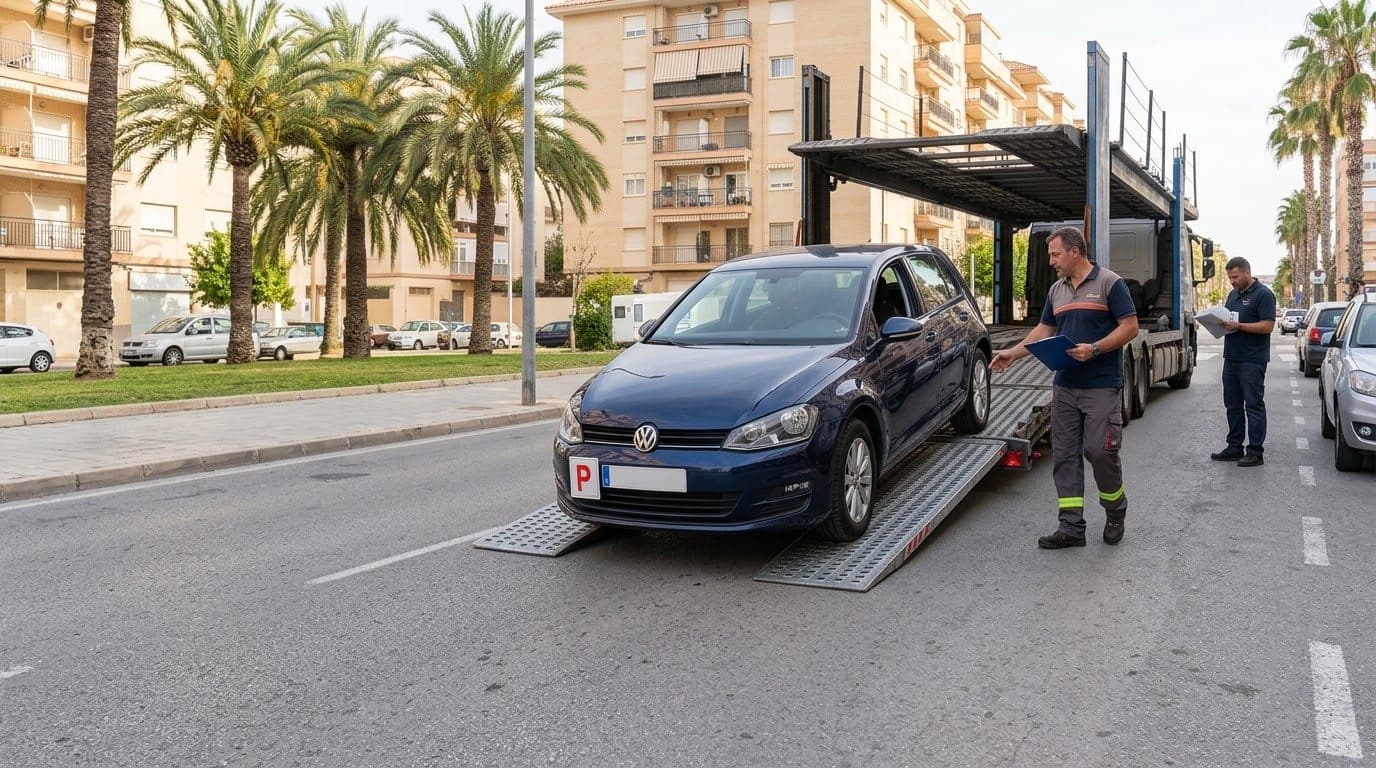
If you are moving to Mallorca and bringing your own car with you, you cannot simply keep driving on your home number plates indefinitely. Spain requires foreign-registered vehicles used by residents to go through matriculación — the process of registering the car onto Spanish plates. It is more paperwork than a straightforward car purchase, but once you understand the sequence it is manageable without a lawyer.
This guide walks through when registration becomes compulsory, the steps involved, and where the costs sit so there are no surprises partway through.
Thinking about buying or selling in Mallorca?
Do You Need to Register? The Residency Rule
The trigger for compulsory registration is residency, not simply owning property. Once you become a Spanish tax resident — broadly, once you spend more than 183 days a year in Spain — a vehicle you keep using here must be registered on Spanish plates, generally within 30 days of that residency starting. Visitors and second-home owners who spend part of the year in Mallorca and drive a foreign-plated car for short stays are not caught by this rule in the same way, though the vehicle cannot simply stay in Spain indefinitely without ever being used elsewhere.
There is a specific, useful exemption for people relocating permanently: traslado de residencia (transfer of residence). If you have owned and used the car for at least six months before moving, and you have been resident outside Spain for the preceding twelve months, you can apply to import the vehicle without paying the registration tax described below. The exemption has to be applied for before the vehicle is registered, not afterwards, so it is worth confirming eligibility early.
Step 1: Homologación and the Certificate of Conformity
Before a foreign car can go on Spanish plates, it needs to be shown to comply with Spanish and EU technical standards. For most cars bought new within the EU, this is straightforward: the manufacturer's European Certificate of Conformity (CoC) is usually enough, and many manufacturers or their Spanish dealers can supply a duplicate if you no longer have the original. For cars from outside the EU, or older vehicles without a valid CoC, a formal homologación report from an authorised engineering firm is required instead, checking the vehicle individually against Spanish type-approval rules.
Step 2: Passing the ITV Inspection
Once the paperwork on conformity is sorted, the car needs an ITV inspection — Spain's equivalent of an MOT — carried out specifically for the purpose of first registration in Spain. The inspector checks the vehicle against the documentation from step one, confirms the chassis and engine numbers match, and verifies the car meets current roadworthiness standards. It is worth booking this appointment as far ahead as you can, since ITV stations in Mallorca get busy, particularly outside the winter months.
Step 3: Registration Tax (IEDMT) and Modelo 576
Assuming the traslado de residencia exemption does not apply, the next step is the Impuesto Especial sobre Determinados Medios de Transporte (IEDMT), Spain's one-off vehicle registration tax. It is self-assessed using tax form Modelo 576, filed with the Agencia Tributaria before the car can be registered with the DGT. The rate depends on the car's official CO2 emissions figure, taken from its type-approval documentation, and rises in bands as emissions increase — vehicles with the lowest emissions figures pay no registration tax at all, while higher-emission vehicles pay progressively more. The Balearic Islands apply the same national bands as the rest of Spain.
Step 4: DGT Registration and Number Plates
With the CoC or homologación certificate, the ITV pass, and the Modelo 576 receipt (or exemption approval) in hand, the final administrative step is registering the car with the Dirección General de Tráfico (DGT). This is where the vehicle receives its Spanish number plates and its permanent Spanish registration certificate (permiso de circulación). You will need your NIE, proof of address in Mallorca, and valid Spanish insurance already in place before the DGT will complete the registration — insurers can normally issue a policy against the foreign chassis number ahead of the plates being issued.
Ongoing Costs: IVTM Road Tax
Once registered, the car becomes liable for the Impuesto sobre Vehículos de Tracción Mecánica (IVTM), an annual municipal road tax billed by the town hall where the car is registered rather than by the region. The amount depends on the vehicle's fiscal power (potencia fiscal, a horsepower-derived rating shown on the registration certificate) and on the specific municipality's own rate within nationally set bands, so a car registered in Calvià and an identical car registered in Palma will not necessarily pay the same amount.
Typical Timeline
Realistically, allow several weeks from first booking an ITV appointment to holding Spanish plates, longer if a full homologación report is needed rather than a manufacturer's CoC, or if the traslado de residencia exemption application is still being processed. Building in that lead time avoids the awkward gap where a car is neither legally on its old plates in Spain nor yet registered on new ones.
Getting Help
Gestorías — administrative agencies used throughout Spain for exactly this kind of paperwork — handle vehicle registration routinely and can take the form-filling and appointment-booking off your hands for a modest fee. For anyone settling into a new home in the southwest of the island, it is one of several practical jobs, alongside utilities and residency paperwork, that is easier delegated than done entirely solo in a new language.