Table of Contents
IBI, Basura and What They Actually Fund: Mallorca vs. London and Munich Property Taxes
Every homeowner in Europe pays some form of annual local property tax, but the systems behind the bill differ far more than most people realise. In Mallorca that means IBI and, separately, the basura (rubbish collection) charge; in London it means Council Tax; in Munich it means Grundsteuer. Comparing the headline numbers alone misses the point, because each tax is calculated differently and funds a different slice of local government. This is about what each one is actually for, not just what it costs.
Understanding that difference matters more than the raw figure, especially for anyone budgeting for a home in more than one of these places.
Thinking about buying or selling in Mallorca?
IBI in Mallorca: How It Is Calculated
The Impuesto sobre Bienes Inmuebles (IBI) is based on the valor catastral, the cadastral value assigned to every property by the Catastro, Spain's land registry, which is typically well below current market value. Each town hall (ayuntamiento) sets its own annual rate, or coeficiente, within limits set by national law, and applies it to the cadastral value to produce the bill. Because it is set locally, IBI in Calvià is not the same as IBI in Palma or Andratx, even for comparable properties, simply because each council sets its own rate.
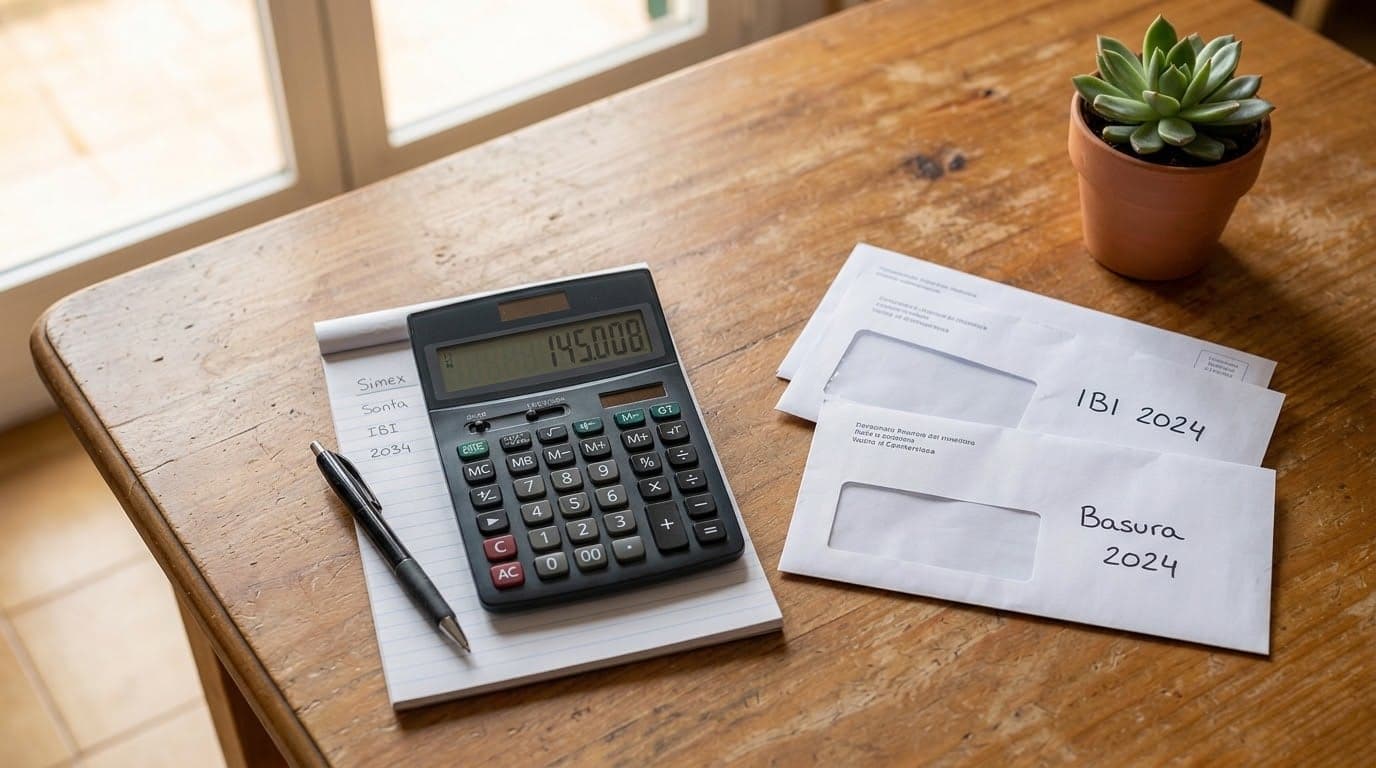
Separately from IBI, most Mallorcan town halls charge a basura fee for rubbish collection, billed as its own line rather than folded into IBI. It is a flat or property-type-based charge set by each council for waste collection and disposal specifically, distinct from the broader municipal budget that IBI feeds into.
What IBI and Basura Actually Fund
IBI revenue goes into the general municipal budget of the ayuntamiento that levies it, funding the ordinary run of local services: street cleaning and lighting, local roads, parks and public spaces, municipal police, and local administration. It is one of several revenue streams a Spanish town hall has, alongside charges like the basura fee, licence fees and its share of state and regional transfers, so IBI alone does not fund any single service outright — it goes into the general pot. The basura fee, by contrast, is more directly tied to the specific cost of running rubbish collection and treatment in that municipality.
London Council Tax: How It Is Calculated
Council Tax in London and the rest of England is based on which of eight valuation bands (A to H) a property falls into, determined by its estimated value back in 1991 rather than its current price — a quirk that means two very differently priced homes today can sit in the same band if their relative values in 1991 were similar. Each London borough sets its own rate for each band annually, so, as with IBI, the same band produces a different bill depending on which borough the property is in.
What Council Tax Actually Funds
Council Tax is the single largest source of locally-raised income for English local authorities and is earmarked far more visibly than IBI: a London borough's Council Tax bill typically shows separate lines for the Greater London Authority (funding the Metropolitan Police, London Fire Brigade and Transport for London's precept) and for the borough itself, which funds adult social care, children's services, waste collection, libraries and local roads. Adult social care in particular has become one of the largest single pressures on Council Tax revenue in recent years, a structural difference from how IBI is spent in Spain, where social care is funded through different channels.
Munich Grundsteuer: How It Is Calculated
Germany's Grundsteuer works on a two-part formula: a federally-set base value (Grundsteuerwert, following the 2025 nationwide reform of how properties are valued) multiplied by a federal base rate, and then multiplied again by the Hebesatz, a municipal multiplier that each city, including Munich, sets itself. It is this local Hebesatz that gives municipalities their room to vary the final bill, in a broadly similar way to how Spanish councils set their own IBI coeficiente or London boroughs set their own Council Tax rate.
What Grundsteuer Actually Funds
Grundsteuer feeds into Munich's general municipal budget, but unlike Council Tax in London, it is a comparatively smaller piece of that city's overall revenue mix, which also draws heavily on Gewerbesteuer (local business tax) and the municipality's share of income tax collected nationally. German municipalities generally rely less on residential property tax as a proportion of total local revenue than English boroughs do, which is one of the clearest structural differences between the three systems.
The Real Difference Is Structural, Not Just the Number
Put simply: Council Tax in London is the backbone of how a borough funds itself and comes with the most visible, itemised breakdown of the three. IBI in Mallorca is one contributor among several to a Spanish town hall's general budget, with rubbish collection billed and accounted for separately via the basura fee. Grundsteuer in Munich sits further back in the funding mix behind business tax and shared income tax revenue. None of the three numbers is directly comparable to another without accounting for what each is actually paying for — which is exactly why a straight euro-for-euro comparison of the bills alone tells only part of the story.