Table of Contents
Horse Country: Riding Stables and Equestrian Life in Southwest Mallorca
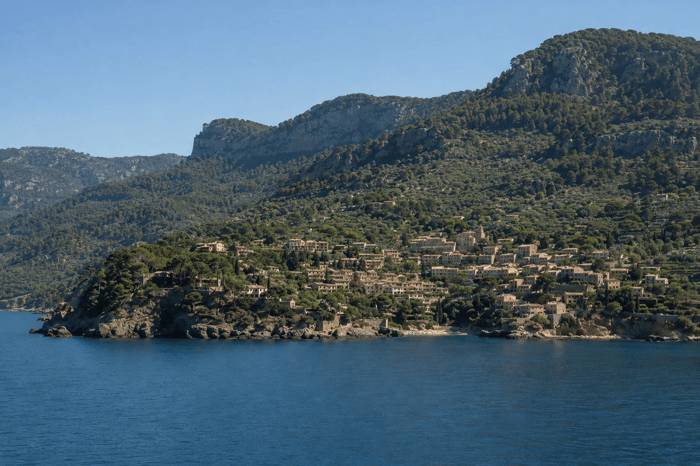
Behind the coastline of Calvià and Andratx, past the last of the villa developments, the land opens into something quieter — dry-stone walls, almond groves, and paddocks where horses have grazed for generations. Southwest Mallorca isn't usually the first place people associate with equestrian life; that reputation tends to go to the island's flatter interior, around Sa Pobla or Manacor. But the hinterland behind Santa Ponsa, Calvià village and the road toward Andratx has quietly supported a working riding culture for decades, and it's grown rather than shrunk as the coast itself has become busier.
For residents who keep horses, or simply want to ride, the appeal of this part of the island is straightforward: proper stables within a short drive of the coast, trails that climb into genuinely wild terrain, and a pace of life that still runs on daylight and seasons rather than tourist schedules.
The Stables of Calvià
Calvià itself, sitting at the foot of the Tramuntana a short way inland from the southwest coast, has become something of a hub for riding in this part of the island. Es Pas Riding Club offers lessons across levels along with countryside hacks and access to competitions, and has built a solid local reputation over the years. A little further along, on the road toward Andratx, Rancho La Romana is one of the area's longer-established riding centres, with a straightforward focus on lessons and trail riding through the surrounding hills.
Club Caballista Son Malero, based at Camí de Son Malero in Calvià, rounds out the picture with training arenas, stabling and instruction aimed at both complete beginners and more experienced riders working toward competition. Between the three, the Calvià area covers most of what a rider on this side of the island is likely to need, from a first lesson on a pony to structured training for dressage or show jumping.
Thinking about buying or selling in Mallorca?
The Terrain: What Makes This Corner of the Island Different
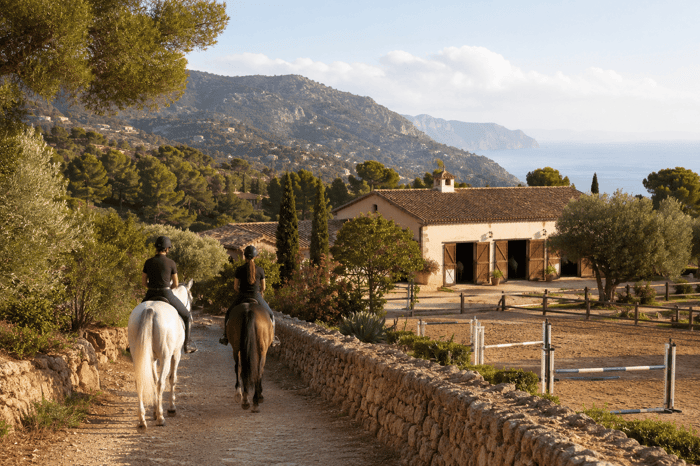
What sets the southwest apart from Mallorca's flatter, more agricultural interior is the terrain itself. Riders here move between two very different landscapes within the space of a short hack: the lower slopes of the Tramuntana behind Andratx and Calvià, dense with pine and holm oak, and the drier, more open country running down toward the coast, threaded with old cart tracks and drystone boundary walls that predate any of the current development. It's demanding riding in places — narrow paths, real gradient, loose stone underfoot — which is part of why the stables here tend to attract riders who want genuine trail work rather than a flat arena and a slow walk along a beach.
Sunset rides along tracks with sea views toward the bay are a fairly standard feature of what local stables offer in the warmer months, and the light in this part of the island in the early evening is a large part of the draw for both residents and visitors who ride.
Keeping Horses in the Southwest
Beyond the lesson-and-trail-ride model, this stretch of the island supports a real population of privately owned horses. Fincas with stabling, paddocks and direct access to bridleways are a recognised category of property here, distinct from a standard rural finca, and they turn up regularly among the countryside listings behind Calvià, Santa Ponsa and further toward Andratx. Buyers looking specifically for equestrian property tend to prioritise flat, useable land alongside the house itself, existing stable infrastructure that meets current standards, and proximity to one of the established riding clubs for farriery, feed and veterinary support.
It's a narrower market than general countryside property, and land with the right combination of space, water access and stabling doesn't come up as often as houses without it — which tends to keep well-equipped equestrian fincas in the southwest holding their value.
A Working Culture, Not a Novelty
What distinguishes horse ownership here from the more obviously tourist-facing "rancho holiday" model found elsewhere on the island is that it functions as an everyday part of local life. Families in and around Calvià keep horses the way families elsewhere keep boats or a second car — as something used regularly rather than as an occasional excursion. Local gymkhanas and small competitions run through the stables mentioned above give younger riders a route from first lessons through to informal competition without needing to travel across the island.
That everyday quality is, in the end, what makes this corner of Mallorca genuinely "horse country" rather than simply a place that offers riding to visitors. The infrastructure exists because local people use it year-round, not because the season demands it.
Finding Equestrian Property in the Southwest
For anyone searching specifically for a finca with stabling or paddock land in this part of the island, it's worth browsing the current listings across Mallorca to see what's available, since equestrian-suitable land tends to be filtered by specific plot characteristics rather than by area alone.