Table of Contents
- Why the Golden Visa Was Ended
- The 183-Day Rule: The Single Most Important Number to Understand
- The Residency Routes That Remain in 2026
- What You Still Need to Buy Property in Mallorca
- Planning Ahead Makes the Difference
- Por Que Se Elimino el Visado Dorado
- La Regla de los 183 Dias: El Numero Mas Importante que Debes Entender
- Las Vias de Residencia Disponibles en 2026
- Lo Que Sigue Siendo Necesario Para Comprar Una Propiedad en Mallorca
- Planificar Con Antelacion Marca la Diferencia
- Warum das Golden Visa Abgeschafft Wurde
- Die 183-Tage-Regel: Die Wichtigste Zahl, Die Es Zu Verstehen Gilt
- Die Verbleibenden Aufenthaltsmoeglichkeiten 2026
- Was Weiterhin Zum Kauf Benoetigt Wird
- Vorausplanung Macht den Unterschied
Spain's Golden Visa Is Gone: What Every Mallorca Buyer Needs to Know in 2026
For many years, Spain's Golden Visa programme offered non-EU buyers a straightforward path: invest at least 500,000 euros in property and receive a Spanish residency permit in return. It was a route that brought significant international investment to Mallorca and made the island even more attractive to buyers from the United Kingdom, the United States, the Middle East and beyond. That route closed officially in April 2025, and anyone planning to buy property in Mallorca in 2026 needs to understand what has changed, what has not, and what options remain.
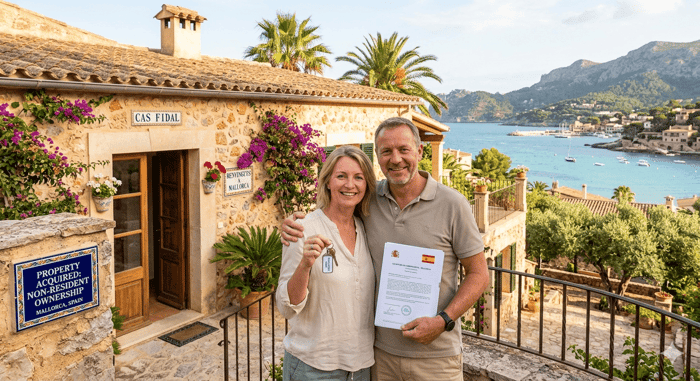
The key thing to be clear about from the outset is this: the end of the Golden Visa does not restrict your right to buy property in Mallorca. Any individual, regardless of nationality, can purchase real estate on the island. What has changed is the relationship between property ownership and residency. Buying a home in Mallorca no longer grants you the legal right to live there long term, and this distinction matters enormously in practice.
Why the Golden Visa Was Ended
The Spanish government's decision to close the Golden Visa programme was driven primarily by concerns about housing affordability and the pressure that overseas investment was placing on the residential market, particularly in cities like Madrid and Barcelona. Prime Minister Pedro Sanchez cited figures showing that more than 27,000 properties were purchased by non-EU residents in 2023 alone through the scheme. The decision was framed as a housing policy measure, and it applied across Spain, including the Balearic Islands.
It is worth noting that the closure of the Golden Visa has not reduced the appetite among international buyers for Mallorca property. The island's market remains extremely active, and the underlying reasons that drew buyers here, the climate, the quality of life, the stability of values, the infrastructure and the cultural richness, remain entirely intact. What has changed is the administrative route for those who also wish to establish legal residency.
The 183-Day Rule: The Single Most Important Number to Understand
Whether or not you have formal residency status, Spain's tax law contains a threshold that every property owner on the island should understand clearly. If you spend more than 183 days in Spain during any calendar year, you become a Spanish tax resident in the eyes of the law. At that point, your worldwide income, including pensions, dividends, rental income from properties in other countries and capital gains on overseas assets, becomes reportable to the Spanish tax authorities. For residents of EU member states this distinction carries one set of implications; for UK nationals post-Brexit and for Americans, the picture is somewhat different and requires specific professional advice.
The practical consequence is that many buyers who previously assumed they could simply spend as much time as they liked in Mallorca without addressing their residency status are now encountering legal reality. Non-EU nationals, including UK citizens since Brexit, are subject to the 90 in 180 day Schengen Area rule if they do not hold a valid residency permit. Overstaying carries real risk and the rules are increasingly enforced.
The Residency Routes That Remain in 2026
The good news is that several genuine and well-established pathways to Spanish residency remain open, and each suits a different buyer profile.
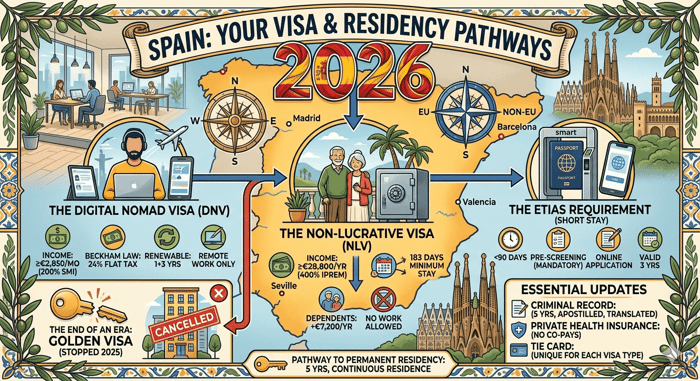
The Non-Lucrative Visa is Spain's long-standing route for people who wish to live in Spain without working locally. It is designed for retirees and those who can support themselves from passive income, savings or income earned entirely from outside Spain. To qualify, applicants need to demonstrate sufficient financial means, currently in the region of 2,400 euros per month for a single applicant, with additional amounts required for dependants. The visa also requires private health insurance with no copayments. It is initially granted for one year and is renewable for two-year periods. After five years of continuous legal residence, permanent residency becomes available, and citizenship follows the standard ten-year timeline. One important change introduced in 2025 is that the Spanish government reinstated a minimum physical presence requirement of 183 days per year to maintain the Non-Lucrative Visa, so this is no longer a permit that can be held while living predominantly elsewhere.
The Digital Nomad Visa, introduced in January 2023 under Spain's Startup Law, is now an established option for remote workers and self-employed professionals whose clients or employers are based predominantly outside Spain. To qualify, applicants need to demonstrate earnings of at least around 2,849 euros per month, hold a relevant degree or at least three years of professional experience in their field, and carry private health insurance. At least 80 per cent of professional activity must serve clients outside Spain. This visa is particularly suited to buyers who work remotely for international companies or who run businesses with an international client base.
The Entrepreneur Visa provides a pathway for non-EU nationals who can present a viable and innovative business plan that demonstrates clear economic benefit to Spain. It was not affected by the Golden Visa closure and remains open. It requires approval of the business plan by the relevant Spanish authorities and carries its own set of financial and practical requirements.
For those who are employed by a non-Spanish company and being relocated to Spain in a professional capacity, the Highly Qualified Professional route under Spain's Beckham Law offers a particularly attractive option. Under this regime, qualifying individuals are taxed as non-residents for Spanish tax purposes for a period of six years, meaning foreign-source income including dividends, rental income from overseas properties and capital gains on foreign assets falls outside Spanish taxation entirely. The application must be made within six months of commencing work in Spain, and the window cannot be reopened once missed.
What You Still Need to Buy Property in Mallorca
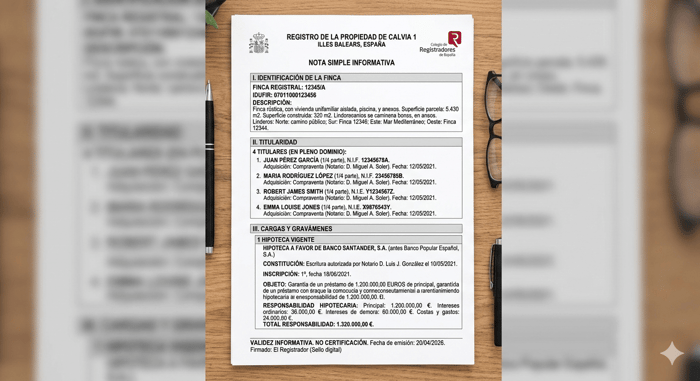
Regardless of nationality and regardless of which residency route you may pursue, buying property in Mallorca requires certain documents. Every buyer needs an NIE, the Numero de Identificacion de Extranjero, which is a Spanish tax identification number for foreigners. Without an NIE it is not possible to complete any property transaction, and the process of obtaining one should be started well in advance of any planned purchase. A Spanish bank account is also required, both for the transaction itself and for ongoing tax payments and utility bills. Most buyers working in Mallorca also engage a Spanish property lawyer to carry out due diligence, review contracts and manage the process through to completion at the notary.
The costs of buying property in Mallorca, in addition to the purchase price itself, typically run to between 10 and 12 per cent of the value. For second-hand properties, this includes Transfer Tax at rates of between 8 and 11 per cent depending on the value of the property, plus notary fees, Land Registry fees and legal costs. For new-build properties, VAT at 10 per cent and Stamp Duty at 1.5 per cent apply instead of Transfer Tax.
Planning Ahead Makes the Difference
The buyers who experience difficulties are almost always those who separate the property decision from the residency planning. The two are, in practice, closely connected, and the sequence in which you address them matters. Applying for a visa too early or too late can create complications, and different visa categories carry different tax implications that should be understood before, not after, any purchase completes.
Mallorca remains one of the most attractive locations in Europe for those seeking a second home, a permanent relocation or a long-term investment. The rules governing how non-EU buyers establish their right to live here have changed, but the routes remain open and the island itself has not changed at all. With the right legal and financial advice taken early, the path from visiting Mallorca to making it your home is entirely clear.
The team at Imperial Properties works regularly with buyers navigating these questions and can connect you with the trusted legal and tax specialists who know this landscape in detail. The first conversation costs nothing, and it can save a great deal later on.
El Visado Dorado de Espana Ha Desaparecido: Lo Que Todo Comprador en Mallorca Necesita Saber en 2026
Durante muchos anos, el programa de Visado Dorado de Espana ofrecio a los compradores no comunitarios una via directa: invertir al menos 500.000 euros en inmuebles y recibir a cambio un permiso de residencia espanol. Era una ruta que atrajo una inversion internacional significativa hacia Mallorca y convirtio a la isla en un destino aun mas atractivo para compradores del Reino Unido, Estados Unidos, Oriente Medio y muchos otros paises. Esa via cerro oficialmente en abril de 2025, y quien planee comprar una propiedad en Mallorca en 2026 necesita comprender que ha cambiado, que no ha cambiado y que opciones siguen disponibles.
Lo fundamental que hay que tener claro desde el principio es esto: el fin del Visado Dorado no restringe el derecho a comprar una propiedad en Mallorca. Cualquier persona, independientemente de su nacionalidad, puede adquirir inmuebles en la isla. Lo que ha cambiado es la relacion entre la propiedad inmobiliaria y la residencia. Comprar una vivienda en Mallorca ya no otorga el derecho legal a residir en ella a largo plazo, y esta distincion tiene enorme importancia practica.
Por Que Se Elimino el Visado Dorado
La decision del gobierno espanol de cerrar el programa del Visado Dorado estuvo motivada principalmente por las preocupaciones en torno a la asequibilidad de la vivienda y la presion que la inversion extranjera estaba ejerciendo sobre el mercado residencial, especialmente en ciudades como Madrid y Barcelona. El presidente Pedro Sanchez cito cifras que mostraban que mas de 27.000 propiedades fueron adquiridas por residentes no comunitarios solo en 2023 a traves del programa. La medida se enmarco como una politica de vivienda y se aplico en toda Espana, incluyendo las Islas Baleares.
Vale la pena senalar que el cierre del Visado Dorado no ha reducido el interes de los compradores internacionales por el mercado inmobiliario de Mallorca. El mercado de la isla sigue siendo muy activo, y las razones de fondo que atraen a los compradores, el clima, la calidad de vida, la estabilidad de los valores, la infraestructura y la riqueza cultural, permanecen intactas. Lo que ha cambiado es la via administrativa para quienes desean tambien establecer su residencia legal.
La Regla de los 183 Dias: El Numero Mas Importante que Debes Entender
Con o sin residencia formal, la legislacion fiscal espanola incluye un umbral que todo propietario en la isla debe conocer con claridad. Si se pasan mas de 183 dias en Espana durante un ano natural, la ley te convierte en residente fiscal espanol. En ese momento, los ingresos de todo el mundo, incluyendo pensiones, dividendos, rentas de propiedades en otros paises y plusvalias de activos en el extranjero, pasan a ser declarables ante la Agencia Tributaria espanola. Para los ciudadanos de estados miembros de la UE esta distincion tiene unas implicaciones; para los ciudadanos britanicos tras el Brexit y para los ciudadanos estadounidenses, el panorama es algo distinto y requiere asesoramiento profesional especifico.
La consecuencia practica es que muchos compradores que anteriormente asumian que podian pasar todo el tiempo que quisieran en Mallorca sin plantearse su situacion de residencia se estan encontrando ahora con la realidad legal. Los ciudadanos no comunitarios, incluidos los britanicos desde el Brexit, estan sujetos a la regla de los 90 dias en 180 del espacio Schengen si no poseen un permiso de residencia valido. El incumplimiento de estos plazos acarrea riesgos reales y las normas se aplican de forma cada vez mas estricta.
Las Vias de Residencia Disponibles en 2026
La buena noticia es que existen varias vias autenticas y bien consolidadas para obtener la residencia espanola, y cada una se adapta a un perfil de comprador diferente.
El Visado No Lucrativo es la via tradicional de Espana para quienes desean vivir en el pais sin trabajar localmente. Esta disenado para jubilados y personas que pueden mantenerse con ingresos pasivos, ahorros o rentas generadas enteramente fuera de Espana. Para solicitarlo, los candidatos deben demostrar medios economicos suficientes, actualmente en torno a 2.400 euros mensuales para un solicitante individual, con cantidades adicionales para dependientes. El visado tambien exige un seguro medico privado sin copago. Se concede inicialmente por un ano y puede renovarse por periodos de dos anos. Tras cinco anos de residencia legal continuada, se puede solicitar la residencia permanente, y la ciudadania sigue el plazo estandar de diez anos.
El Visado para Nomadas Digitales, introducido en enero de 2023 en el marco de la Ley de Startups de Espana, es ya una opcion consolidada para trabajadores remotos y profesionales autonomos cuyos clientes o empleadores estan basados principalmente fuera de Espana. Para cumplir los requisitos, los solicitantes deben demostrar ingresos de al menos unos 2.849 euros mensuales, tener un titulo universitario relevante o al menos tres anos de experiencia profesional en su campo, y disponer de un seguro medico privado.
El Visado para Emprendedores permite acceder a la residencia a ciudadanos no comunitarios que puedan presentar un plan de negocio viable e innovador que demuestre un claro beneficio economico para Espana. No se vio afectado por el cierre del Visado Dorado y sigue en vigor.
Para quienes trabajan por cuenta ajena para una empresa no espanola y se trasladan a Espana en un contexto profesional, la via contemplada en la Ley Beckham ofrece una opcion especialmente atractiva. Bajo este regimen, los individuos que cumplan los requisitos tributan como no residentes a efectos fiscales espanoles durante un periodo de seis anos. La solicitud debe realizarse en los seis meses siguientes al inicio de la actividad laboral en Espana.
Lo Que Sigue Siendo Necesario Para Comprar Una Propiedad en Mallorca
Con independencia de la nacionalidad y de la via de residencia que se pueda seguir, comprar una propiedad en Mallorca requiere cierta documentacion. Todo comprador necesita un NIE, el Numero de Identificacion de Extranjero. Sin un NIE no es posible completar ninguna transaccion inmobiliaria. Tambien se necesita una cuenta bancaria espanola. Los costes de compra suelen ascender a entre el 10 y el 12 por ciento del valor. Para propiedades de segunda mano, esto incluye el Impuesto de Transmisiones Patrimoniales de entre el 8 y el 11 por ciento segun el valor del inmueble. Para inmuebles de obra nueva, se aplica el IVA al 10 por ciento y el IAJD al 1,5 por ciento.
Planificar Con Antelacion Marca la Diferencia
Mallorca sigue siendo uno de los destinos mas atractivos de Europa para quienes buscan una segunda residencia, un traslado permanente o una inversion a largo plazo. Las normas que regulan como los compradores no comunitarios establecen su derecho a vivir aqui han cambiado, pero las vias siguen abiertas y la isla en si no ha cambiado en absoluto. Con el asesoramiento legal y financiero adecuado adoptado con tiempo, el camino desde visitar Mallorca hasta convertirla en tu hogar esta completamente despejado.
El equipo de Imperial Properties trabaja habitualmente con compradores que navegan por estas cuestiones y puede ponerte en contacto con los especialistas legales y fiscales de confianza que conocen este panorama en detalle.
Spaniens Golden Visa Ist Geschichte: Was Jeder Mallorca-Kaeufer 2026 Wissen Muss
Viele Jahre lang bot Spaniens Golden-Visa-Programm Kaeufer ausserhalb der EU einen klaren Weg: Investiere mindestens 500.000 Euro in Immobilien und erhalte dafuer eine spanische Aufenthaltserlaubnis. Diese Route wurde im April 2025 offiziell geschlossen, und wer 2026 eine Immobilie auf Mallorca erwerben moechte, muss verstehen, was sich geaendert hat, was unveraendert geblieben ist und welche Moeglichkeiten weiterhin bestehen.
Das Wichtigste, das von Anfang an klar sein muss: Das Ende des Golden Visa schraenkt das Recht, Immobilien auf Mallorca zu erwerben, nicht ein. Jede Person, unabhaengig von ihrer Nationalitaet, kann auf der Insel Immobilien kaufen. Was sich geaendert hat, ist die Beziehung zwischen Immobilieneigentum und Aufenthaltsrecht.
Warum das Golden Visa Abgeschafft Wurde
Die Entscheidung der spanischen Regierung, das Golden-Visa-Programm zu schliessen, war in erster Linie durch Bedenken hinsichtlich der Wohnkostenerschwinglichkeit und des Drucks bedingt, den auslaendische Investitionen auf den Wohnimmobilienmarkt ausuebten. Ministerpraesident Pedro Sanchez zitierte Zahlen, denen zufolge allein 2023 ueber 27.000 Immobilien von Nicht-EU-Residenten ueber das Programm erworben wurden.
Die 183-Tage-Regel: Die Wichtigste Zahl, Die Es Zu Verstehen Gilt
Unabhaengig vom formellen Aufenthaltsstatus enthaelt das spanische Steuerrecht eine Schwelle, die jeder Immobilieneigentuemer auf der Insel klar verstehen sollte. Wer sich in einem Kalenderjahr mehr als 183 Tage in Spanien aufhaelt, wird nach spanischem Recht zum Steuerresidenten. Nicht-EU-Buerger, einschliesslich britischer Staatsangehoerige nach dem Brexit, unterliegen der 90-Tage-in-180-Tage-Regel des Schengen-Raums, wenn sie keine gueltige Aufenthaltserlaubnis besitzen.
Die Verbleibenden Aufenthaltsmoeglichkeiten 2026
Das Non-Lucrative Visa richtet sich an Rentner und Personen, die sich aus passiven Einkuenfte, Ersparnissen oder ausschliesslich ausserhalb Spaniens erzielten Einkuenfte unterhalten koennen. Antragsteller muessen ausreichende finanzielle Mittel von rund 2.400 Euro monatlich nachweisen sowie eine private Krankenversicherung ohne Eigenanteil besitzen. Nach fuenf Jahren rechtmaessigen Daueraufenthalts kann ein Daueraufenthaltsrecht beantragt werden.
Das Visum fuer digitale Nomaden ist eine etablierte Option fuer Fernarbeiter, deren Kunden oder Arbeitgeber ueberwiegend ausserhalb Spaniens ansaessig sind. Antragsteller muessen Einkuenfte von mindestens rund 2.849 Euro monatlich sowie einen einschlaegigen Abschluss oder Berufserfahrung nachweisen.
Das Beckham-Gesetz bietet fuer Personen, die beruflich nach Spanien versetzt werden, eine besonders attraktive Option: Qualifizierende Personen werden sechs Jahre lang steuerlich als Nicht-Residenten behandelt, sodass auslaendische Einkuenfte vollstaendig ausserhalb der spanischen Besteuerung liegen. Der Antrag muss innerhalb von sechs Monaten nach Aufnahme der Erwerbstaetigkeit gestellt werden.
Was Weiterhin Zum Kauf Benoetigt Wird
Jeder Kaeufer benoetigt eine NIE (Numero de Identificacion de Extranjero) sowie ein spanisches Bankkonto. Die Kaufnebenkosten betragen in der Regel zwischen 10 und 12 Prozent des Kaufpreises. Bei Bestandsimmobilien faellt die Grunderwerbsteuer von 8 bis 11 Prozent an; bei Neubauten werden Mehrwertsteuer von 10 Prozent und Stempelsteuer von 1,5 Prozent faellig.
Vorausplanung Macht den Unterschied
Mallorca bleibt einer der attraktivsten Standorte Europas fuer diejenigen, die ein Feriendomizil, eine permanente Umsiedlung oder eine langfristige Investition suchen. Die Wege bleiben offen, und die Insel selbst hat sich ueberhaupt nicht veraendert. Das Team von Imperial Properties arbeitet regelmaessig mit Kaeufer zusammen, die mit diesen Fragen konfrontiert sind, und kann Sie mit vertrauenswuerdigen Rechts- und Steuerexperten in Kontakt bringen.