Table of Contents
- Southeast Mallorca - Calo des Moro and the Santanyi Coast
- South Mallorca - Es Trenc and the Natural Park Coast
- Northeast Mallorca - Cala Agulla and the Alcudia Bay
- North Mallorca - Formentor and the Peninsula
- Southwest Mallorca - The Resident Coves
- When to Visit Mallorca Beaches
- Mallorca Beaches and the Property Market
Mallorca Beaches Guide 2026 - The Best Beaches on the Island by Zone
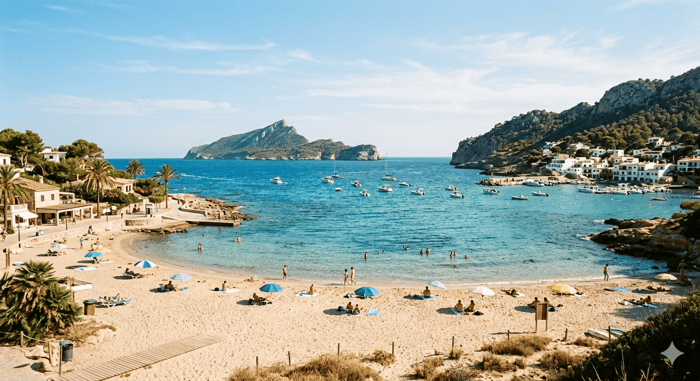
Mallorca beaches are among the most varied and consistently beautiful in the Mediterranean. The island has over 200 beaches and coves, ranging from kilometres of Caribbean-style white sand at Es Trenc to the dramatic cliff-framed jewel of Calo des Moro, from the pine-backed bay of Formentor to the southwest coves of Cala Llamp and Cala Mago that regular visitors treat as their own. Understanding which beach suits which purpose, which zones have the best water quality, when to arrive at the most popular spots, and how the beach geography maps onto the island's residential areas is genuinely useful knowledge. This guide covers the best Mallorca beaches zone by zone, with access details, the best time to visit each, and the connection between beach proximity and property values in the areas that matter most to our audience.
Southeast Mallorca - Calo des Moro and the Santanyi Coast
The southeast of Mallorca, centred on the municipality of Santanyi, contains what most people who know the island well consider its single most beautiful beach. Calo des Moro is a tiny fjord-like cove of perhaps 30 metres of sand, framed on three sides by high limestone cliffs draped in pine and wild rosemary, with water that runs from turquoise at the shoreline to deep cobalt in the channel. It looks extraordinary in photographs and looks even better in reality. It is also very small, reaches capacity by mid-morning in summer, and requires a 15-minute walk from the nearest parking area along a rocky path. Arriving before 9am in July and August is the only way to have the beach with room to breathe; arriving at 11am means standing on rock. September and October transform the experience entirely: the water is at its warmest (23 to 25 degrees), the light is golden, and the crowds are gone.
Within walking distance of Calo des Moro, the wider Santanyi coast offers several alternatives. Cala Llombards is a small bay only 60 metres wide, framed by green cliff walls, with a simple beach bar serving fresh grilled fish from a terrace directly above the water. Cala Figuera, nearby, is a traditional fishing village with a narrow harbour lined with white-painted fishing boats and excellent seafood restaurants: it has no beach but deserves mention as one of the most genuinely unchanged corners of coastal Mallorca. Cala Pi, further west, is a sheltered inlet with a 16th-century watchtower at the clifftop and calm, clear water protected from wind from almost every direction.
South Mallorca - Es Trenc and the Natural Park Coast
Es Trenc is the most famous beach in Mallorca, and the comparison to the Caribbean that appears in every guide to the island is, for once, not significantly overblown. The beach stretches for almost three kilometres between Colonia de Sant Jordi and Ses Covetes, within a protected natural park, backed by sand dunes and low scrub with no development of any kind on the shoreline. The sand is fine and white, the water is shallow and intensely turquoise for the first hundred metres, and the setting is one of the most naturally intact on the island. Access requires parking at designated areas and walking 10 to 20 minutes, which helps distribute visitor numbers along the length of the beach. A small nudist section has existed at the western end for decades. Parking costs approximately €6 per day at the main access points. Es Trenc is at its finest in May, June and September: the summer months are beautiful but busy.
Cala Mondragó and S'Amarador, further east within the Mondrago Natural Park, are two connected coves linked by a short coastal path through pine forest. Both carry EU Blue Flag water quality designation and are genuinely family-friendly: shallow water, fine sand, clear underwater visibility and resident lifeguard cover through the season. They are accessible by car to within reasonable walking distance and are less physically demanding than Calo des Moro.
Northeast Mallorca - Cala Agulla and the Alcudia Bay
Cala Agulla, near Cala Ratjada in the northeast, is consistently rated as one of the most complete beach experiences on the island. A broad bay of fine white sand, 500 metres long and up to 50 metres wide, backed by pine and oak-covered hillsides within the Llevant Peninsula Nature Park, with EU Blue Flag water quality, resident lifeguards, showers, a beach bar and nearby restaurants. The protected status of the natural park means there are no hotel or apartment complexes on the beach itself, preserving the setting in a way that is increasingly rare at well-equipped Mallorca beaches. A hiking trail to the Cap de Cala Agulla headland offers spectacular coastal views. The beach is accessible by car (paid parking nearby) and by public bus from Cala Ratjada in summer.
Playa de Muro, on the northeastern coast within the Alcudia municipality, is Mallorca's longest beach: almost six kilometres of near-white sand with the S'Albufera wetland nature reserve and bird sanctuary immediately behind it. The water is extremely shallow and warm for the first 50 to 100 metres, making it the island's best family beach for small children. The setting is broad and open, with the Tramuntana mountains visible to the west across the bay. It is a long beach and distributes visitor numbers well even in peak season.
North Mallorca - Formentor and the Peninsula
Playa de Formentor is one of the most famous beaches in the Mediterranean, backed by dense pine forest that drops almost to the water's edge, with the rugged Tramuntana mountains as a backdrop and the legendary Hotel Formentor — where Grace Kelly, Winston Churchill and Audrey Hepburn all holidayed — set on the hill above. The beach is one kilometre of fine sand with calm, crystal-clear water. Access by private car is restricted in high summer: a shuttle bus from Port de Pollenca operates from late June through September, leaving private cars in Port de Pollenca and connecting to the beach. Outside peak season the road is open to all traffic and the drive itself — winding along the clifftop peninsula with views over the bay — is one of the great scenic drives of Mallorca.
Southwest Mallorca - The Resident Coves
The southwest coastline between Palma and Andratx contains a collection of smaller coves that are less known than the headline beaches but are the ones most valued by the island's international resident community and by owners of properties in the area. Cala Mago near Portals Vells, Cala Llamp near Port d'Andratx, Sant Elm at the western tip of the island, and the coves around Cala Figuera (Calvià) are all within 30 to 45 minutes of the main southwest residential areas. Most are accessible only by boat or on foot, which keeps them quiet even in high summer. The water quality in the southwest, away from urban harbours, is consistently among the best on the island: transparent, clean and relatively cool year-round.
Playa de Illetes, immediately south of Palma near Portals Nous, is the closest high-quality sandy beach to both Palma city and the southwest residential areas. A narrow strip of fine sand with excellent facilities, it is the default beach for residents who want quality close to home without a long drive.
When to Visit Mallorca Beaches
The question of timing matters more for beaches than almost any other element of life on Mallorca. The island's beaches are genuinely excellent from April through to November, but the experience varies dramatically by month.
| Month | Sea Temp | Crowds | Verdict |
|---|---|---|---|
| April - May | 17-19°C | Very low | Ideal for active beach days, snorkelling, coastal walks |
| June | 21-23°C | Building | Best overall month for beach swimming with manageable crowds |
| July - August | 26-28°C | Peak | Warmest water; popular beaches require early arrival |
| September - October | 23-25°C | Low | The best month for beach residents; warm water, empty beaches |
| November | 20-21°C | Minimal | Mild and quiet; some beach bars closed |
September is the month that residents consistently identify as their favourite for beach use. The water temperature reaches its annual peak, the angle of the light has shifted from the harsh mid-summer overhead glare to the warmer golden tone of early autumn, the beaches are noticeably quieter, and the restaurants around them return to their best.
Mallorca Beaches and the Property Market
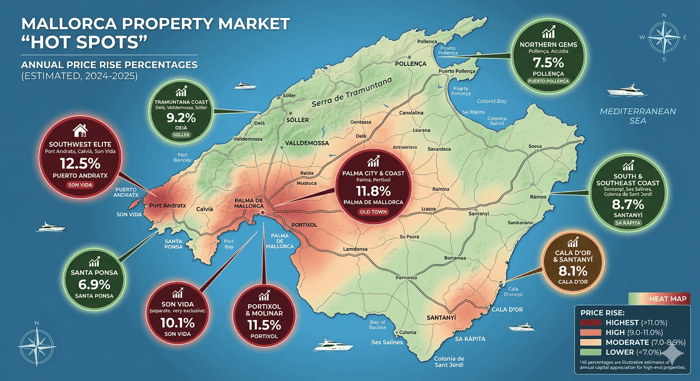
The geography of Mallorca's beaches is directly reflected in the property market. Areas with the most accessible and consistently high-quality beach provision — the southwest coast from Palma to Andratx, the northeast around Alcudia and Pollensa, and the southeast around Santanyi and Cala d'Or — command the most sustained international demand and the strongest long-term price performance. For buyers considering where proximity to quality beach access sits in their priorities, the southwest coastal zone offers the most complete package: excellent beaches within 15 to 30 minutes, the highest-quality international schools nearby, Palma city and the airport accessible in 20 to 30 minutes, and some of the most consistently liquid property markets on the island.
At Imperial Properties, we are based in the southwest and know this coastline in detail. If beach proximity is an important factor in your property search, we can help you match the right area to what you are looking for.