Table of Contents
Palma Water Bus Starts 1 November: Routes, Fares and Resident Passes
The Palma water bus, known locally as the Bus Nàutic, starts operating on 1 November 2026 with two lines linking the cruise terminals to La Lonja. The regular line for everyday journeys follows on 15 January 2027, and resident passes bring the price of a trip down to 50 cents.
It is a new way of moving around the capital, and one that puts the bay itself to work. For anyone who drives into Palma from the southwest and knows the traffic along the seafront, a boat that crosses the harbour in a straight line is a welcome idea.
What Is the Bus Nàutic?
The Bus Nàutic is a public boat service inside the Port of Palma, promoted by the Balearic Islands Port Authority, the body that manages the port. It works like a bus line on water: boats run between fixed stops around the harbour, with tickets and passes in the same way as any other public transport.
The service forms part of the mobility plan that the Port Authority drew up alongside the remodelling of the seafront promenade. The idea is to move people by sea instead of by road, particularly on days when large cruise ships are in port and thousands of passengers need to reach the city centre within a short space of time.
Thinking about buying or selling in Mallorca?
The Port Authority also wants the boats to be a practical option for people who live here. It describes the service as a complement to Palma's existing public transport network and as an easier way to reach the restaurants and leisure areas along the waterfront.
When Each Line Starts
The launch comes in two stages.
- 1 November 2026: Lines 2 and 3 begin. These are aimed mainly at cruise passengers and link the maritime stations with the old town.
- 15 January 2027: Line 1 begins. This is the regular internal route, the one designed for residents, port workers and visitors staying in the city.
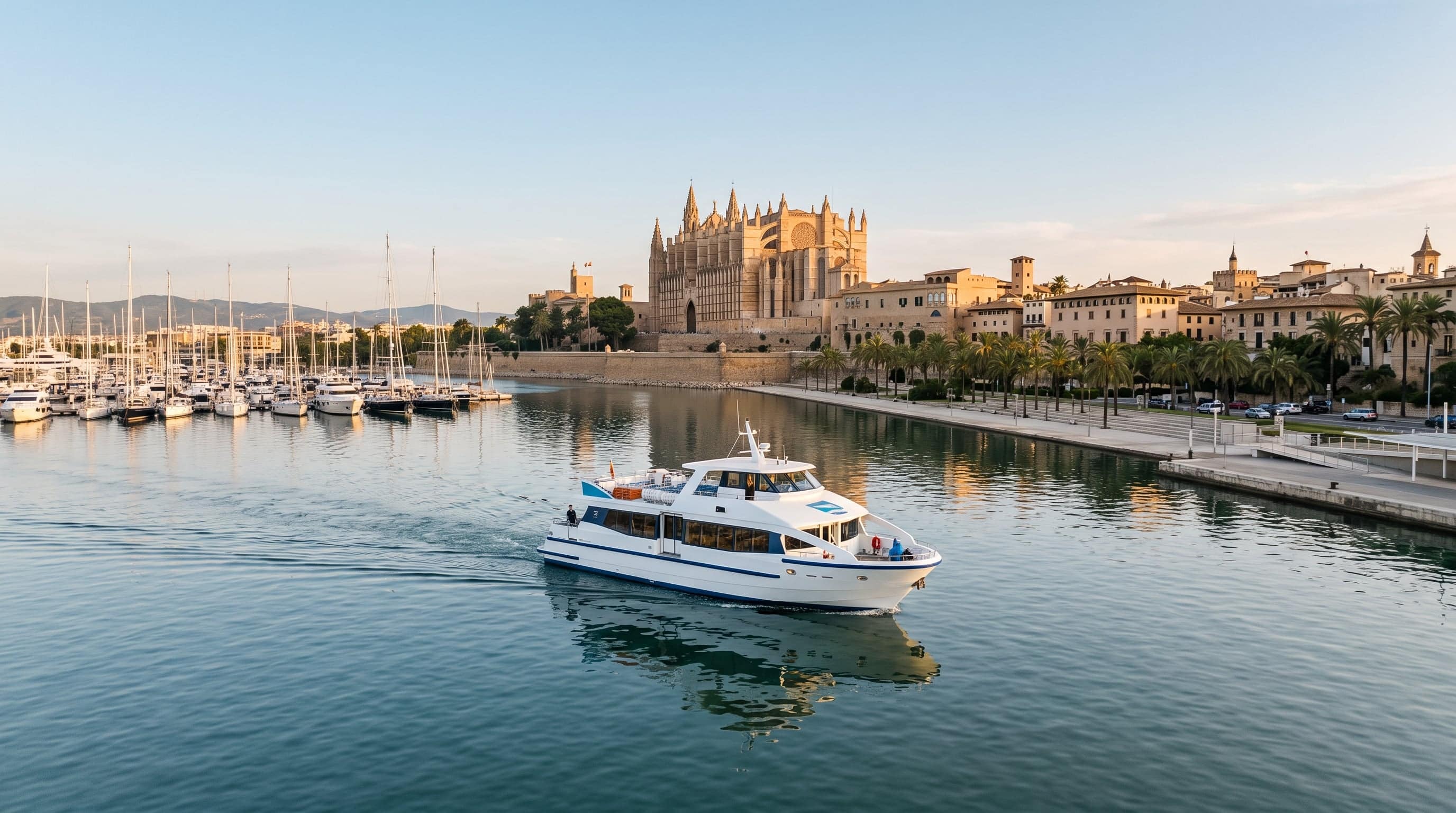
The Palma water bus operates from four stops around the port. The network links the maritime stations at the Dique del Oeste and the Poniente pier with La Lonja, which puts passengers a short walk from the cathedral, the Born and the old town without touching the road. The plans also include a sea connection between the port and Portitxol.
Line 1 connects the Poniente pier, La Lonja and the Tráfico Local stop. It is the line most of us will use: a short crossing from one end of the Paseo Marítimo to the heart of the city.
Fares and Resident Passes
The fare structure rewards regular local use.
- Single ticket: €10.
- Return ticket: €18.
- Bono 100 for residents: €50, valid for one year and good for up to 100 journeys. That works out at 50 cents a journey, or €1 for a return trip.
- Bono 20: €20, valid for six months.
The difference between the two tiers is deliberate. The standard ticket is priced for an occasional visitor who wants to see Palma from the water. The Bono 100 is priced like a city bus, so that someone who works at the port or eats out on the Paseo Marítimo every week has a reason to leave the car behind.
Timetable
During the peak season, Line 1 runs continuously from 9:00 to 19:00. On Fridays, Saturdays and the eve of public holidays, the service continues until midnight.
That late weekend timetable is the detail that matters most for an evening out. It is designed so that residents can reach the restaurants and bars along the Paseo Marítimo and get back again by boat, which removes the question of where to park on a Saturday night.
Who Runs the Service
The Mallorcan company Palma Cruises has been appointed to run the Palma water bus. Its permit lasts one year and is renewable annually for up to three years, or until a permanent operator takes over.
Alongside that arrangement, the board of the Port Authority has approved the tender documents for a long-term contract of up to 15 years. Starting with a temporary operator means the boats are on the water this autumn while the long-term concession is decided.
The long-term tender carries environmental conditions. All vessels have to use low-NOx technology, which reduces emissions of nitrogen oxides, in line with the Port Authority's aim of a cleaner harbour.
What It Means for Palma's Seafront
The Paseo Marítimo has changed more in the last few years than in the previous four decades. The promenade has been rebuilt with wider pavements, more trees and a cycle path, and the harbour front now reads as a place to walk and sit instead of a road to cross. A boat service is the natural next piece: it links the western end of the port, where the ferries and cruise ships dock, with the historic centre, and it does so across open water with the cathedral in view the whole way.
For the city, fewer coaches and taxis on Avenida Gabriel Roca on cruise days means a calmer seafront for everyone else. For residents, the Bono 100 turns a harbour crossing into something you do without thinking about the price.
For visiting family and friends, it is simply a lovely thing to do. Ten euros buys a view of La Seu, Bellver Castle and the yachts of the bay from the water, which until now meant booking an excursion.
Using It From the Southwest
From Santa Ponsa, Palma is around twenty minutes by car on the Ma-1 motorway, and the western end of the port is the first part of the city you reach. Once Line 1 is running in January, that makes a neat day out: arrive at the Poniente side, cross to La Lonja by boat, spend the day in the old town and come back the same way.
If you prefer to leave the car at home altogether, the island's TIB buses connect the main resorts of Calvià with Palma. Our resident's guide to the TIB bus network in Calvià explains the routes, and timetables are published on the TIB website. For what is on in the city once you arrive, Visit Palma lists events and exhibitions.
This closeness to the capital is one of the reasons the southwest is so popular with buyers. You live by the beach, with golf, marinas and international schools nearby, and one of the Mediterranean's most attractive small cities is a short drive, a bus ride and now a boat trip away.
Find Your Home in Mallorca
Imperial Properties has been a family-run agency in Santa Ponsa since 1985, and we work in English, German and Spanish. Browse our latest properties for sale across Mallorca.
Call us on +34 971 692 434, message us on WhatsApp, or email help@imperial-properties.com. If you are thinking of selling, you can request a free property valuation.