Table of Contents
Winter sea swimming in southwest Mallorca is very doable for most healthy adults. The sea around Palma averages 18.7°C in November, 16°C in December and bottoms out at around 13.7°C in February, according to long-term data from Puertos del Estado. With the right beach, a sensible routine and a warm drink waiting, it becomes one of the best parts of island life.
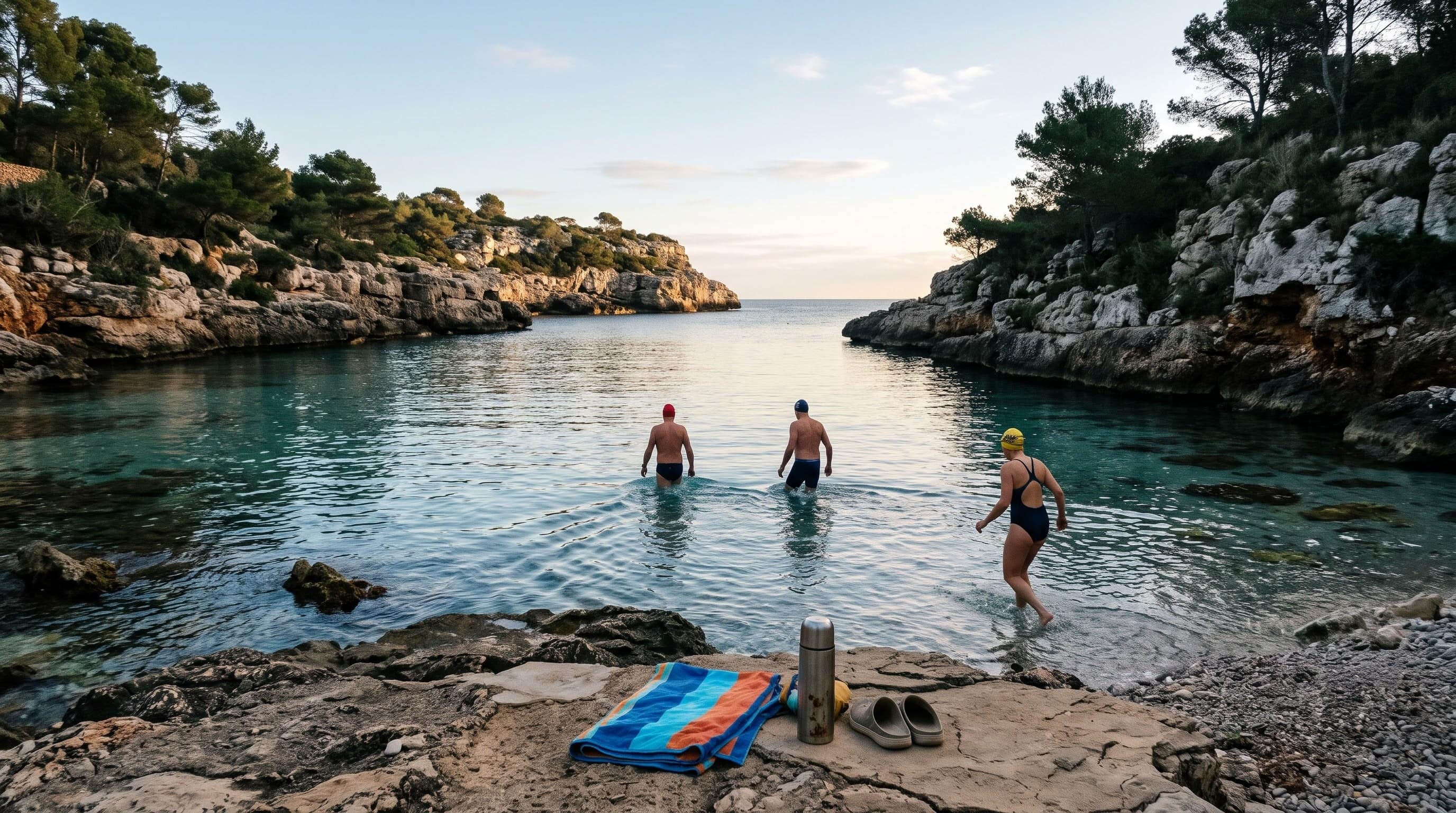
Every winter morning in Calvià you will see them: a handful of swimmers in bright caps walking into the water while the rest of us are still on our first coffee. Some have been doing it for decades. Others started after moving here and never stopped. The beaches are empty, the water is clear, and the light in the bay at sunrise is something you only get in the quiet months.
How Cold Is the Sea in Winter?
The figures below are average monthly sea temperatures for Palma, from Puertos del Estado's marine data series for 2003 to 2022, alongside average air temperatures at Palma airport from AEMET for 1991 to 2020.
Thinking about buying or selling in Mallorca?
| Month | Sea (°C) | Air (°C) |
|---|---|---|
| November | 18.7 | 14.1 |
| December | 16.0 | 11.4 |
| January | 14.5 | 10.3 |
| February | 13.7 | 10.4 |
| March | 13.9 | 12.0 |
| April | 14.9 | n/a |
Two things stand out. First, the sea cools slowly. November water is still warmer than a typical British or German summer sea, which is why so many residents simply carry on swimming after the season ends. Second, the coldest water comes late, in February and March, not at Christmas. Many swimmers find December and early January the most pleasant winter months, because the sea still holds some of its autumn warmth.
For more on the island's weather by month, see our guide to southwest Mallorca's climate in numbers.
Checking the Sea Temperature on the Day
Averages are useful for planning, but on the day you want live data. Puertos del Estado runs a network of measuring buoys around Spain and publishes the readings in real time on its Portus website. The closest offshore buoy to the southwest is the Dragonera buoy, west of Mallorca, which has been measuring since 2009. It measures water temperature with a sensor three metres below the surface, so it is a good guide to what you will feel at a beach.
It is also the buoy that makes headlines in summer. On 5 August 2026 it recorded 33.02°C, the highest sea temperature it has ever measured, according to AEMET. In winter its readings settle into the mid-teens, which tells you most of what you need before you leave the house.
For wind and sea state, the Spanish weather service AEMET publishes coastal forecasts and warnings for Mallorca. A calm, sunny morning after a still night is ideal. A day with a yellow coastal warning is a day to walk the promenade instead.
Where to Swim in the Southwest
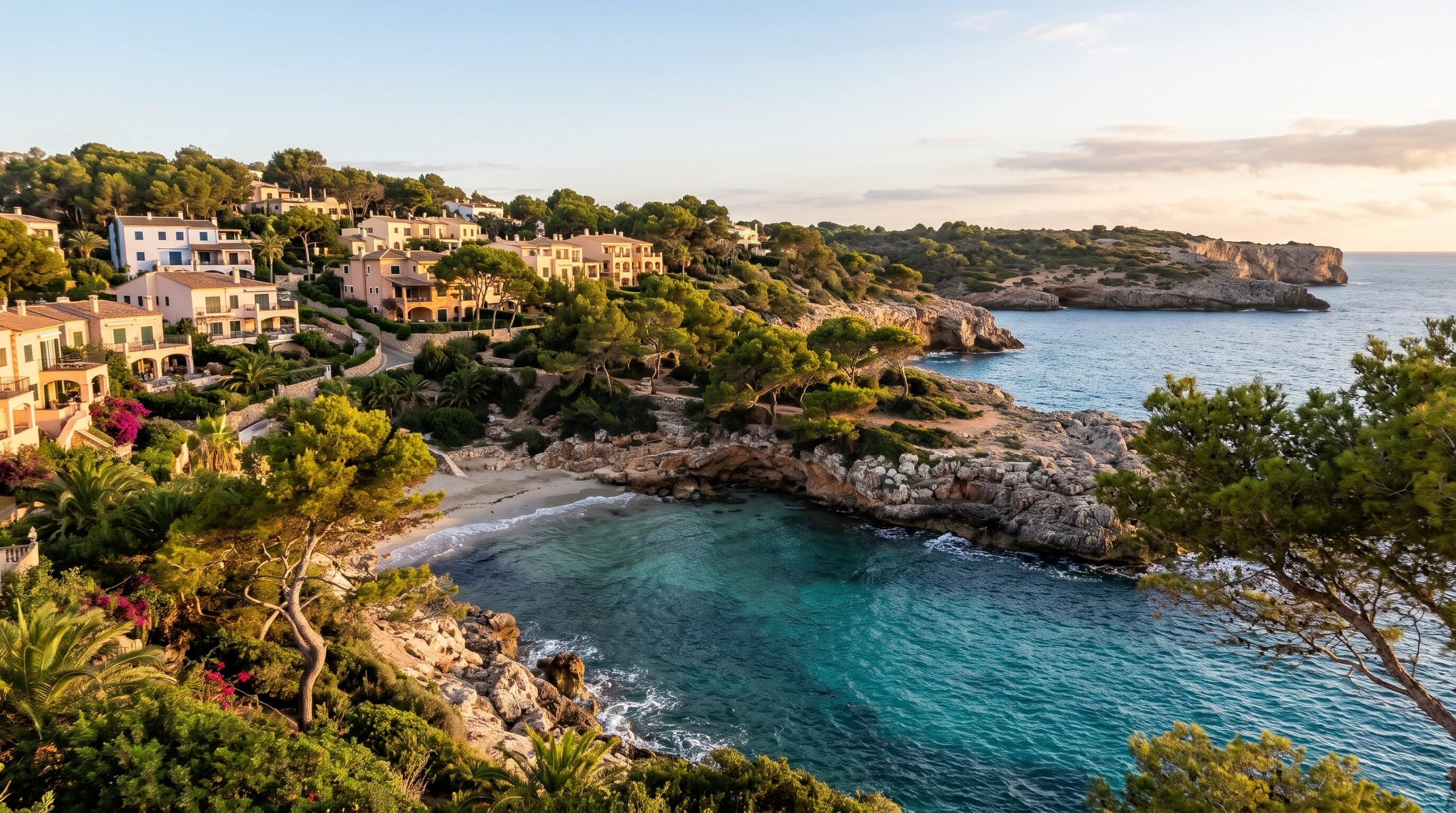
The best winter swimming spots have the same things in common: a gentle entry where you can stand, somewhere to leave your things, and other people around. In Calvià, the main bays tick all three boxes.
- Santa Ponsa beach. A wide sandy bay with a gradual slope and a promenade behind it. It is the easiest place in the area to start.
- Palmanova and Son Maties. Long, shallow sandy beaches close to bus stops and parking.
- Illetas. Small coves with very clear water close to Palma. Entry is rockier in places, so water shoes help.
- Cala Vinyes. A small, pretty cove between Magaluf and Sol de Mallorca that is very peaceful out of season. Our Cala Vinyes guide describes the area.
- Portals Vells. Beautiful and quiet in winter, but more remote. Save it for calm days and never swim there alone. See our guide to Sol de Mallorca and Portals Vells.
The waters off El Toro form part of a protected marine reserve, and you can watch the seabed there live on the El Toro underwater camera. It is a nice reminder of what is swimming beneath you.
How to Start and Stay Safe
Cold water is not dangerous because of the temperature alone. The main risk is the body's reaction in the first minute, known as cold shock, when breathing speeds up sharply. Experienced winter swimmers manage this with a few simple habits.
- Never swim alone. Go with a friend or join the regulars. Outside the summer season, do not assume a lifeguard is on duty.
- Get in slowly. Walk in, splash your face and wrists, and let your breathing settle before you swim.
- Stay close to the shore and swim parallel to the beach, not out to sea.
- Keep it short at first. A few minutes is plenty in the first weeks. Build up gradually as the sea cools through the winter.
- Wear a bright cap so boats and other swimmers can see you. Neoprene gloves, socks or a wetsuit make the coldest months much more comfortable.
- Warm up properly afterwards. Dry off, dress quickly in layers, and have a hot drink. Avoid a hot shower straight away.
- Check with your doctor before starting if you have a heart condition or any other medical concern.
If anything goes wrong, the emergency number in Spain is 112. Our guide to hospitals near Santa Ponsa lists the nearest emergency departments.
Why Residents Love It
Ask a regular why they do it and the answers are rarely about fitness. They talk about the quiet, the light, the friends they have made on the beach, and the feeling of starting the day with something that most people only do on holiday. For many of our clients, a morning swim in January is the moment they realise they really live here now.
It also says something about the southwest itself. Few places in Europe let you walk from your front door to a clear, calm sea all year round. If that sounds like the life you want, our current homes in Santa Ponsa and Nova Santa Ponsa are a good place to start, or browse all our properties across Mallorca. Thinking of selling instead? Request a free, no-obligation valuation.
Call us on +34 971 692 434, message us on WhatsApp, or email help@imperial-properties.com.